
DIY vs. Shop: Deciding Which Maintenance Tasks You Can Handle Yourself

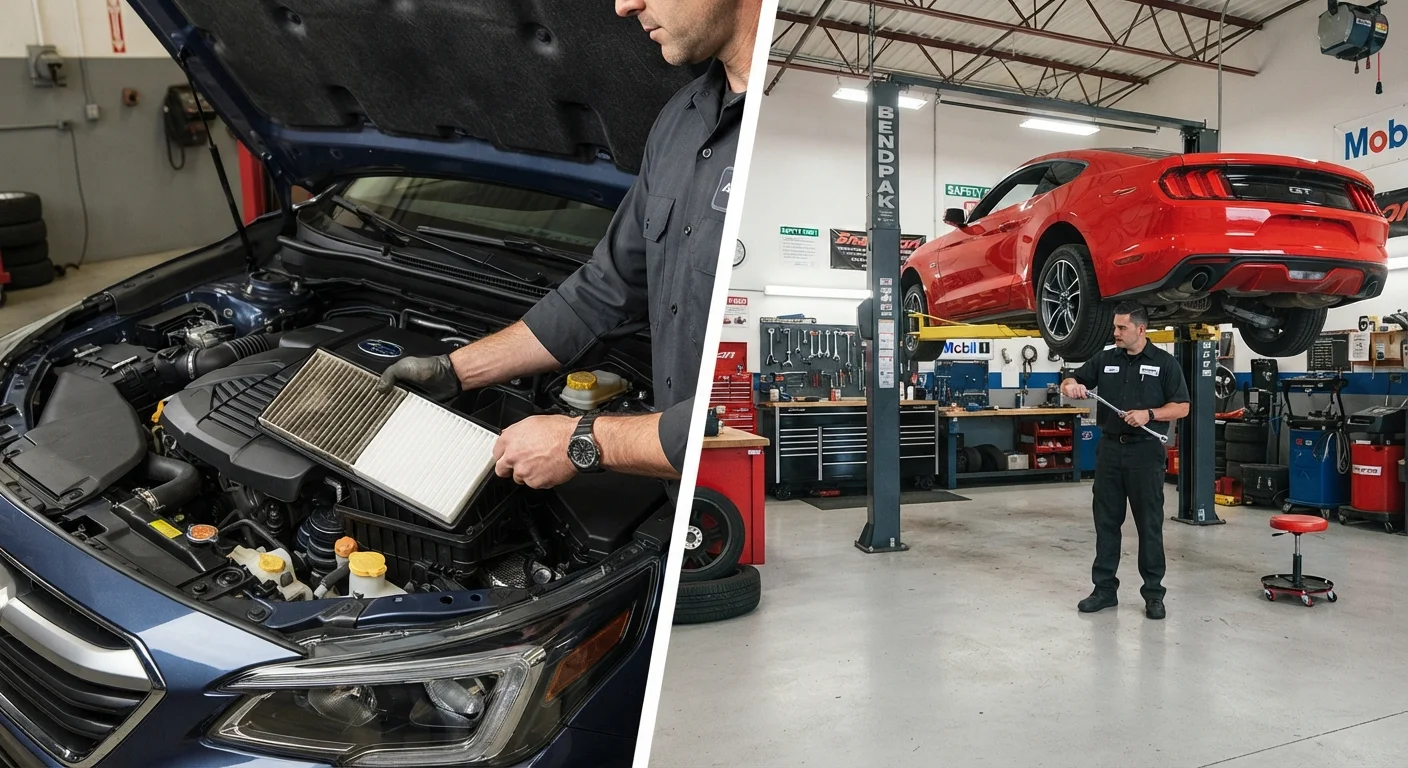
Photo: InsightsChief.com | Your Source Of Trusted Insights editorial
Key Takeaways
- Several routine maintenance tasks are genuinely safe and cost-effective for most drivers to handle at home.
- Work involving brakes, suspension, fuel systems, or electrical diagnostics typically warrants a qualified mechanic.
- The right tool inventory, vehicle lift access, and honest skill assessment determine whether DIY makes financial sense.
- Mistakes on safety-critical systems can cost far more than the original shop estimate you were trying to avoid.
- Your owner's manual and a basic OBD-II scanner are the two most underused resources for budget-conscious car owners.
The Real Question Isn't Pride-It's Risk and Return
Every driver faces a version of the same calculation: is it worth attempting this myself, or should I pay someone who does this daily? The answer isn't about mechanical confidence alone. It's about understanding what can go wrong, what tools the job actually requires, and whether the savings justify the exposure.
For budget-conscious households, the appeal of DIY is obvious. Labor rates at independent shops commonly run $80-$120 per hour, with dealerships often higher. But DIY also carries real costs-parts bought incorrectly, tools purchased for a single use, or a repair done wrong that creates a larger failure downstream.
See our honest look at DIY maintenance trade-offs before committing either direction. And if you're newer to car ownership, this first-time owner's primer covers the full range of routine tasks and their typical intervals.
Tasks Most Drivers Can Handle at Home
Several jobs fall into a category where the skill ceiling is low, mistakes are easy to catch before they become dangerous, and the required tools are inexpensive.
- Engine air filter replacement: Usually a tool-free or single-screwdriver job. Filters are inexpensive, and access is straightforward on most vehicles.
- Cabin air filter replacement: Typically located behind the glove box. Manufacturer intervals are often 15,000-25,000 miles.
- Wiper blade replacement: No mechanical knowledge required. Packaging usually includes vehicle-specific instructions.
- Fluid top-offs: Checking and topping off washer fluid, coolant (reservoir only, never a hot radiator cap), and power steering fluid are low-risk visual checks. See our guide on checking coolant, brake fluid, and transmission fluid for a walkthrough.
- Battery terminal cleaning: Corrosion on terminals can cause starting issues and is addressable with basic supplies. Disconnecting a battery has minor risk if done in the wrong order-positive terminal last when removing, first when reconnecting.
- Oil changes: DIY-able for experienced home mechanics with proper jack stands or ramps, the right drain pan, and confirmed oil specification from the owner's manual. However, the cost savings over quick-lube shops have narrowed considerably, making this one to evaluate honestly.
Start With Your Owner's Manual
Understanding your car's maintenance schedule is the starting point for any DIY approach-it tells you exactly what's due and when, before anything becomes urgent.
Jobs That Belong in a Shop
Some maintenance and repair tasks cross into territory where the cost of error-financially or physically-is too high to absorb at home.
- Brake system work: Pad replacement is sometimes cited as a DIY task, but it requires correct torque specs, proper bedding-in procedure, and accurate rotor measurement. Errors here affect stopping distance directly. Understanding what actually needs replacing helps you evaluate shop recommendations, but the hands-on work typically warrants professional execution.
- Suspension and steering components: Ball joints, tie rods, and struts require specialized tools and precise torque values. Incorrect assembly can cause unpredictable handling.
- Transmission service: Fluid changes are theoretically accessible, but accessing the correct fill point and confirming proper fluid type and level requires service manual precision that most home setups can't verify reliably.
- Timing belt or chain service: Consequences of incorrect installation-engine damage-are severe. This is a job for professionals with the right alignment tools.
- Complex electrical or emissions diagnosis: A basic OBD-II scanner reads fault codes, but interpreting them accurately and isolating the root cause often requires professional-grade scan tools and experience.
Never Work Under an Unsupported Vehicle
If a shop quote feels off, that's worth investigating-but separately from deciding whether to do the work yourself. Our article on understanding labor rates and parts markups explains how to read an estimate critically.
How to Assess Any Job Before Starting
Before committing to a DIY attempt, run through a short checklist:
- What's the failure mode? If a mistake could affect steering, braking, or structural integrity, default to a shop. If the worst outcome is a fluid spill or a part that needs re-seating, the risk profile is lower.
- What tools does the job actually require? Look up the full procedure-not just a summary video-before assuming you're equipped. Specialty sockets, torque wrenches, and lift equipment are easy to underestimate.
- Do you have a safe workspace? Working under a vehicle supported only by a floor jack is a documented cause of serious injury. Proper jack stands or vehicle ramps rated for your car's weight are non-negotiable, not optional.
- Can you verify your work? Some repairs have a clear confirmation step. Others-like correct brake caliper seating-require test drives and subsequent inspections that are hard to replicate at home.
The comparison framework that applies to automotive decisions translates directly to other skilled trades. Similar logic applies when weighing DIY home maintenance against hiring a professional-the underlying risk calculus is the same.
Side-by-Side: Common Tasks Evaluated
The table below summarizes common maintenance tasks by typical DIY accessibility, approximate tool requirements, and where professional involvement is generally warranted.
| Task | DIY Accessible | Key Tool Requirement | Shop Recommended When | |
|---|---|---|---|---|
| Engine Air Filter | Yes | Minimal or none | Never; straightforward swap | |
| Oil Change | With experience | Jack stands, drain pan, torque wrench | No safe lift or workspace | |
| Wiper Blades | Yes | None | Never; no mechanical risk | |
| Brake Pad Replacement | Limited | Torque wrench, caliper tool, jack stands | Always recommended for most drivers | |
| Fluid Checks and Top-offs | Yes | None beyond rags and funnel | If leak source is unknown | |
| Suspension Components | No | Specialty tools, press equipment | Always; safety-critical | |
| Timing Belt/Chain | No | Alignment tools, specialized equipment | Always; engine damage risk | |
| Battery Terminal Cleaning | Yes | Wire brush, gloves, safety glasses | If battery itself needs testing | |
| Electrical Diagnosis | Partial (code reading only) | OBD-II scanner | When root cause is unclear | |
| Cabin Air Filter | Yes | Minimal or none | Never; glove box access only |
Cost estimates are general ranges for informational purposes and will vary by region, vehicle type, and specific conditions. Always verify part specifications against your owner's manual.
The content provided on our blog site traverses numerous categories, offering readers valuable and practical information. Readers can use the editorial team’s research and data to gain more insights into their topics of interest. However, they are requested not to treat the articles as conclusive. The website team cannot be held responsible for differences in data or inaccuracies found across other platforms. Please also note that the site might also miss out on various schemes and offers available that the readers may find more beneficial than the ones we cover.