
Checking Your Own Fluids: Coolant, Brake Fluid, and Transmission Fluid

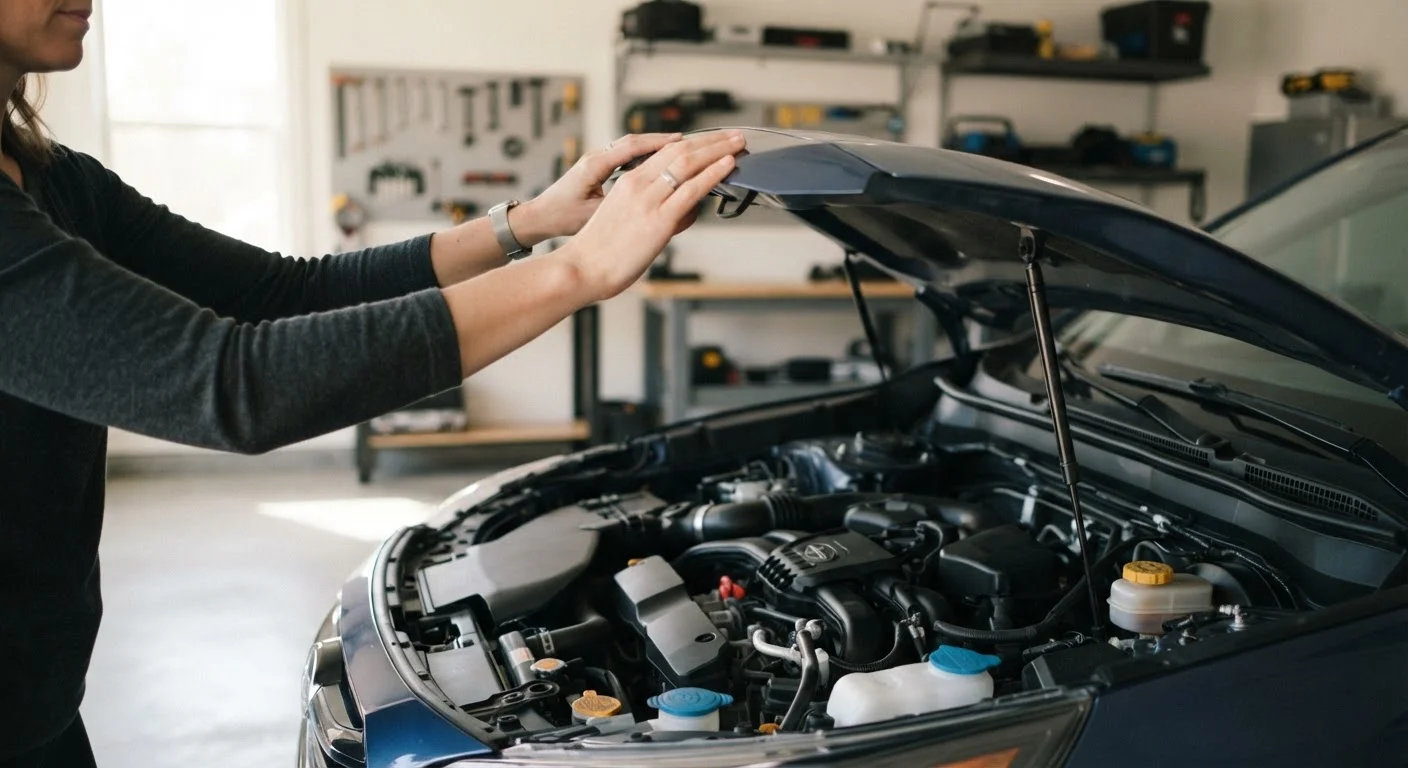
Photo: InsightsChief.com | Your Source Of Trusted Insights editorial
Key Takeaways
- Coolant, brake fluid, and transmission fluid can all be visually inspected without special tools.
- Color and clarity are your primary indicators - degraded fluid often looks dark, murky, or contaminated.
- Low brake fluid may signal a leak or worn brake pads and warrants prompt professional attention.
- Always check fluids on a level surface with the engine cool to get accurate, safe readings.
- Most manufacturers specify fluid inspection intervals in the owner's manual - use that as your baseline.
Why These Three Fluids Matter
Engine oil gets most of the attention, but coolant, brake fluid, and transmission fluid are equally critical to vehicle reliability and safety. Each serves a distinct function: coolant regulates engine temperature and prevents corrosion; brake fluid transfers the hydraulic force that stops the vehicle; transmission fluid lubricates and cools the gearbox. When any of these degrade or drop below safe levels, the consequences range from expensive component damage to serious safety failures.
The good news is that inspecting all three takes under 20 minutes, requires no mechanical skill, and costs nothing beyond a few paper towels. This is exactly the kind of routine task that, done consistently, helps you catch small problems before they turn into large repair bills. For a broader look at which maintenance jobs are genuinely DIY-friendly, see our guide to DIY vs. shop decisions.
What you will need
What You'll Need
No special tools are required. The items below are either already in most households or available inexpensively. The most important resource is your owner's manual - it tells you where each reservoir is located, what fluid specification your vehicle requires, and any vehicle-specific procedures (some transmissions, for instance, must be checked at operating temperature).
Owner's Manual
Identifies the correct fluid type, reservoir locations, and manufacturer-specified check intervals for your specific vehicle.
Clean Lint-Free Rag
Used to wipe dipsticks clean before taking a final reading and to check fluid color accurately.
Flashlight
Helps illuminate dipstick markings and reservoir levels under the hood in poor lighting conditions.
Disposable Gloves
Protects hands from brake fluid, which is corrosive and can irritate skin on prolonged contact.
Step-by-Step Instructions
Work through the steps below in order. Doing coolant and transmission fluid checks on a cold engine and brake fluid on a cool one keeps the process safe and the readings accurate. If you discover something that concerns you during any step, stop and consult a qualified mechanic rather than continuing.
Park on level ground and let the engine cool
Pull onto a flat surface and turn off the engine. For coolant and transmission fluid checks, the engine should be fully cool - ideally after sitting overnight or for at least two hours. Checking these fluids on a hot engine gives inaccurate readings and carries a burn risk. Brake fluid can generally be checked cold or slightly warm, but cool is always safer.
Check the coolant level and condition
Locate the translucent coolant reservoir - typically a white or light-colored plastic tank connected to the radiator by a hose. Without opening the cap, read the MIN and MAX lines marked on the side. The level should fall between them.
Next, assess the color. Healthy coolant is typically bright green, orange, pink, or blue depending on the formulation - it should be clear, not murky. If it looks brown, oily, or contains floating particles, the coolant is contaminated and the system needs professional attention. An oily sheen can indicate a head gasket issue.
Inspect the brake fluid reservoir
The brake fluid reservoir is usually a small, semi-transparent plastic container near the back of the engine bay on the driver's side, mounted on top of the master cylinder. Check the level against the MIN/MAX markings on the outside without removing the cap if possible.
Brake fluid should be pale yellow to nearly clear when fresh. Fluid that is dark brown or black has absorbed moisture over time - brake fluid is hygroscopic, meaning it pulls water from the air - and should be flushed by a mechanic. The darker the fluid, the more degraded it is.
If the level is noticeably low, do not simply top it off and move on. Low brake fluid can mean worn brake pads (which consume more fluid as they wear) or, more seriously, a leak in the brake system. Have a qualified mechanic inspect the system before driving further.
Check the transmission fluid level and color
Many older vehicles have a transmission dipstick, usually located toward the rear of the engine bay. Some modern vehicles - particularly those with continuously variable transmissions (CVTs) or dual-clutch automatics - are sealed units with no dipstick, requiring a dealer or shop inspection. Check your owner's manual first.
If a dipstick is present, pull it out, wipe it clean with a rag, reinsert it fully, then pull it out again for an accurate reading. The level should fall within the marked range. Rub a small amount of fluid between your fingers: healthy transmission fluid is typically bright red or pink and has a slightly sweet smell. Dark brown or black fluid with a burnt odor indicates the fluid is overdue for a service - this is a job for a qualified technician.
Document your findings and decide on next steps
Write down what you observed: fluid levels (low, normal, high), colors, and any unusual smells or contamination signs. If all three fluids are within range and look healthy, you're done - note the date and mileage for your records.
If any fluid is low, discolored, or shows signs of contamination, refer to your owner's manual for the correct top-off specification (never substitute a different fluid type), and schedule a professional inspection for anything beyond a simple top-up, especially for brake or transmission concerns.
Low Brake Fluid Is Not a Simple Top-Up Situation
Knowing When to Stop and Call a Professional
Fluid checks are diagnostic, not always a fix. Topping off a slightly low coolant reservoir is generally straightforward - but if it's consistently low between checks, there's likely a leak that needs professional diagnosis. Similarly, brake fluid that keeps dropping after being topped off is a red flag for a hydraulic leak, which affects stopping ability and requires immediate attention from a qualified mechanic.
Transmission fluid that is severely burnt or consistently low almost always points to internal wear or a leak - not something to defer. The honest trade-offs of DIY maintenance are worth understanding before deciding how far to take any task yourself.
Make fluid checks part of a broader seasonal habit. Our seasonal car prep checklist covers fluids alongside tires, batteries, and belts - a useful companion to this walkthrough. And if you're tracking total vehicle costs, the annual car ownership cost audit can help you spot where preventive maintenance is paying off.
The content provided on our blog site traverses numerous categories, offering readers valuable and practical information. Readers can use the editorial team’s research and data to gain more insights into their topics of interest. However, they are requested not to treat the articles as conclusive. The website team cannot be held responsible for differences in data or inaccuracies found across other platforms. Please also note that the site might also miss out on various schemes and offers available that the readers may find more beneficial than the ones we cover.