
Seasonal Car Prep Checklist: Getting Ready for Winter and Summer

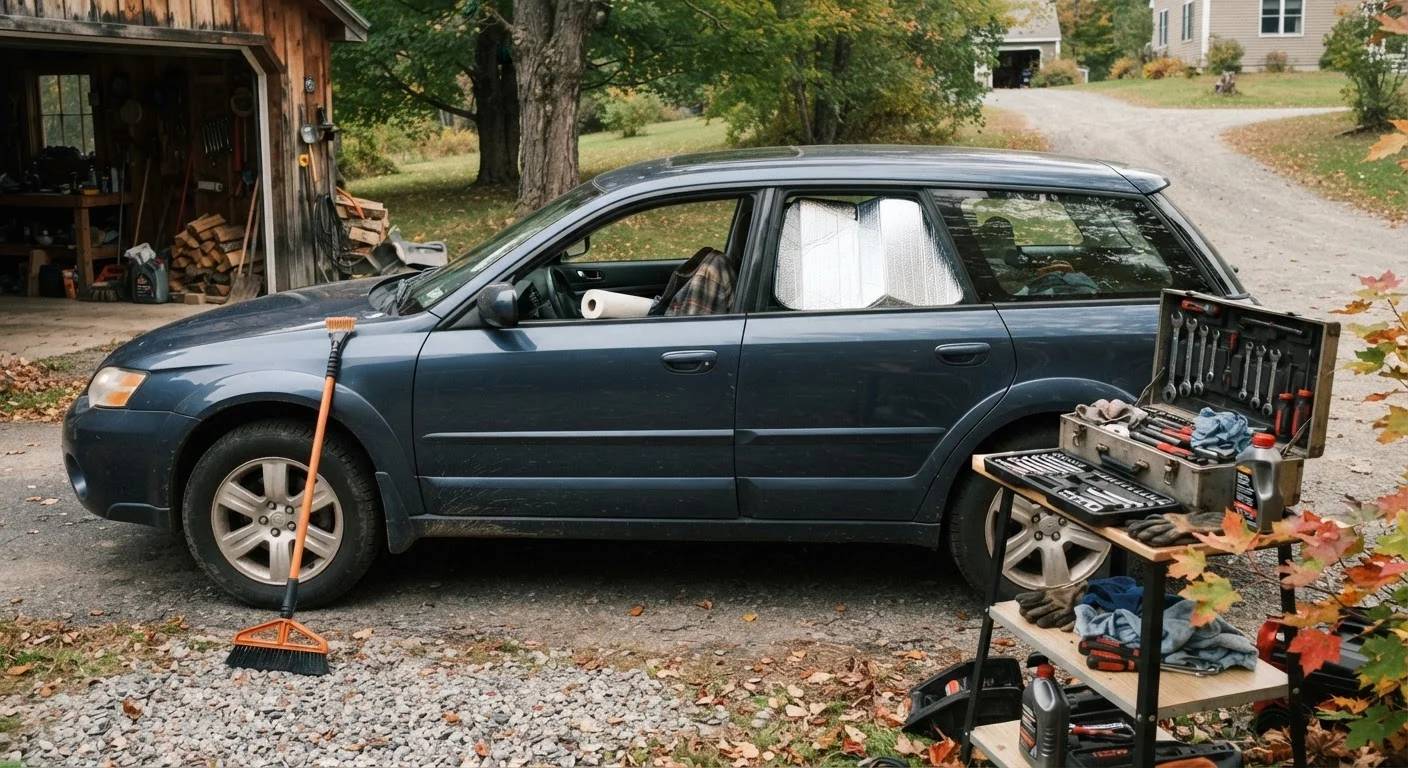
Photo: InsightsChief.com | Your Source Of Trusted Insights editorial
Key Takeaways
- Seasonal inspections catch small problems before they become expensive repairs.
- Tires, battery, and fluid levels are the highest-priority items before any season change.
- Many checklist tasks require only basic tools and can be done at home in a driveway.
- Winter prep and summer prep share a common core but differ on a handful of critical items.
- Pairing this checklist with an annual cost review helps keep total ownership costs predictable.
Why Seasonal Prep Matters for Budget-Conscious Drivers
Extreme temperatures - in either direction - put stress on components that perform fine in mild weather. A battery that holds a reasonable charge in July may fail to turn the engine over on a 10°F morning. Tires that passed a visual inspection in October may be dangerously underinflated by February because cold air contracts. Catching these issues before the season changes is almost always cheaper than dealing with a roadside breakdown or an accelerated repair bill.
This checklist is organized into two phases: a shared core that applies to both seasonal transitions, and targeted sections for winter-specific and summer-specific preparation. Work through the shared items first, then complete whichever seasonal section applies to your upcoming months.
For a broader view of managing vehicle spending across the full year, see our year-round cost management guide. If you want to pair this inspection with a full financial review of your vehicle, the annual car ownership cost audit is a logical next step.
Tire pressure gauge
Measure actual tire inflation against the door jamb specification.
Tread depth gauge
Accurately measure remaining tire tread rather than relying on visual estimates.
Battery load tester
Assess whether the battery can deliver adequate power under real starting conditions.
Coolant test strips or refractometer
Verify the antifreeze-to-water ratio and freeze protection level of your coolant.
Flashlight or work light
Illuminate the engine bay, undercarriage, and wheel wells for visual inspections.
Vehicle owner's manual
Confirm correct fluid specs, change intervals, and component locations specific to your make and model.
The Seasonal Prep Checklist
Work through these items in order. Items marked must are non-negotiable safety or reliability checks. Should items are strongly recommended. Nice-to-have items add convenience or extend component life but won't strand you if skipped.
Shared Core - Both Season Changes
Winter-Specific Preparation
Summer-Specific Preparation
Don't Defer Safety-Critical Items
How to Use Your Results
After completing the checklist, sort any flagged items by urgency. Safety-critical findings - brake issues, a battery near the end of its service life, tires at or below the wear indicator - should be addressed before the season arrives, not after. For items in the should category, get a quote within the next two to four weeks and budget accordingly.
If several items need attention at once, ask your shop whether any repairs can be bundled to save on labor time. Many shops will, for example, replace the cabin air filter and engine air filter in the same visit for a single labor charge. Document what was inspected, what was replaced, and the mileage at service - this log becomes useful when tracking intervals and when you eventually sell the vehicle.
Know Your Limits on DIY Work
The content provided on our blog site traverses numerous categories, offering readers valuable and practical information. Readers can use the editorial team’s research and data to gain more insights into their topics of interest. However, they are requested not to treat the articles as conclusive. The website team cannot be held responsible for differences in data or inaccuracies found across other platforms. Please also note that the site might also miss out on various schemes and offers available that the readers may find more beneficial than the ones we cover.