
When a Mechanic Quote Feels Wrong: Understanding Labor Rates and Parts Markups

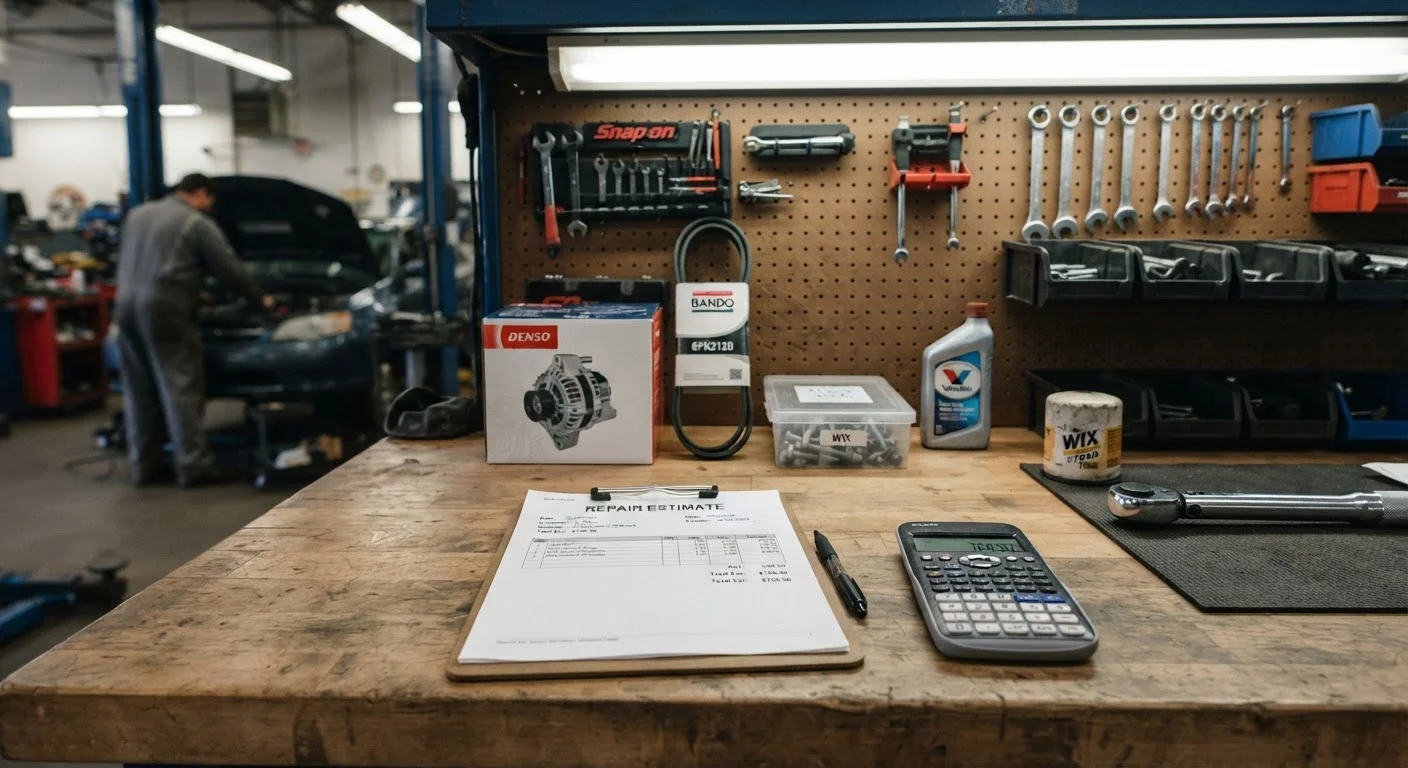
Photo: InsightsChief.com | Your Source Of Trusted Insights editorial
Key Takeaways
- Shop labor rates vary widely - often $80-$175/hr - based on location, shop type, and technician certifications.
- Parts markups of 20-50% above wholesale cost are common and generally considered standard industry practice.
- Estimates use flat-rate time guides, not a stopwatch, so faster techs don't reduce your bill.
- Getting two or three written estimates for major repairs is a straightforward way to gauge fair pricing.
- Asking for an itemized estimate separates labor and parts costs so you can evaluate each independently.
- Bringing your own parts is possible at some shops but may void labor warranties - always confirm first.
How Labor Rates Are Set
When a shop quotes a labor charge, the number comes from two inputs: the shop's hourly rate and the flat-rate time assigned to the job. The hourly rate is what the shop charges per labor unit - commonly $80-$175 at independent shops and $150-$220 or more at franchised dealerships, though rates vary significantly by region and shop type.
The flat-rate time is drawn from industry reference guides. If replacing a water pump is listed at 3.0 hours in the applicable guide, you pay for 3.0 hours regardless of how quickly the technician completes the job. This system benefits experienced, efficient technicians, but it means you can't reduce your bill by hoping the mechanic works fast.
Overhead drives a significant portion of any shop's rate: rent, equipment, liability insurance, tool calibration, and ongoing technician training all factor in. Shops that invest in manufacturer-specific certifications and diagnostic software often charge more - and in some cases, those capabilities are genuinely necessary. Understanding this context helps you evaluate a quote without assuming the highest rate is automatically unjustified.
Ask for the Labor Rate Upfront
Where Parts Markups Come From
Shops buy parts at wholesale prices - negotiated supplier rates that are lower than what you'd pay at a retail auto-parts store. They then charge you a marked-up price to cover purchasing overhead, storage, and the cost of standing behind the part if it fails under warranty. A markup of 20-50% above wholesale is typical for common parts; markups on specialized or dealer-only components can be higher.
To put markups in perspective: if a shop pays $80 wholesale for an alternator that retails for $120, a 40% markup brings your price to $112 - still below retail. However, if the markup brings your price well above what any retail outlet charges for the same part number, that's worth a follow-up question.
Checking the retail price of a part before your appointment gives you a rough ceiling. Note, though, that shops sourcing OEM (original equipment manufacturer) parts pay more than those using aftermarket alternatives, which is a legitimate reason for price variation rather than a sign of overcharging. Common ownership cost assumptions often underestimate the role parts sourcing plays in total repair bills.
OEM vs. Aftermarket: A Real Price Driver
Reading an Estimate Like a Consumer
A written, itemized estimate is your primary tool for evaluating any quote. It should list each job separately, show the flat-rate hours assigned, state the labor rate, and itemize every part with its price. If an estimate shows only a single lump-sum figure, ask for the breakdown before authorizing work.
Once you have an itemized estimate, a few comparisons become straightforward. Look up the parts on retail sites to gauge whether the prices fall in a reasonable range. Compare the labor hours against any flat-rate reference you can access (some are available through libraries or auto-enthusiast forums). If you're facing a significant repair, getting two to three written quotes is the most reliable check - not to find the absolute lowest price, but to understand the market range for that specific job.
For context on how similar evaluation applies to other vehicle costs, the guidance on comparing auto insurance quotes applies a similar framework: the lowest number isn't always the right number, but understanding what drives each figure helps you decide what's fair.
State consumer protection laws in most of the US require shops to get your approval before exceeding an estimate by more than a specified amount - often 10% or a fixed dollar threshold. Knowing your state's rule before you hand over the keys is worth a quick search.
$80-$175/hr
Typical independent shop labor rate range
Industry surveys and consumer automotive publications consistently cite this range as typical for independent repair shops across the US, with variation by market and shop type.
20-50%
Common parts markup above wholesale cost
Auto industry trade sources generally describe this as the standard markup range shops apply to parts purchased at wholesale, though specialized or dealer-only components can fall outside it.
~3 quotes
Estimates recommended before major repairs
Consumer advocates and automotive advisory organizations generally recommend obtaining at least two to three written estimates for any repair exceeding a few hundred dollars.
Questions Worth Asking Before You Authorize Work
Being prepared with specific questions changes the dynamic of a repair conversation. Before authorizing any significant job, consider asking:
- What is your labor rate, and what flat-rate time applies to this job? A shop that can't or won't answer this may not be working from a standard guide.
- Are these OEM parts, aftermarket, or remanufactured? Each tier carries different price and quality expectations - neither is inherently wrong, but you deserve to know.
- Does the estimate cover any additional labor if something unexpected is found? Known as a diagnostic allowance or supplemental authorization clause, this protects you from surprise charges mid-repair.
- What warranty covers the labor and parts? Reputable shops typically offer at least 12 months or 12,000 miles on parts and labor.
If you're weighing which tasks to bring to a shop versus handling yourself, the DIY vs. shop decision framework can help you identify where professional labor genuinely adds value. And if deferred maintenance is behind the current repair, understanding how skipped maintenance compounds costs puts the bill in broader context.
This article provides general consumer information about auto repair pricing practices and is not a substitute for advice from a licensed mechanic or consumer protection professional. Rates, regulations, and industry standards vary by location and change over time.
Frequently Asked Questions
The content provided on our blog site traverses numerous categories, offering readers valuable and practical information. Readers can use the editorial team’s research and data to gain more insights into their topics of interest. However, they are requested not to treat the articles as conclusive. The website team cannot be held responsible for differences in data or inaccuracies found across other platforms. Please also note that the site might also miss out on various schemes and offers available that the readers may find more beneficial than the ones we cover.