
Routine Maintenance Skipped, Costs Multiplied: Understanding Deferred Repair Expenses

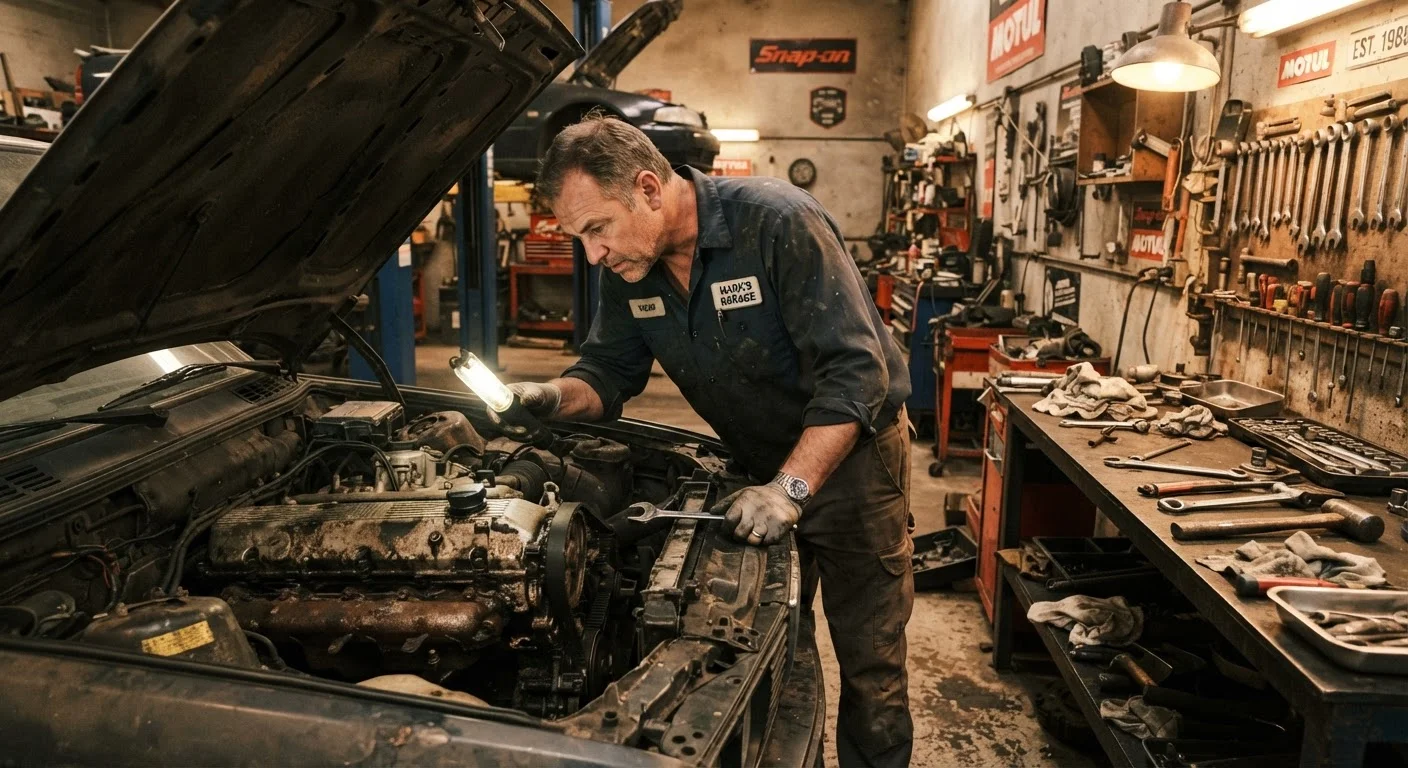
Photo: InsightsChief.com | Your Source Of Trusted Insights editorial
Key Takeaways
- Skipping a small maintenance task rarely eliminates the cost - it typically multiplies it.
- Secondary damage is how deferred maintenance becomes expensive: one neglected part stresses adjacent components.
- Oil changes, coolant flushes, and brake inspections are among the highest-leverage preventive services.
- Repair bills for neglected vehicles can run several times the cost of the maintenance that was avoided.
- Understanding the compounding logic of deferred repairs helps drivers make smarter spending decisions.
How Deferred Maintenance Compounds Into Larger Bills
The financial logic of deferred vehicle maintenance is straightforward but easy to underestimate: components do not wait patiently for service. They continue operating under stress, degrading at an accelerating rate and often pulling adjacent parts into failure. A $60 oil change deferred for six months does not simply become a $60 oil change plus mild inconvenience. In a worst-case scenario, thickened or depleted oil accelerates friction, scoring cylinder walls and bearings, and the eventual repair can run into thousands of dollars.
This pattern repeats across nearly every maintenance category. The brake pad inspection skipped this season becomes rotor replacement next season - a job that costs two to four times more. The coolant flush deferred for a second year allows corrosion inhibitors to break down, quietly attacking water pump seals and radiator walls. Understanding this compounding dynamic is the first step toward making maintenance decisions that are genuinely cost-effective, not just cheap in the moment.
3-5×
Cost multiplier for neglected brake service
Industry repair data consistently shows that worn pads allowed to contact rotors result in rotor replacement costs that are three to five times the price of a timely pad swap.
$4,000+
Average engine repair from severe oil neglect
Repair estimates from national automotive service providers indicate that oil-related engine damage - including bearing and cylinder wear - frequently exceeds $4,000 when neglect is severe.
46%
Of vehicles found to need immediate service at inspection
A multi-year survey by the Car Care Council found that approximately 46% of vehicles inspected at community car care events had one or more maintenance items requiring immediate attention.
The Most Consequential Services to Keep Current
Not all maintenance items carry equal risk when deferred. The following categories represent the highest-leverage services - those where timely completion prevents disproportionately expensive downstream damage.
- Engine oil and filter: Oil lubricates and cools internal engine components. As it degrades, its ability to prevent metal-on-metal contact diminishes. Extended intervals beyond manufacturer specifications increase the risk of accelerated wear and, eventually, engine failure.
- Coolant system service: Coolant contains corrosion inhibitors that break down over time. Neglecting coolant exchanges can lead to internal corrosion, water pump failure, and in severe cases, overheating that warps cylinder heads - a repair that can exceed $1,500.
- Transmission fluid: Automatic and manual transmissions rely on clean fluid to manage heat and lubrication. Skipping this service can accelerate clutch and gear wear, with full transmission rebuilds ranging from $1,800 to $3,500 or more.
- Timing belt or chain inspection: On interference engines, a failed timing belt can cause catastrophic internal damage. Replacement at the manufacturer-specified interval is far less expensive than the engine repair that follows a failure.
- Brake system inspections: Worn pads that contact rotors metal-to-metal can require rotor replacement or, in extreme cases, caliper damage - multiplying a simple pad swap into a comprehensive brake job.
Staying current with these services is not about perfection - it is about avoiding the repair multiplier that deferred maintenance reliably produces. The car maintenance fundamentals hub offers additional guidance on service intervals and what each task protects.
Real Scenarios: What Skipping Actually Costs
Abstract percentages are less persuasive than concrete examples. The following scenarios illustrate how typical deferrals translate into real repair expenses.
These scenarios are representative of common outcomes but actual costs vary by vehicle make, model, age, local labor rates, and the specific extent of damage. A qualified mechanic can assess the current condition of your vehicle and flag risks before they escalate.
The Broader Pattern: Deferred Maintenance Across Ownership
The compounding dynamic of deferred vehicle maintenance mirrors patterns seen in other domains of household ownership. The costs that follow deferred home maintenance follow the same logic: a small ignored problem - a slow drain, a minor roof leak - becomes structurally significant once secondary damage accumulates. Households that recognize this pattern across categories are better positioned to allocate maintenance budgets proactively rather than reactively.
There is also a cognitive dimension worth noting. Drivers often anchor their perception of a car's condition to how it feels rather than what the service schedule says. A vehicle that drives smoothly today can still be accumulating hidden wear that will surface as a repair bill months later. Relying on manufacturer service intervals rather than subjective feel is a more reliable approach - one that common ownership cost assumptions frequently overlook.
Use Your Owner's Manual as a Budget Tool
This article provides general educational information about vehicle maintenance and is not a substitute for advice from a qualified mechanic familiar with your specific vehicle.
Frequently Asked Questions
The content provided on our blog site traverses numerous categories, offering readers valuable and practical information. Readers can use the editorial team’s research and data to gain more insights into their topics of interest. However, they are requested not to treat the articles as conclusive. The website team cannot be held responsible for differences in data or inaccuracies found across other platforms. Please also note that the site might also miss out on various schemes and offers available that the readers may find more beneficial than the ones we cover.