
Your Car's Maintenance Schedule, Explained

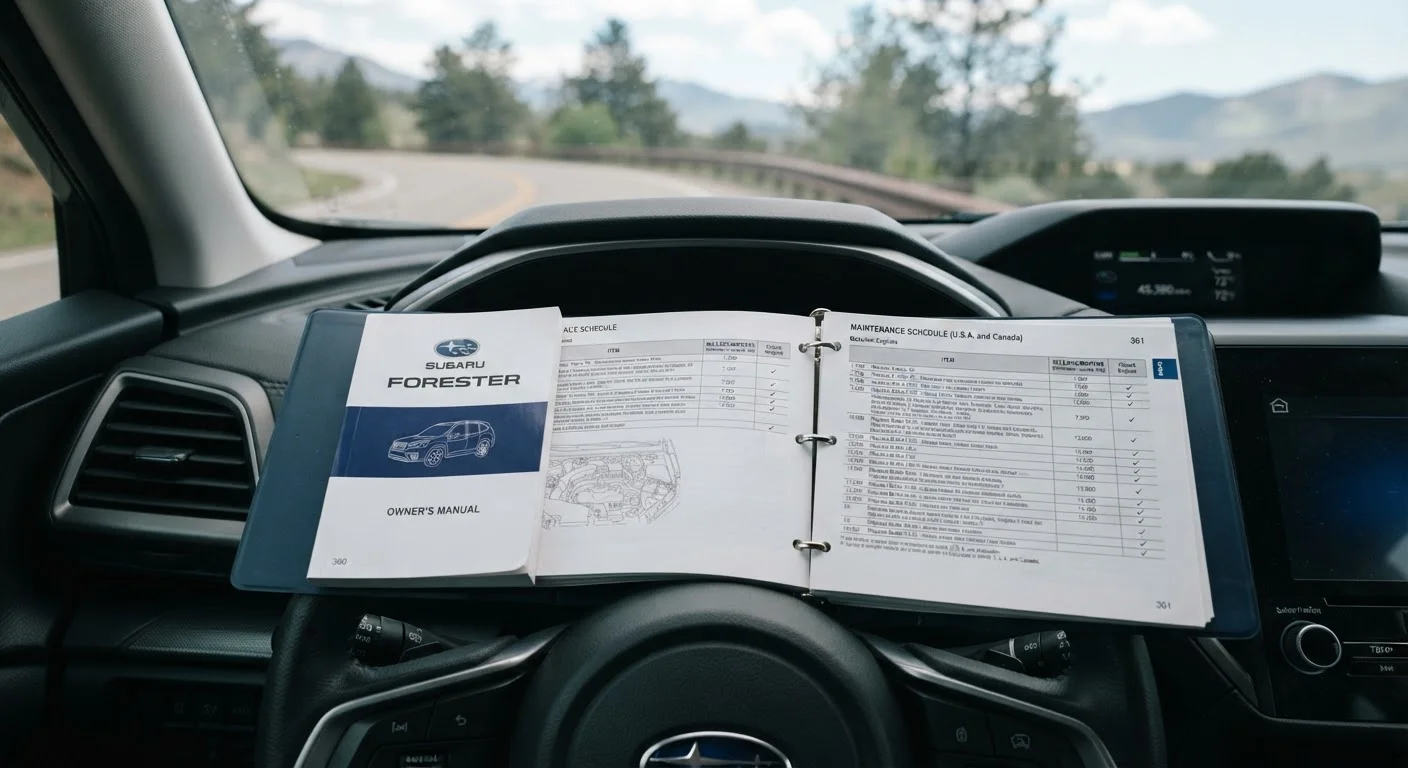
Photo: InsightsChief.com | Your Source Of Trusted Insights editorial
Key Takeaways
- Your owner's manual - not the shop's sticker - is the definitive source for your maintenance intervals.
- Many drivers qualify for the 'severe duty' schedule due to short trips, heavy traffic, or extreme climates.
- Skipping scheduled maintenance can void powertrain warranties and lead to repairs far costlier than the service itself.
- Keeping a written or digital service log protects your car's resale value and supports warranty claims.
- Time-based intervals matter as much as mileage - oil degrades even when a car sits unused.
What a Maintenance Schedule Actually Contains
Flip to the maintenance section of any owner's manual and you will find a table organizing service tasks by mileage and time intervals. Common items include engine oil and filter changes, tire rotations, air filter replacement, brake inspections, cabin air filter swaps, spark plug replacement, coolant flushes, transmission fluid service, and belt or timing chain inspection. Each item has a specific interval - for example, tire rotations every 5,000-7,500 miles, or spark plugs every 30,000-100,000 miles depending on the plug type.
Two things drive those intervals: mechanical wear rates and fluid degradation timelines. Engine oil, for instance, breaks down chemically under heat and pressure regardless of how many miles you drive. That is why most schedules specify an interval in both miles and months - whichever comes first applies. A car driven only 3,000 miles in a year may still need an oil change based on the time interval alone.
$0.09/mile
Average vehicle maintenance cost per mile
The American Automobile Association (AAA) estimates routine maintenance averages around $0.09 per mile for a typical sedan, underlining that consistent upkeep is far less expensive than deferred repairs.
7,500-10,000 mi
Typical modern synthetic oil change interval
Many current vehicle manufacturers recommend full-synthetic oil changes in this range, a significant extension from the traditional 3,000-mile guideline that applied to older engines and conventional oil.
Up to $5,000+
Potential cost of a neglected transmission replacement
Industry repair data consistently show that deferred transmission fluid maintenance is among the leading causes of premature transmission failure, one of the most expensive repairs a vehicle owner can face.
Normal vs. Severe Duty: Which Schedule Is Yours?
Most owner's manuals publish two parallel schedules. The normal schedule assumes relatively mild operating conditions - steady highway miles, temperate climate, light loads. The severe (sometimes called "special operating conditions") schedule applies to harder use and calls for shorter service intervals.
Conditions that qualify as severe duty include: frequent trips under five miles, stop-and-go city traffic, towing or hauling heavy loads, driving in dusty or off-road environments, and operating in extreme heat or cold. The California Air Resources Board and many automakers note that short-trip city driving is actually more stressful on engine oil than sustained highway driving, because the engine never fully warms up to burn off condensation and fuel dilution.
If your daily commute involves heavy traffic or short hops, you likely fall under the severe schedule - even if your car never sees a dirt road. Review both tables in your manual and apply the one that honestly matches your driving patterns.
How to Read Your Owner's Manual Like a Pro
Owner's manuals can feel intimidating, but the maintenance section follows a consistent structure once you know what to look for. Most present a mileage grid - columns for key intervals (such as 5K, 10K, 15K, 30K miles) and rows for each service item, with checkmarks or codes indicating what is due at each point.
Pay attention to footnotes. Manufacturers often add conditions - for example, "inspect more frequently if driven in dusty conditions" or "replace earlier under severe schedule." These footnotes are not boilerplate; they carry real guidance relevant to your situation.
If your manual is lost, the automaker's official website almost always offers a downloadable PDF version. Some manufacturers also embed maintenance reminders in the vehicle's information display, but treat those as alerts, not replacements for reading the full schedule yourself.
For guidance on which scheduled tasks you can reasonably handle at home versus which warrant a professional, see our guide to DIY vs. shop decisions.
“The owner's manual is the most underused document in most people's glove compartments. It contains precisely what the engineers who built that engine determined it needs to last - and most drivers never open it.”
— Rich White, Executive Director, Car Care Council
Staying on Schedule Without Overspending
Deferred maintenance is rarely a money-saver. A skipped transmission fluid service at 60,000 miles can cost $100-$150; a transmission replacement can run $3,000-$5,000 or more. The math consistently favors keeping up with the schedule.
That said, there are legitimate ways to manage costs. Grouping services that fall due at the same interval - say, an oil change and tire rotation together - reduces the number of shop visits and associated labor fees. Maintaining a service log also gives you leverage: documented history helps mechanics diagnose issues faster and demonstrates to future buyers that the vehicle was cared for. See our article on why keeping maintenance records matters for practical ways to build that history.
For drivers aiming to push well past 100,000 miles, consistent adherence to the schedule is the foundation. Our guide to running a car reliably to 200,000 miles details the additional steps that separate long-lived vehicles from early failures.
New to car ownership and unsure where to start? Our first-time owner's maintenance primer walks through every routine task and what happens if it is skipped.
Frequently Asked Questions
The content provided on our blog site traverses numerous categories, offering readers valuable and practical information. Readers can use the editorial team’s research and data to gain more insights into their topics of interest. However, they are requested not to treat the articles as conclusive. The website team cannot be held responsible for differences in data or inaccuracies found across other platforms. Please also note that the site might also miss out on various schemes and offers available that the readers may find more beneficial than the ones we cover.