
Container Gardening: Growing Food and Flowers Without a Yard

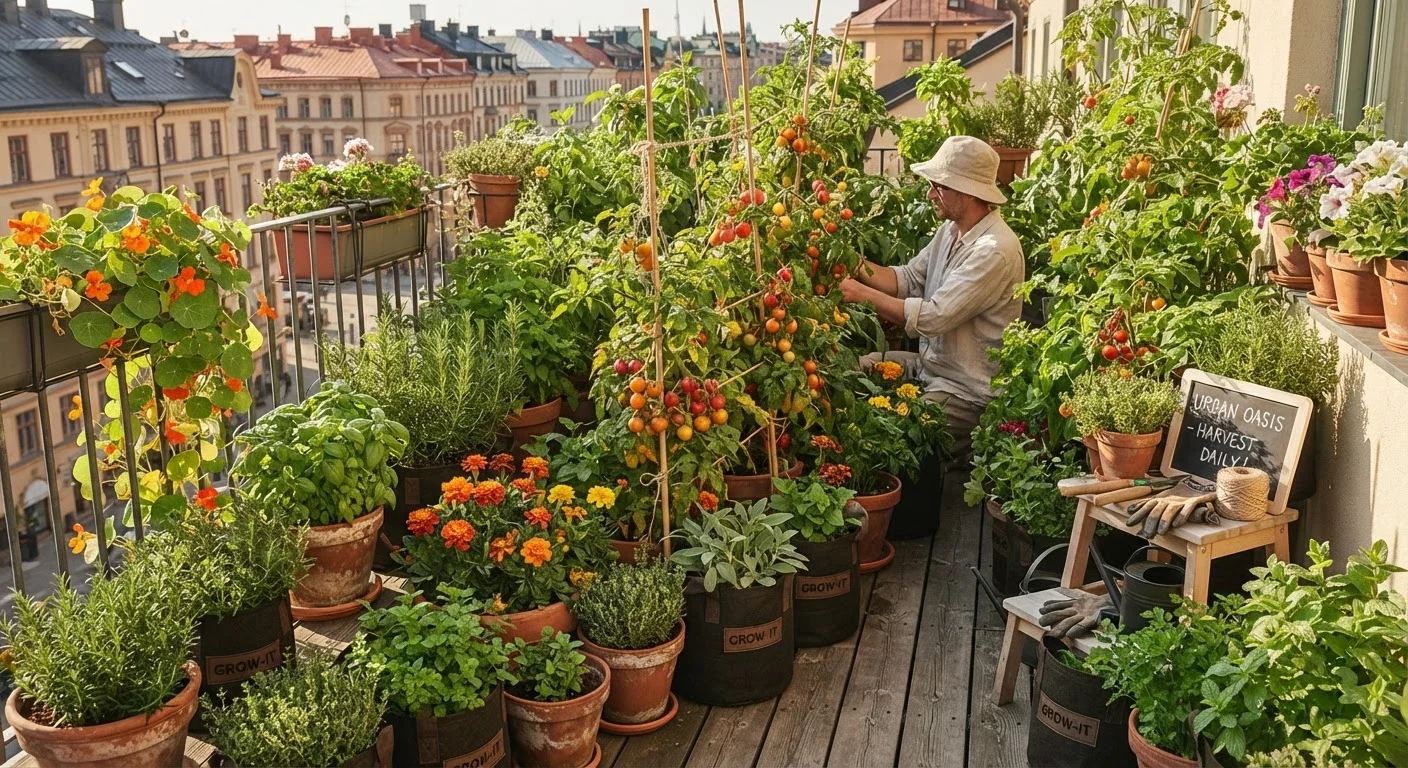
Photo: InsightsChief.com | Your Source Of Trusted Insights editorial
Key Takeaways
- Almost any outdoor space - balcony, porch, or patio - can support a productive container garden.
- Container size, drainage holes, and the right soil mix are the three most critical setup factors.
- Vegetables like lettuce, herbs, and cherry tomatoes are well-suited to container growing.
- Containers dry out faster than ground soil, so consistent watering is essential.
- Starting from seed saves money; transplants give beginners a faster, more reliable start.
Why Container Gardening Works for Small Spaces
Not having a yard is no longer a barrier to growing your own food or cultivating flowers. Balconies, patios, stoops, and even sunny windowsills can all support meaningful plant growth when you work with containers instead of the ground. Container gardening gives you precise control over soil quality, drainage, and placement - advantages that in-ground gardeners often have to work hard to achieve.
If you've weighed your options and are wondering how containers compare to other setups, our guide on raised beds vs. in-ground gardening covers the key tradeoffs in detail. For small-space households, containers are often the most flexible and budget-friendly path.
What you will need
What You'll Need Before You Start
Getting your container garden off the ground requires a handful of affordable supplies. Quality choices in containers and growing medium pay dividends all season - don't cut corners here.
Containers (pots, grow bags, or planter boxes)
Holds soil and plants; size determines what you can grow and how much water it retains.
Quality potting mix
Provides a loose, well-draining growing medium suited to the confined root environment of containers.
Perlite
Blended into potting mix to improve drainage and aeration, especially in larger containers.
Slow-release granular fertilizer
Supplies steady nutrition throughout the growing season to compensate for the limited soil volume.
Watering can or hose with spray nozzle
Delivers water gently without dislodging soil or damaging seedlings.
Wheeled plant caddies
Allows large, heavy containers to be repositioned easily to follow sunlight or shelter plants from harsh weather.
Stakes or small cages
Supports upright plants like tomatoes and peppers as they grow taller and heavier.
For soil amendment ideas on a budget, consider composting kitchen scraps to enrich your mix at low cost. Even apartment dwellers can maintain a small vermicompost bin.
Step-by-Step: Setting Up Your Container Garden
Follow the steps below to put together a container garden that's productive from the start. Each decision - from container selection to plant spacing - builds on the one before it.
Choose the right container size
Match container size to plant type. As a general guide: herbs need at least a 6-inch pot, lettuce and greens do well in a 12-inch wide, 6-inch deep planter, and tomatoes or peppers need at least a 5-gallon container. Bigger is almost always better - larger volumes of soil hold moisture longer and give roots more room to develop.
Confirm adequate drainage
Every container must have drainage holes at the bottom. Without them, water pools around roots and causes rot. If a pot you like lacks holes, drill several yourself using a standard drill bit sized for your material (plastic, wood, or unglazed ceramic). Avoid placing a solid saucer underneath - if you use a saucer, empty it after heavy watering.
Fill with the right growing medium
Do not use garden or backyard soil in containers. It compacts heavily in pots, cutting off oxygen to roots. Use a quality potting mix (sometimes labeled "potting soil" or "container mix") formulated to stay loose and drain well. For vegetables, choose a mix with added compost for fertility. You can also blend in perlite (a lightweight volcanic mineral) at roughly 20% by volume to improve drainage further.
Plant at the correct depth and spacing
Follow the spacing guidance on seed packets or transplant tags. Crowding plants in a container reduces airflow and competition for nutrients. For transplants, plant at the same soil depth they were growing in their nursery pot, except for tomatoes, which can be planted deeper to encourage additional root development along the buried stem.
Position containers for maximum light
Place containers where they'll receive the most direct sunlight your space allows. South- and west-facing exposures typically offer the most sun in the Northern Hemisphere. Use wheeled plant caddies to reposition heavier containers as the season shifts - this is one of container gardening's biggest advantages over fixed garden beds.
Water thoroughly at planting and establish a routine
After planting, water deeply until water flows freely from the drainage holes. This settles the soil and ensures full moisture contact with roots. Going forward, check containers daily during warm weather - they dry out significantly faster than ground soil, especially smaller pots and dark-colored containers in direct sun.
Choosing What to Grow
The most productive container plants share a few traits: compact growth habits, high yield relative to space, and tolerance for the slight stress of confined roots. Edible options that tend to perform well include:
- Herbs: Basil, parsley, chives, mint (keep mint in its own pot - it spreads aggressively), and cilantro thrive in smaller 6-8 inch containers.
- Salad greens: Lettuce, spinach, and arugula grow quickly in shallow trays and can be harvested in successive cuts.
- Cherry tomatoes: Compact or "patio" varieties do well in 5-gallon or larger containers with a simple stake or cage.
- Peppers and eggplant: Both adapt well to containers in warm climates with full sun.
- Radishes and green onions: Fast-growing, minimal-space crops ideal for beginners.
For flowers, marigolds, nasturtiums, and pansies work well in containers and can double as companion plants that may deter certain pests. See our article on companion planting for a grounded look at which pairings have genuine benefits.
On a tight budget, starting from seed is typically less expensive than buying transplants. Our comparison of seeds vs. transplants can help you decide which approach fits your timeline and skill level.
Drought-Tolerant Varieties Save Water and Effort
Ongoing Care and Troubleshooting
Container plants have slightly different care needs than in-ground crops. Because their root zone is limited, they depend entirely on you for nutrients and water.
- Watering: Check containers daily during warm weather. Stick your finger an inch into the soil - if it's dry, water thoroughly until it drains from the bottom holes.
- Fertilizing: Container soil loses nutrients faster than garden beds. A balanced, slow-release granular fertilizer applied at planting, supplemented with a liquid feed every two to three weeks during the growing season, keeps plants vigorous.
- Sunlight: Most vegetables need six or more hours of direct sun daily. Track how sunlight moves across your space before deciding where to place containers.
- Pest monitoring: Inspect leaves regularly - especially undersides - for aphids, spider mites, and whiteflies. Catch infestations early, when they're easiest to address without chemicals.
If your plants are growing but not producing as expected, many of the causes are the same as for in-ground gardens. Our piece on why vegetable gardens underperform walks through the most common fixable problems.
The content provided on our blog site traverses numerous categories, offering readers valuable and practical information. Readers can use the editorial team’s research and data to gain more insights into their topics of interest. However, they are requested not to treat the articles as conclusive. The website team cannot be held responsible for differences in data or inaccuracies found across other platforms. Please also note that the site might also miss out on various schemes and offers available that the readers may find more beneficial than the ones we cover.