
Starting a Garden From Seed vs. Buying Transplants

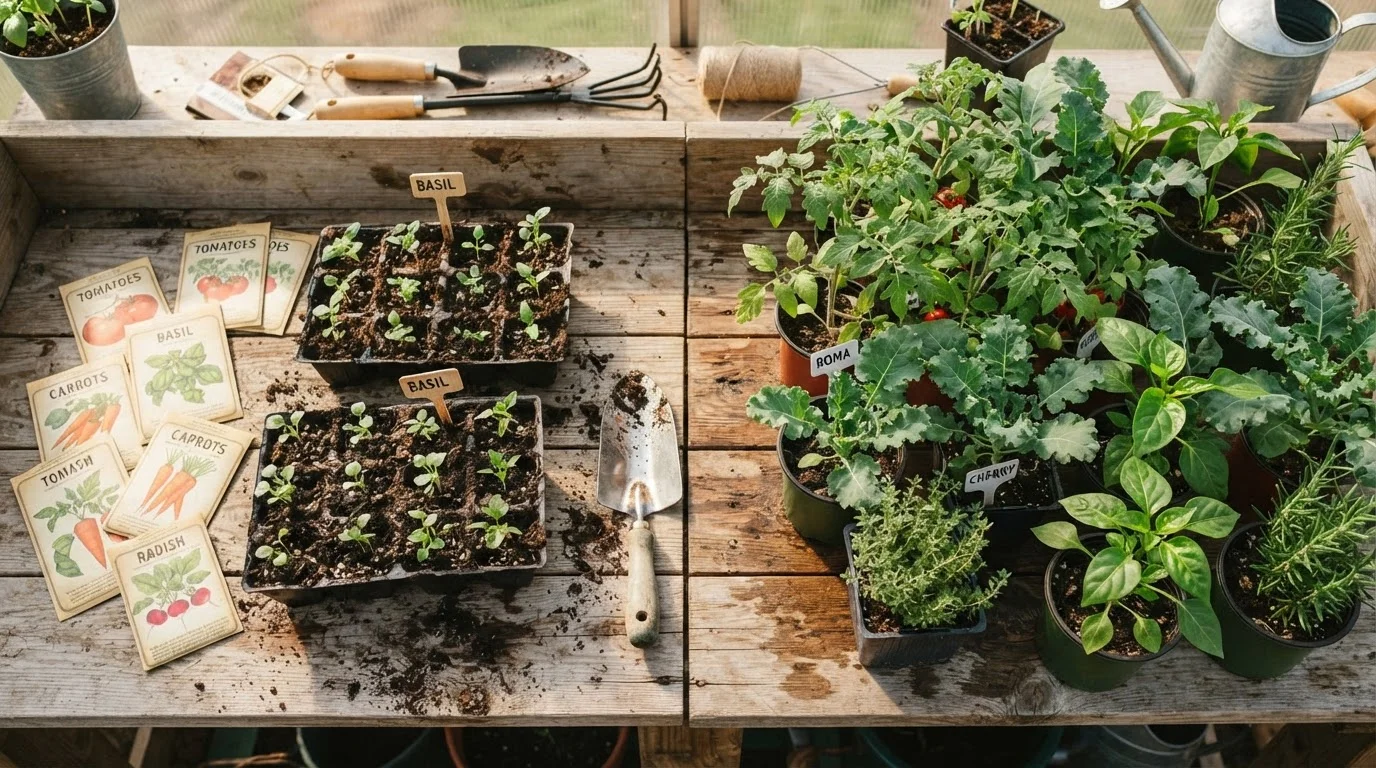
Photo: InsightsChief.com | Your Source Of Trusted Insights editorial
Key Takeaways
- Starting from seed costs significantly less per plant but requires 6-12 weeks of lead time and more active care.
- Transplants shorten the growing timeline and suit beginners or time-pressed gardeners, but cost more per plant.
- Some crops - like carrots, beans, and peas - perform best when direct-seeded rather than transplanted.
- Seeds offer far greater variety than what's typically available at nurseries.
- Mixing both methods is a practical strategy for most household gardens.
Seeds cost a fraction of transplant prices
A single seed packet typically yields dozens of plants for a few dollars, making seeds the clear choice for gardeners trying to cover a large growing area on a limited budget.
Far greater variety available from seed
Seed catalogs offer hundreds of heirloom and specialty varieties that nurseries simply don't stock as transplants - a significant advantage for gardeners who want specific flavors or colors.
Transplants dramatically shorten time to harvest
A tomato transplant that's already 6 weeks old when you buy it can be in the ground and producing fruit weeks earlier than a seed started at the same time as planting day.
Transplants reduce the risk of early failure
Pre-grown seedlings have already cleared the most vulnerable germination stage, making them more forgiving for beginners who are still learning to manage watering and temperature.
Seeds allow more control over growing conditions
Starting your own seeds means you can choose the soil mix, avoid pesticide exposure common in commercial transplants, and time planting to your exact local frost dates.
Transplants work well in short growing seasons
In northern regions where frost-free windows are 90 days or fewer, transplants provide the head start needed to reach maturity before the first autumn frost.
Seeds demand 6-12 weeks of indoor lead time
Slow-maturing crops like peppers and eggplant need to be started indoors well before the last frost, which requires planning ahead and a reliable indoor growing setup.
Transplants cost significantly more per plant
At $3-$6 per plant at many nurseries, buying transplants for a mid-sized garden can easily add up to $50-$100 or more, compared to a few dollars for a full packet of seeds.
Seed starting requires equipment and space
Trays, grow lights, heat mats, and potting mix represent a real upfront investment, and not every household has a suitable shelving area to dedicate to weeks of seedling care.
Transplant selection is limited to what nurseries carry
Most garden centers stock only a handful of popular varieties, meaning gardeners interested in heirloom or regionally adapted cultivars may not find what they want as transplants.
Seedlings are vulnerable to damping-off and pests
Damping-off - a fungal condition that collapses seedlings at the soil line - is a common setback for indoor seed starters, particularly in humid or poorly ventilated spaces.
Transplant shock can set plants back significantly
If transplants aren't gradually hardened off before going into the ground, root disturbance and environmental stress can cause wilting, stunted growth, or complete plant loss.
The Core Trade-Off: Cost vs. Convenience
The seed-vs.-transplant decision comes down to a straightforward exchange: seeds ask for more of your time and attention; transplants ask for more of your money. Neither trade is inherently bad - it depends on what your household can realistically offer this season.
A single packet of tomato seeds typically yields 20-50 plants for a few dollars, while individual transplants at a nursery commonly run $3-$6 each. For a gardener planning to grow a dozen tomato plants, that cost gap is meaningful on a tight budget. On the other hand, transplants arrive already hardened and weeks ahead in development, which matters enormously in regions with short growing windows.
If you're still figuring out your overall garden layout, the First-Time Gardener's Roadmap walks through planning decisions that will shape whether seeds or transplants make more sense for your setup.
Advantages and Disadvantages at a Glance
Before diving into specific scenarios, it helps to see both sides clearly. Starting from seed and buying transplants each carry distinct trade-offs across cost, effort, timing, and plant selection.
Seeds cost a fraction of transplant prices
A single seed packet typically yields dozens of plants for a few dollars, making seeds the clear choice for gardeners trying to cover a large growing area on a limited budget.
Far greater variety available from seed
Seed catalogs offer hundreds of heirloom and specialty varieties that nurseries simply don't stock as transplants - a significant advantage for gardeners who want specific flavors or colors.
Transplants dramatically shorten time to harvest
A tomato transplant that's already 6 weeks old when you buy it can be in the ground and producing fruit weeks earlier than a seed started at the same time as planting day.
Transplants reduce the risk of early failure
Pre-grown seedlings have already cleared the most vulnerable germination stage, making them more forgiving for beginners who are still learning to manage watering and temperature.
Seeds allow more control over growing conditions
Starting your own seeds means you can choose the soil mix, avoid pesticide exposure common in commercial transplants, and time planting to your exact local frost dates.
Transplants work well in short growing seasons
In northern regions where frost-free windows are 90 days or fewer, transplants provide the head start needed to reach maturity before the first autumn frost.
Seeds demand 6-12 weeks of indoor lead time
Slow-maturing crops like peppers and eggplant need to be started indoors well before the last frost, which requires planning ahead and a reliable indoor growing setup.
Transplants cost significantly more per plant
At $3-$6 per plant at many nurseries, buying transplants for a mid-sized garden can easily add up to $50-$100 or more, compared to a few dollars for a full packet of seeds.
Seed starting requires equipment and space
Trays, grow lights, heat mats, and potting mix represent a real upfront investment, and not every household has a suitable shelving area to dedicate to weeks of seedling care.
Transplant selection is limited to what nurseries carry
Most garden centers stock only a handful of popular varieties, meaning gardeners interested in heirloom or regionally adapted cultivars may not find what they want as transplants.
Seedlings are vulnerable to damping-off and pests
Damping-off - a fungal condition that collapses seedlings at the soil line - is a common setback for indoor seed starters, particularly in humid or poorly ventilated spaces.
Transplant shock can set plants back significantly
If transplants aren't gradually hardened off before going into the ground, root disturbance and environmental stress can cause wilting, stunted growth, or complete plant loss.
Which Crops Belong in Which Category
Crop type is often the deciding factor regardless of your preference. Some vegetables actively resist transplanting because they grow taproots that are easily damaged - carrots, parsnips, radishes, and beets all fall into this group. Direct seeding is the standard approach for these. Beans, peas, and corn germinate quickly and don't gain much from a head start indoors, so buying transplants of these crops rarely makes financial or practical sense.
Conversely, slow-maturing crops like peppers, eggplant, and most brassicas (broccoli, cauliflower, cabbage) benefit substantially from the 6-10 week head start that indoor seed starting provides. In northern climates with frost dates that leave only 90-100 frost-free days, starting peppers from seed indoors is practically necessary to reach a harvestable crop before fall.
Crops That Should Always Be Direct Seeded
Tomatoes occupy a middle ground: easy enough to start from seed indoors, widely available as transplants, and forgiving enough that either method works well. They're a good crop to experiment with if you're transitioning from transplants to seed starting for the first time.
If you want to understand why certain crops may have underperformed in past seasons, the common reasons vegetable gardens underperform article covers how timing and transplant stress contribute to poor harvests.
Practical Considerations for Seed Starting Indoors
Successfully starting seeds indoors requires more than just a sunny windowsill. Most vegetable seedlings need consistent soil temperatures between 65°F and 75°F for reliable germination, and a south-facing window often falls short on light intensity, leading to leggy, weak transplants. Supplemental grow lighting - even an inexpensive fluorescent shop light positioned a few inches above seedling trays - makes a measurable difference in seedling quality.
You'll also need to account for hardening off: the process of gradually exposing indoor-started seedlings to outdoor conditions over 7-14 days before planting them in the ground. Skipping this step is a common reason healthy seedlings fail after transplanting.
6-10 weeks
Typical indoor seed-starting lead time for tomatoes and peppers
Most extension service planting calendars recommend starting warm-season crops indoors 6-10 weeks before the average last frost date for your region.
~10-20×
Cost difference between seeds and nursery transplants per plant
When comparing per-plant cost, seeds from a standard packet commonly work out to 10-20 times cheaper than purchasing individual transplants at retail nurseries.
For gardeners without much indoor space, or those gardening in containers, the container gardening guide explains how to adapt both seed starting and transplanting for small-space setups.
Making the Decision for Your Garden This Season
A realistic self-assessment beats any universal rule. Ask yourself three questions: How many weeks before your last frost date are you starting this process? Do you have the indoor space and lighting for seedlings? And are you growing crops that benefit from a head start or ones that prefer direct seeding?
If your answers reveal tight timing or limited indoor setup, lean toward transplants for long-season crops and direct seed the fast-maturing ones. If you have 8-10 weeks before transplant time and can dedicate even a modest shelving area to trays, seed starting for tomatoes, peppers, and brassicas will stretch your garden budget noticeably over a full season.
Whichever direction you go, reviewing the spring garden readiness checklist before the season starts will help you avoid the soil prep and bed layout missteps that undercut both seeds and transplants alike. And if you're weighing how your planting method interacts with bed type, raised bed vs. in-ground considerations covers how soil control and drainage affect seedling establishment.
The content provided on our blog site traverses numerous categories, offering readers valuable and practical information. Readers can use the editorial team’s research and data to gain more insights into their topics of interest. However, they are requested not to treat the articles as conclusive. The website team cannot be held responsible for differences in data or inaccuracies found across other platforms. Please also note that the site might also miss out on various schemes and offers available that the readers may find more beneficial than the ones we cover.