
Unit Price vs. Sticker Price: Which Number Actually Matters?

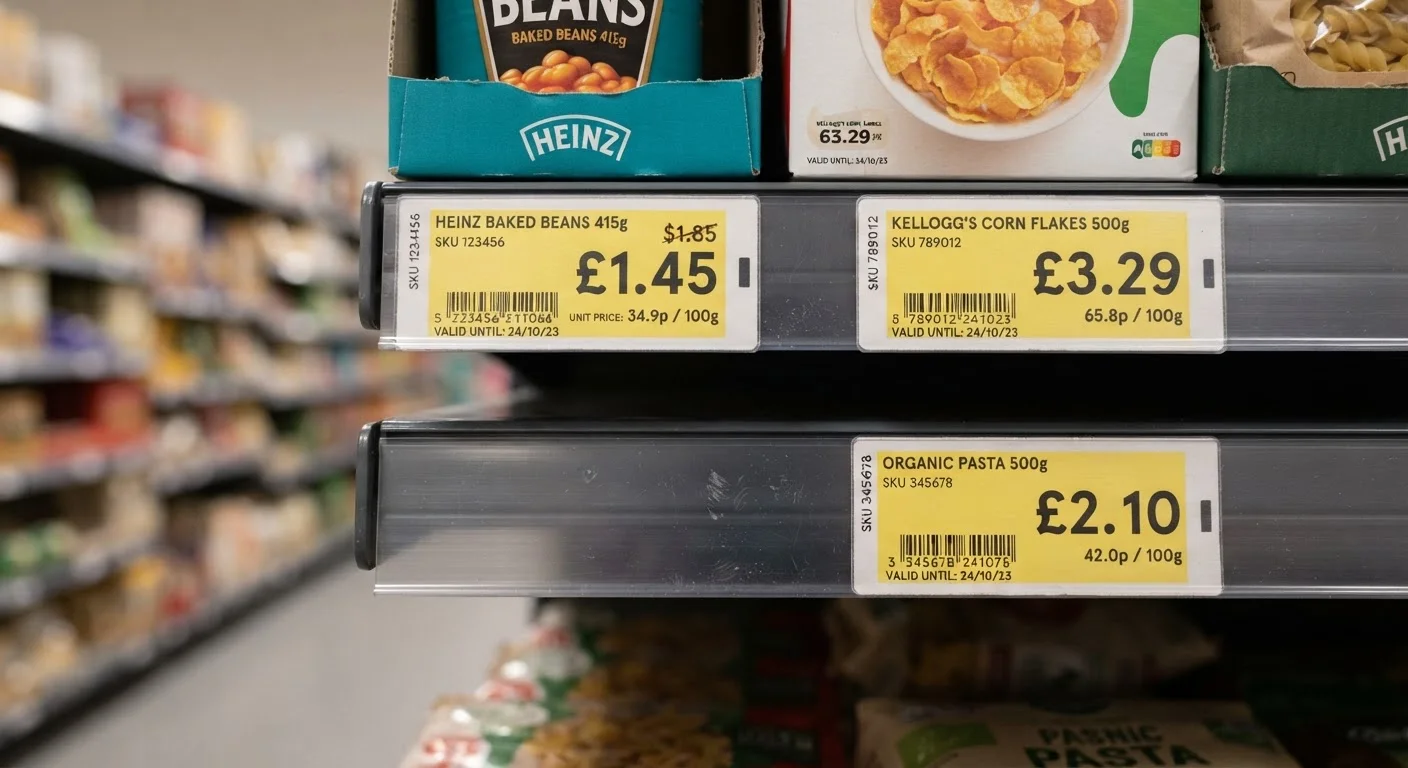
Photo: InsightsChief.com | Your Source Of Trusted Insights editorial
Key Takeaways
- Sticker price tells you what you'll pay; unit price tells you what you're paying per ounce, count, or other standard measure.
- A larger package with a higher sticker price frequently has a lower unit price than a smaller one.
- Unit price comparisons only make sense when you'll actually use the full quantity before it expires or degrades.
- Retailers are required to display unit prices in many US states, though format and placement vary widely.
- Coupons and sales can flip which option has the better unit price - recalculate after any discount.
Two Numbers, Two Different Questions
Every product on a retail shelf carries at least two price signals, even if one is printed in tiny font at the bottom of the tag. The sticker price answers "How much do I pay right now?" The unit price answers "How much am I paying per unit of what I actually get?"
These are genuinely different questions, and answering only one of them leaves money on the table. A 32-ounce bottle of dish soap priced at $6.49 looks cheaper than a 64-ounce bottle at $10.99 - until you calculate that the larger bottle costs roughly 17 cents per ounce versus about 20 cents per ounce for the smaller one. The sticker price is higher; the value is better.
Retailers are well aware that sticker price dominates consumer attention. Understanding why - and how to override that instinct - is a foundational shopping skill. For a broader look at the psychological tactics built into retail pricing, see how anchoring and bundling work.
| Criterion | Sticker Price | Unit Price |
|---|---|---|
| What it measures | Total out-of-pocket cost for one item | Cost per standard unit of quantity |
| Best for | Budgeting checkout totals | Comparing value across sizes and brands |
| Where to find it | Prominently on shelf tag or packaging | Small print on shelf tag; calculate if absent |
| Affected by package size | Yes - larger packages cost more | No - normalizes across package sizes |
| Affected by coupons/sales | Yes - discount reduces sticker price | Yes - recalculate unit price after discount |
| Risk of misleading you | High - larger sizes look expensive | Low - but only if base units match |
| Useful for perishables | Yes - limits quantity waste | Only if you'll use the full quantity |
How to Read and Calculate Unit Price
In the US, many states require retailers to display unit prices on shelf tags, but the standard measure varies - price per ounce, per 100 count, per square foot, per load. Always confirm you're comparing the same unit across products before drawing conclusions.
When a unit price isn't displayed, or you want to verify it, the math is straightforward:
- Find the sticker price.
- Identify the total quantity (weight, volume, count) from the package.
- Divide price by quantity. The result is your unit price.
Where unit price comparisons get complicated: different products use different base units. Paper towels might be listed per sheet or per 100 sheets. Coffee can be priced per ounce of grounds or per serving. Make sure you're dividing by the same denominator before comparing.
35+
US states with unit pricing requirements
According to consumer advocacy research, more than 35 states have some form of unit pricing law for retail food stores, though enforcement and display format vary considerably.
~20%
Typical unit price gap between sizes
Consumer research generally finds that jumbo or bulk sizes carry unit prices roughly 10-25% lower than their smaller counterparts, though the gap varies significantly by category and retailer.
Unit price is especially powerful when coupons are in play. A manufacturer coupon applied to a smaller package can temporarily make that package the unit-price winner. Recalculate after every discount.
When Sticker Price Should Win the Decision
Unit price isn't always the right lens. Three situations exist where the sticker price deserves priority:
- Perishables and expiring goods: If you won't consume the full quantity before spoilage, the waste offsets any per-unit savings. A lower unit price on a bulk package of fresh produce is only a deal if you use it all.
- Storage constraints: Buying three large containers of laundry detergent at a better unit price creates no savings if you have nowhere to store them safely.
- Cash flow limits: A lower unit price on a larger package still requires more cash upfront. When budget is genuinely tight, the sticker price determines what's actually feasible to purchase today.
This connects to the broader concept of cost-per-use, explored in depth in why the cheapest option often costs more. The same logic applies in reverse: the lowest unit price is only a true saving when the product delivers full use.
The same analytical framework that separates sticker price from real cost applies in other categories too. When reviewing financial products, for example, a low headline premium can obscure what coverage actually costs you - a pattern covered in comparing auto insurance quotes.
For a complete framework that goes beyond purchase price entirely, total cost of ownership gives budget-conscious shoppers a structured way to evaluate any major purchase over its full lifetime.
Unit Price Labels Are Not Standardized Nationally
The content provided on our blog site traverses numerous categories, offering readers valuable and practical information. Readers can use the editorial team’s research and data to gain more insights into their topics of interest. However, they are requested not to treat the articles as conclusive. The website team cannot be held responsible for differences in data or inaccuracies found across other platforms. Please also note that the site might also miss out on various schemes and offers available that the readers may find more beneficial than the ones we cover.