
Manufacturer Coupons vs. Store Coupons: Understanding the Difference

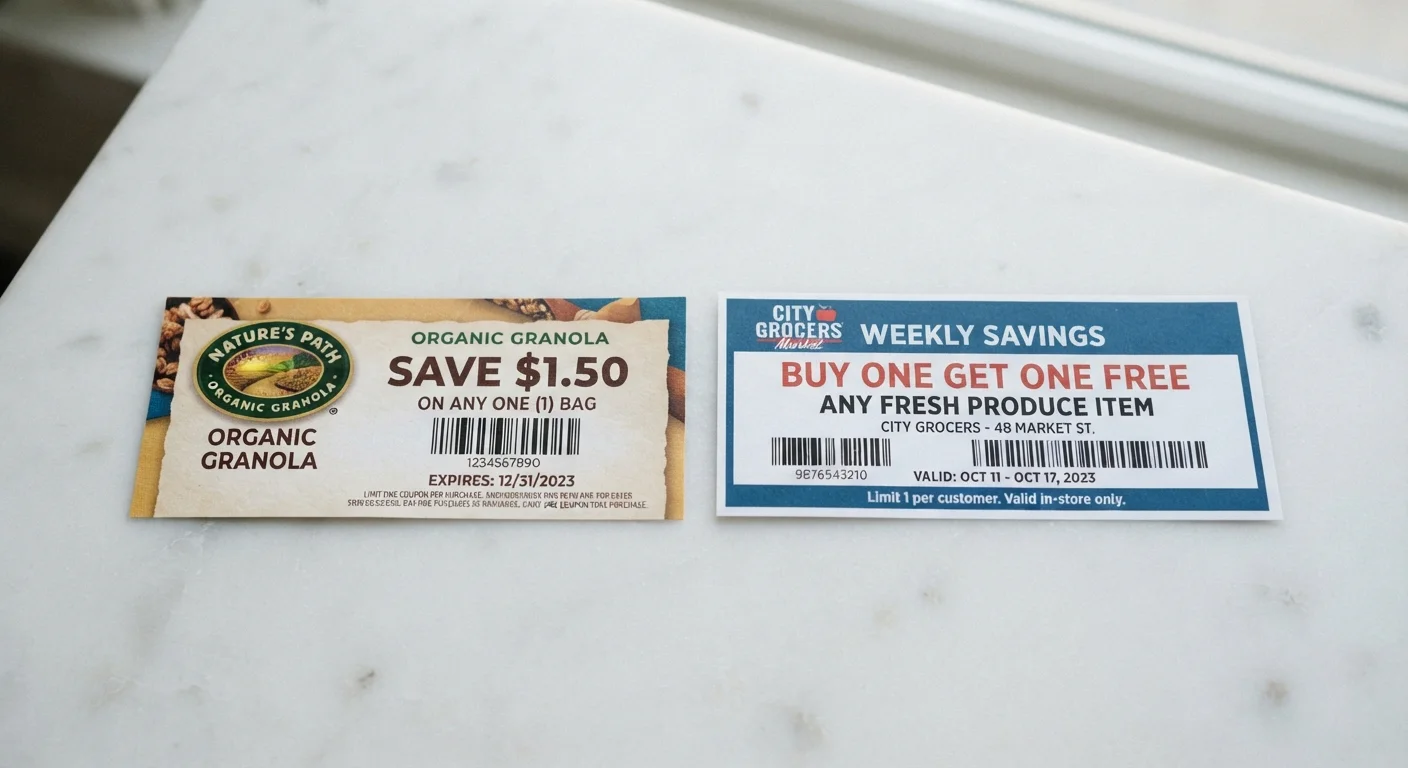
Photo: InsightsChief.com | Your Source Of Trusted Insights editorial
Key Takeaways
- Manufacturer coupons are funded by the brand; store coupons are funded by the retailer.
- Manufacturer coupons are generally accepted at any qualifying retailer; store coupons only work at the issuing store.
- Using one of each on the same item - coupon stacking - is allowed at many stores.
- Both coupon types appear in print and digital formats with varying expiration and restriction terms.
- Reading the fine print on each coupon type prevents checkout surprises and rejected coupons.
Where Each Coupon Type Comes From
The most fundamental difference between manufacturer and store coupons is who creates and funds them. Manufacturer coupons are produced by the company that makes the product - a cereal brand, a cleaning product company, a personal care line. When you redeem one, the retailer submits it to the manufacturer (or a clearinghouse) and receives reimbursement for the face value plus a small handling fee.
Store coupons, by contrast, are created and funded entirely by the retailer. The store absorbs the discount cost as a way to drive traffic, reward loyalty members, or move specific inventory. Because the retailer controls the offer, it only applies at their locations.
Understanding this funding structure explains why the rules differ so significantly between the two. It also explains why stacking them together is often permitted - you're drawing on two separate discount budgets simultaneously. For a deeper look at how that works in practice, see coupon stacking strategies.
~$2.9B
Manufacturer coupons redeemed in the U.S. annually
According to Statista data on U.S. coupon redemption trends, manufacturer coupons represent the significant majority of total coupon value redeemed by consumers.
60%+
Shoppers who use digital coupons regularly
Surveys by the Coupon Bureau and similar organizations have found that a majority of U.S. consumers use digital coupons, including both store and manufacturer formats.
Where to Find Each Type
Manufacturer coupons appear in a variety of places: Sunday newspaper inserts, brand websites, dedicated coupon aggregator sites, brand loyalty apps, and product packaging (sometimes called "peel-off" coupons). Because the manufacturer issues them, the same coupon is theoretically valid wherever that product is sold - though retailer acceptance policies apply.
Store coupons are distributed through the retailer's own channels: weekly circulars, store apps, loyalty program emails, and in-store displays. Grocery chains and drug stores are particularly active in issuing store coupons linked to their rewards programs - clipping a digital store coupon to your loyalty account is now one of the most common formats.
Both coupon types exist in print and digital forms. The format doesn't determine the type - the source does. If you want a side-by-side comparison of how those two formats differ in practice, printable vs. digital coupons covers the key trade-offs.
Rules, Restrictions, and Stacking
Each coupon type carries its own terms. Manufacturer coupons often specify a product size, variety, or quantity - "on any two 12 oz. packages" is a typical phrasing. They may also carry geographic limitations or exclusions for certain retailer types. Store coupons can restrict use to specific days, loyalty members only, or a minimum purchase threshold.
Coupon stacking - applying both a manufacturer coupon and a store coupon to the same item - is where the real savings potential emerges. Many major retailers explicitly allow one of each per item. Some also layer in cashback from rewards programs on top of both discounts, stretching the value further. The key is verifying the store's written coupon policy before checkout; policies are often posted on the retailer's website.
For a plain-language breakdown of coupon terms like "one coupon per transaction" or "not valid with other offers," decoding coupon fine print is a useful companion read.
Check the Store's Coupon Policy First
Practical Identification at a Glance
At a glance, both coupon types can look similar - a discount amount, a product image, an expiration date. The fastest way to identify the type is to look for two things: the issuing name and the redemption language.
- Manufacturer coupon signals: Brand or product company name prominently displayed; text such as "Redeemable at any retailer" or a barcode beginning with the digit 5 (a common identifier in UPC coupon encoding).
- Store coupon signals: Retailer name or logo featured; language restricting use to " only" or tied to a loyalty card number.
When in doubt, ask a cashier or check the store's coupon policy page online before you reach the register. Rejected coupons at checkout are almost always avoidable with a quick pre-shop check. Pairing this habit with smart price comparisons - like understanding unit price vs. sticker price - helps ensure you're applying discounts to genuinely good values, not just discounted prices.
Frequently Asked Questions
The content provided on our blog site traverses numerous categories, offering readers valuable and practical information. Readers can use the editorial team’s research and data to gain more insights into their topics of interest. However, they are requested not to treat the articles as conclusive. The website team cannot be held responsible for differences in data or inaccuracies found across other platforms. Please also note that the site might also miss out on various schemes and offers available that the readers may find more beneficial than the ones we cover.