
Coupon Stacking: How Combining Discounts Can Multiply Your Savings

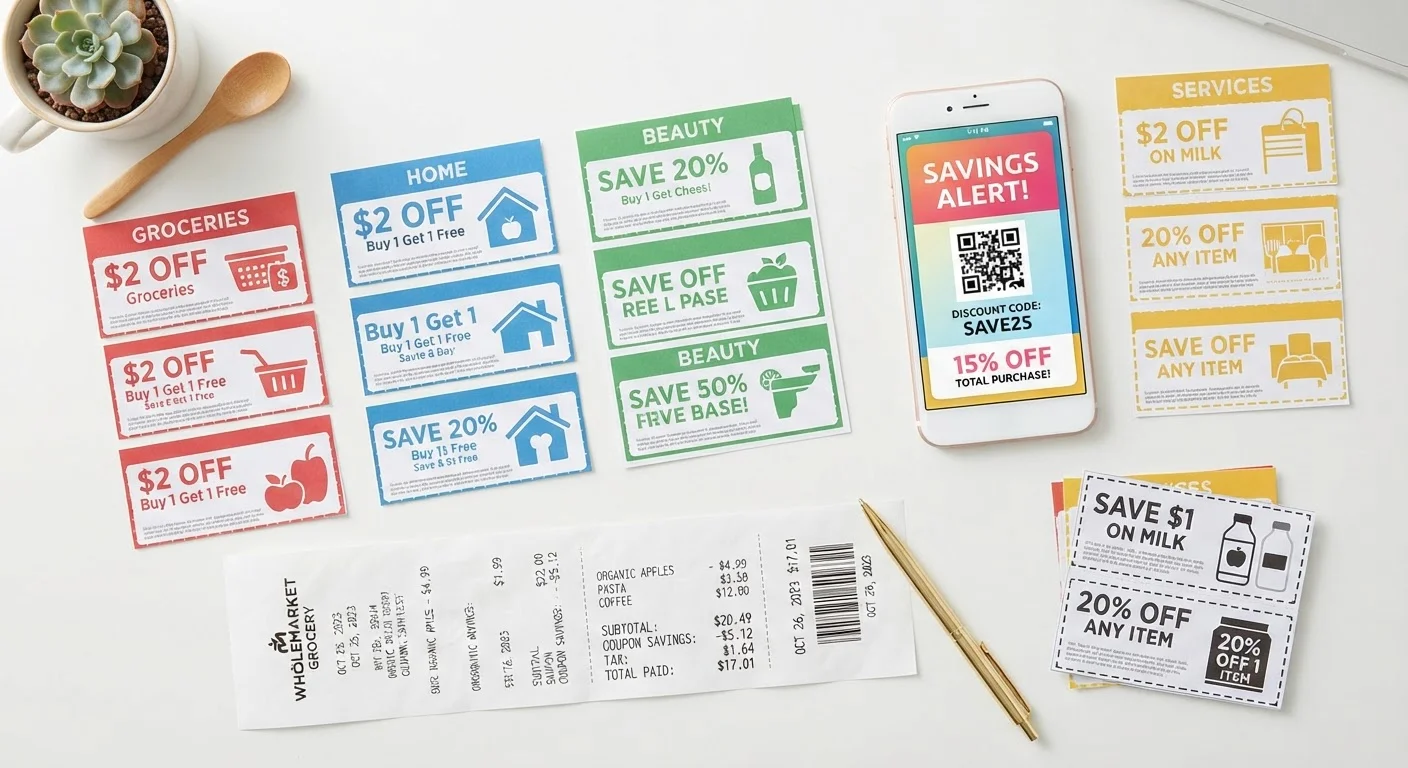
Photo: InsightsChief.com | Your Source Of Trusted Insights editorial
Key Takeaways
- Coupon stacking means applying more than one discount to a single purchase - often a store coupon plus a manufacturer coupon.
- Whether stacking is permitted depends entirely on the retailer's coupon policy, which varies widely.
- Digital coupons, promo codes, loyalty discounts, and cashback apps can often be layered without violating any policy.
- Reading a store's coupon policy before shopping prevents wasted effort and checkout surprises.
- Stacking works best when you plan purchases around genuine needs rather than chasing discounts for their own sake.
What Coupon Stacking Actually Means
Coupon stacking is the practice of applying more than one discount to a single item or order in a single transaction. The most straightforward version - combining a manufacturer coupon with a store coupon on the same product - is explicitly permitted by many major retailers and is common practice among consistent savers.
What stacking is not is a loophole or a workaround. When it works, it works because the retailer's policy allows it and because the two coupon types come from different funding sources. The store absorbs its own coupon cost; the manufacturer reimburses the retailer for the manufacturer coupon. No one is being deceived - the system is functioning as designed.
Stacking becomes more complex - and more powerful - when you factor in loyalty member pricing, cashback apps, and promo codes layered on top of a sale price. Each of these can interact differently depending on the retailer. Understanding the mechanics before you shop is what separates effective stacking from wasted effort. If you want to clear up some persistent misconceptions first, common couponing myths that cost shoppers real money addresses the assumption that stacking is always or never allowed.
Retailer Coupon Policy Page
Confirms exactly which coupon combinations the store permits before you invest time sourcing them.
Store Loyalty App
Loads digital store coupons directly to your account and often reveals member-exclusive pricing that stacks with other offers.
Manufacturer Coupon Source (Sunday inserts, brand websites, coupon apps)
Provides manufacturer coupons that are issued by the brand - not the store - and may be stackable with store coupons.
Cashback App or Browser Extension
Applies a rebate or percentage back on qualifying purchases after checkout, layering on top of coupon savings.
Promo Code Aggregator
Surfaces publicly available promo codes for online retailers so you can identify codes that may combine with a sitewide sale.
Step-by-Step: How to Stack Discounts Effectively
Follow the steps below in sequence. Each builds on the previous, so skipping the policy-reading step in particular will undermine everything that follows.
What you will need
Read the retailer's coupon policy in full
Before sourcing a single coupon, locate and read the store's official coupon policy. Most major retailers publish this on their website under "Help" or "Coupons." Key details to note: whether the store accepts manufacturer coupons, how many coupons are allowed per item or per transaction, whether digital and paper coupons can be combined on the same item, and any exclusions by product category.
Policies change periodically, so check before each major shopping trip rather than relying on a version you read months ago.
Identify which coupon types are stackable at your store
The most widely permitted stack is one manufacturer coupon combined with one store coupon on the same item. Manufacturer coupons are issued by the brand and reimbursed to the retailer by the manufacturer, so retailers generally allow them alongside their own promotions. Common stackable combinations include:
- A paper or digital manufacturer coupon + a store app coupon on the same product
- A loyalty member price (already discounted) + a digital coupon clipped to your account
- A sitewide promo code (e.g., 15% off your order) + a product-specific sale price online
Two manufacturer coupons on one item, or two store coupons on one item, are almost never permitted. Understanding this distinction is the foundation of legal, effective stacking. For a deeper look at how these discount types differ structurally, see how coupons and promo codes actually work.
Clip or collect your coupons before you shop
With your permitted combinations mapped out, source each coupon type separately:
- Store digital coupons: Open the retailer's app, browse available offers, and clip each relevant coupon to your account. They apply automatically when you scan your loyalty card or phone number at checkout.
- Manufacturer coupons: Find these on brand websites, coupon apps, or printed newspaper inserts. For online shopping, these often appear as a separate promo code field.
- Promo codes: For online orders, note the code and the specific terms - many are single-use, category-specific, or exclude sale items.
Organize paper coupons by category or store aisle so you're not searching at the register. For online shopping, keep codes in a notes app sorted by expiration date.
Layer in cashback and loyalty rewards
After your coupons are in order, add a cashback layer. Cashback apps and browser extensions typically operate as a rebate system - they don't affect the price at checkout but return a percentage of your purchase afterward. Because they function separately from the coupon system, they usually do not conflict with store or manufacturer coupon policies.
Similarly, loyalty program points earned on a purchase generally accumulate regardless of what coupons were used, unless a specific promotion excludes coupon transactions. Check the program's terms to confirm.
For a detailed breakdown of how these layers interact, stacking rewards programs alongside coupons covers when the extra coordination is genuinely worth the effort. You can also explore cashback and rewards strategies broadly to find programs that fit your shopping habits.
Apply discounts in the correct order at checkout
The sequence in which discounts apply can affect the final amount, particularly online. A general rule: percentage-off codes apply to the pre-coupon subtotal, so applying a fixed-dollar coupon first may reduce the base amount before a percentage discount is calculated - sometimes resulting in a smaller overall saving. Test the order if the retailer's cart allows it.
In physical stores, the register typically applies coupons automatically in a fixed sequence. Present your loyalty card first, then any paper coupons, so the cashier can verify each one before finalizing the transaction.
[important_callout]Verify your receipt and log what worked
Before leaving the store or closing a browser tab, review your receipt line by line. Confirm every coupon and discount posted correctly. If a coupon didn't apply, address it at customer service immediately - resolving it at the store is almost always faster than contacting support afterward.
Record which combinations worked: store, product type, coupon types stacked, and final discount percentage. This reference becomes increasingly valuable over repeated shopping cycles. For context on how loyalty programs fit into this record, coordinating loyalty programs with coupons offers practical guidance on layering those systems without running into policy conflicts.
Track Savings With a Simple Spreadsheet
For a comprehensive resource covering sourcing strategies, digital tools, and advanced stacking scenarios, the complete playbook for coupons and promo codes covers the full process end to end.
Stacking Is Not Always Allowed - Even When It Works
The content provided on our blog site traverses numerous categories, offering readers valuable and practical information. Readers can use the editorial team’s research and data to gain more insights into their topics of interest. However, they are requested not to treat the articles as conclusive. The website team cannot be held responsible for differences in data or inaccuracies found across other platforms. Please also note that the site might also miss out on various schemes and offers available that the readers may find more beneficial than the ones we cover.