
The Complete Playbook for Finding and Using Coupons and Promo Codes

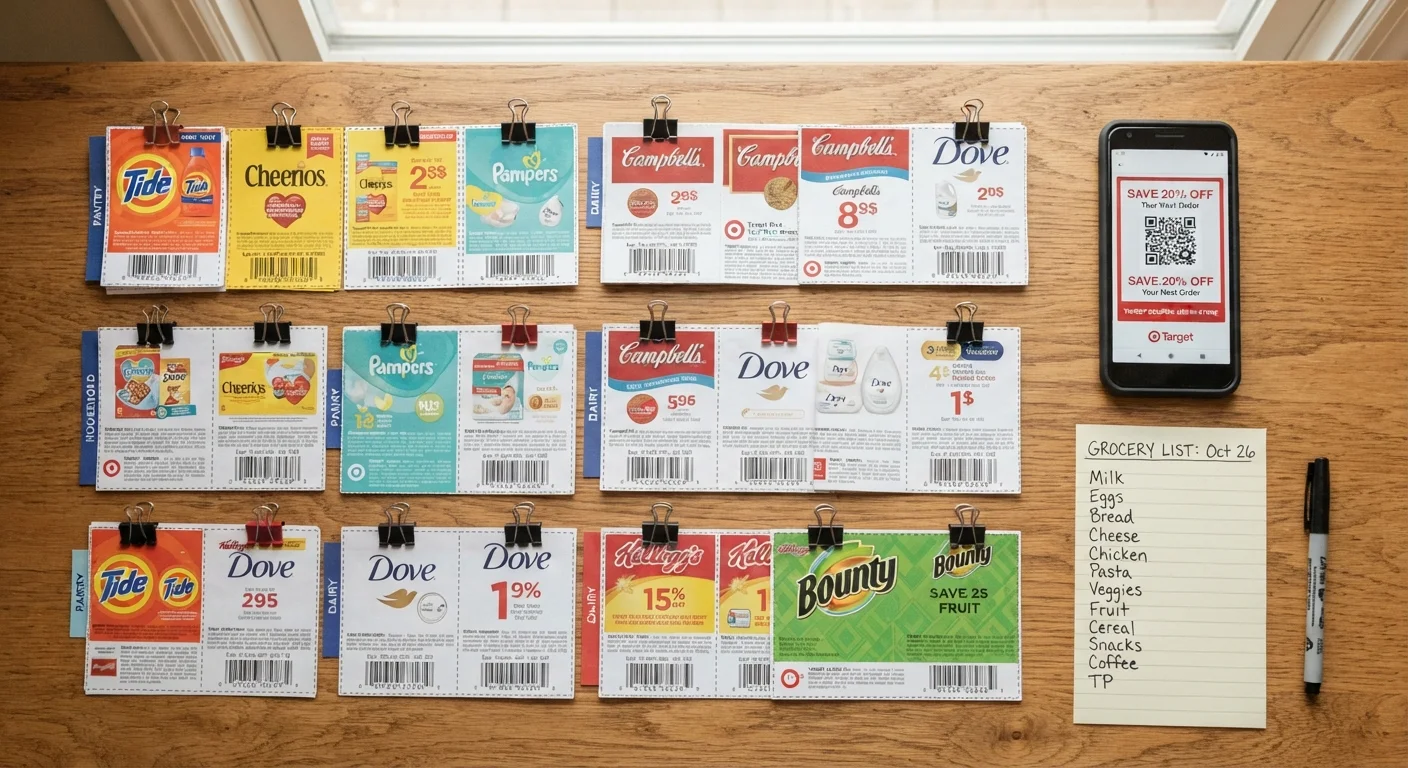
Photo: InsightsChief.com | Your Source Of Trusted Insights editorial
Key Takeaways
- Coupons and promo codes work through distinct redemption mechanics - understanding both types prevents missed savings.
- The most reliable coupon sources include retailer apps, manufacturer sites, browser extensions, and Sunday inserts.
- Stacking store coupons, manufacturer coupons, and cashback is legal at most retailers when done within their stated policies.
- Fine print - expiration dates, minimum thresholds, and exclusions - determines whether a coupon actually saves you money.
- Loyalty program points and member pricing can often be combined with coupons for compounding discounts.
- Organizing coupons by expiration date and category prevents waste and ensures you redeem them before they expire.
Understanding the Coupon Landscape
Coupons have evolved well beyond Sunday newspaper inserts. Today, discounts arrive via retailer apps, email newsletters, browser extensions, and digital wallets - each with its own rules and redemption mechanics. Before building any savings strategy, it helps to understand what distinguishes a manufacturer coupon from a store coupon, and how promo codes differ from traditional coupons.
For a thorough grounding, see how coupons and promo codes actually work, which covers the structural differences and what happens behind the scenes at the point of redemption. That context makes every tactic in this guide easier to apply correctly.
89%
Shoppers who use coupons regularly
According to Statista consumer surveys, the vast majority of US shoppers report using coupons or discount codes in some form.
$1,465
Average annual coupon savings per household
The Coupon Bureau has reported that organized coupon use across grocery and drug categories can generate meaningful annual savings for consistent users.
3-5x
Savings multiplier from stacking strategies
Combining store coupons, manufacturer coupons, and cashback can multiply the effective discount compared to using a single coupon in isolation.
Where to Find Coupons and Promo Codes
Reliable coupon sourcing comes down to knowing which channels produce the highest-quality offers for your spending categories:
- Retailer apps and loyalty portals: Most major grocery and drug chains clip digital coupons directly to your loyalty account. These are often the highest-value offers and require no physical handling.
- Manufacturer websites and email lists: Brands frequently distribute high-value coupons through their own newsletters and printable coupon portals - especially for household staples and personal care.
- Browser extensions: Extensions that automatically surface available promo codes at checkout eliminate the need to search manually. They run in the background and apply codes at the cart stage.
- Sunday newspaper inserts: SmartSource and Procter & Gamble inserts still deliver substantial savings on branded CPG (consumer packaged goods) products, particularly when paired with a sale.
- Cashback platforms: Sites and apps that offer cashback on purchases are another form of discount - and they can often be layered on top of other coupons. Explore the cashback and rewards strategies that work alongside coupon use.
Set a browser bookmark folder for the three or four retailer coupon portals you use most - clip coupons in a single weekly session rather than hunting at checkout time.
Before using a browser extension's auto-applied promo code, verify the code doesn't conflict with an active cashback portal session - some portals void cashback if a third-party code is applied mid-session.
How to Stack Discounts Effectively
Stacking - using more than one discount on a single purchase - is one of the highest-leverage skills in a deal-seeker's toolkit. Most retailers allow a store coupon and a manufacturer coupon to be applied to the same item simultaneously, because each coupon comes from a different funding source. Adding a cashback offer on top of that is a third legal layer at most stores.
The general stacking sequence that maximizes savings: apply the manufacturer coupon first (reducing the item price), then apply the store coupon, then trigger any active cashback offer through your portal or app. For a detailed walkthrough of which combinations are permitted and where, see how coupon stacking works.
Online stacking follows similar logic: apply a promo code at checkout, then confirm your cashback portal is active in the same browser session before completing the purchase.
Reading the Fine Print Before You Redeem
A coupon that looks like a 40% discount can deliver far less - or nothing - if restrictions apply to your specific cart. The most common fine print elements to check before shopping:
- Expiration date: Physical and digital coupons both expire. Digital coupons clipped to loyalty accounts sometimes expire without a visible warning.
- Minimum purchase threshold: Many promo codes require a cart total above a set dollar amount before the discount activates.
- Exclusion categories: Sale items, clearance, alcohol, gift cards, and certain brands are frequently excluded even when not prominently displayed.
- Quantity limits: Most manufacturer coupons specify a maximum number of identical items per transaction.
Decoding these terms before you shop - not at the register - is what separates confident coupon users from frustrated ones. A plain-language guide to coupon terms and fine print covers each of these restrictions in detail.
Layering Loyalty Programs With Coupons
Loyalty programs add a persistent savings layer that complements one-time coupon discounts. Points earned on a purchase can offset future spending, while member pricing on sale events is often stackable with digital coupons. The key is understanding each store's specific stacking policy - not all retailers permit loyalty discounts and external coupons on the same item simultaneously.
Effective coordination means: clip relevant digital coupons to your loyalty account before shopping, check for active member-price events on your list, and confirm the store's policy on combining both. How to coordinate loyalty programs and coupons provides a policy-aware framework for doing this without errors at checkout.
Timing and Organization: The Habits That Compound Savings
Even the best coupons produce no savings if they expire unused or get applied to a non-sale item. Two habits make the difference:
- Sort by expiration, not by category. Coupons expiring soonest should be at the front of your workflow - whether that's a physical accordion folder or a digital folder in your loyalty app. Check expirations weekly.
- Match coupons to sales cycles. Most grocery stores run a 4-6 week sale cycle on major categories. Holding a manufacturer coupon until a category sale drops the shelf price compounds your savings significantly versus using it at full price.
If you're new to building these habits, a no-fluff first month of couponing guide walks through setup without the overwhelm. For broader purchasing strategies across all categories, the smart buying tips hub offers complementary frameworks for value-driven decisions.
The content provided on our blog site traverses numerous categories, offering readers valuable and practical information. Readers can use the editorial team’s research and data to gain more insights into their topics of interest. However, they are requested not to treat the articles as conclusive. The website team cannot be held responsible for differences in data or inaccuracies found across other platforms. Please also note that the site might also miss out on various schemes and offers available that the readers may find more beneficial than the ones we cover.