
Your First Month of Couponing: A No-Fluff Starting Point

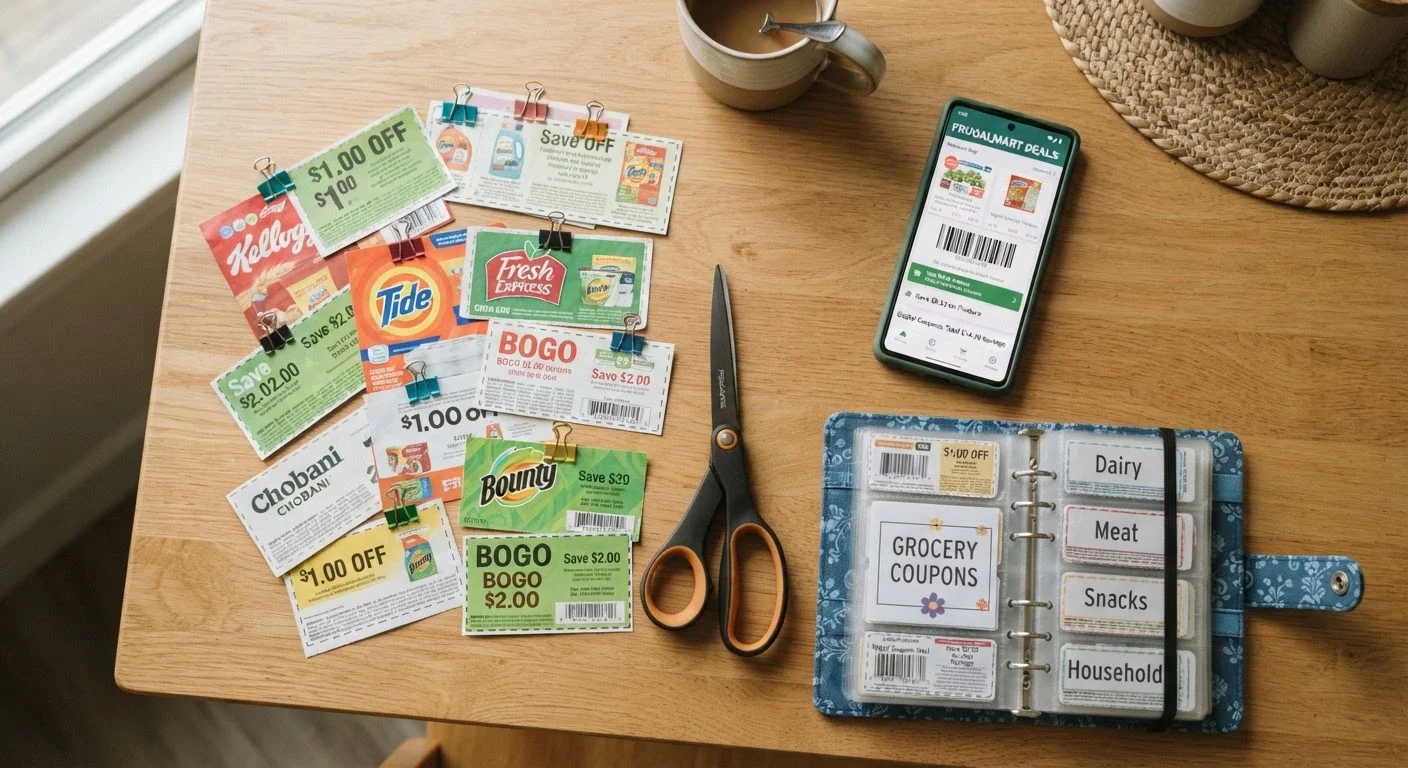
Photo: InsightsChief.com | Your Source Of Trusted Insights editorial
Key Takeaways
- Coupons come from multiple sources - both print and digital - and missing one channel means leaving savings behind.
- Reading coupon fine print prevents wasted trips and declined discounts at checkout.
- A basic filing or app-based system is all most new couponers need to stay organized.
- Stacking a store coupon with a manufacturer coupon is often permitted and can multiply your savings.
- Pairing coupons with a cashback or rewards program compounds your total discount on the same purchase.
- A 15-minute weekly routine is enough to coupon consistently without disrupting your schedule.
Where Coupons Actually Live
New couponers often assume coupons are limited to Sunday newspaper inserts. In practice, coupons circulate across several channels, and using only one means you're skipping most of the available savings.
Here are the primary sources worth checking regularly:
- Retailer loyalty apps: Most major grocery and drugstore chains embed digital coupons directly into their apps. You clip them to your account and they apply automatically at checkout when you scan your loyalty card or phone number.
- Manufacturer websites: Many consumer goods companies offer printable or digital coupons on their own sites, sometimes in amounts larger than what appears in weekly circulars.
- Sunday newspaper inserts: Still a viable source, particularly for grocery and household product coupons. Two common insert types are SmartSource and RetailMeNot Everyday (formerly Valassis).
- Retailer weekly ads: In-ad coupons often require no clipping - just buy the item during the sale period. These are frequently stackable with other coupons.
- Cashback and rewards platforms: Apps and browser extensions that return a percentage of a purchase price as cash or points. While not coupons in the traditional sense, they layer on top of coupons. See the Cashback & Rewards hub for how these programs work alongside clipped discounts.
Manufacturer coupon
A coupon issued by the brand that makes the product, redeemable at any retailer that accepts it. The brand, not the store, reimburses the discount.
Store coupon
A coupon issued by a specific retailer, valid only at that store or chain. The retailer absorbs the discount itself.
Stacking
Using more than one coupon or discount type on the same item in the same transaction, such as combining a manufacturer coupon with a store coupon.
Digital coupon
An electronic discount loaded to a loyalty account or app that applies automatically at checkout when you scan your account - no paper clipping needed.
Loyalty program
A retailer's membership system that tracks your purchases and unlocks personalized discounts, points, or cashback offers tied to your account.
Cashback rebate
A partial refund issued after a qualifying purchase is verified, typically through a mobile app where you submit a photo of your receipt.
Understanding the Fine Print Before You Shop
The most common beginner mistake is collecting coupons without reading their terms. A coupon declined at checkout wastes your time and can leave you short on your budget mid-trip.
The details that matter most:
- Expiration date: Always verify before you shop. Digital coupons in retailer apps sometimes expire mid-week without notice.
- Minimum purchase requirement: Some coupons only activate if your cart reaches a dollar threshold. Know this before you get to the register.
- Eligible sizes and varieties: A coupon for a specific product may exclude certain sizes, scents, or formulations. The excluded varieties are usually listed in small print.
- Limit per transaction or household: Many coupons specify how many times they can be used in a single visit or per household address.
For a complete plain-language walkthrough of coupon terms, see The Anatomy of a Coupon.
Clip Before You Make Your List
A Simple Organization System That Won't Overwhelm You
You don't need a binder with hundreds of plastic sleeves to coupon effectively. For most beginners, one of two lightweight systems works well:
- Digital-only approach
- Keep all coupons in the retailer apps you already use. Before each shopping trip, open the app and clip any relevant offers. This requires no physical storage and suits shoppers who primarily shop at one or two stores.
- Minimal paper system
- Use a simple accordion folder with labeled tabs by category (Produce, Dairy, Household, Personal Care, etc.). Clip only coupons you intend to use within two weeks to prevent folder bloat.
Whichever system you choose, review and purge expired coupons once a week. Letting them accumulate makes it harder to find valid ones when you actually need them.
How to Stack Coupons for Greater Savings
Stacking means applying more than one discount to the same item in the same transaction. It's one of the most effective techniques available to everyday couponers, and many retailers explicitly allow it.
The most common permitted stack is a manufacturer coupon combined with a store coupon for the same product. Because these come from different sources - the brand versus the retailer - using both simultaneously is generally not considered a policy violation. Always verify on the retailer's coupon policy page.
A practical three-layer stack might look like:
- A manufacturer coupon (paper or digital from the brand)
- A store loyalty app coupon for the same item
- A cashback rebate from a separate rebate app, submitted after purchase
Combining coupons with a rewards program is another dimension worth exploring. Your First Rewards Program explains how cashback and points programs work so you can layer them confidently onto your couponing routine.
Stacking Policies Vary - Always Verify
Building a Routine That Sticks
Couponing stops working when it becomes a chore. The goal for your first month is to build a habit light enough to maintain, not to extract maximum savings from every single purchase.
A realistic weekly rhythm:
- Sunday (10 min): Browse the weekly circular and clip relevant digital coupons in your store app before the new week's offers go live.
- Before shopping (5 min): Cross-reference your grocery list against clipped coupons and note any minimum purchase thresholds. Run through a quick mental check - our pre-shopping coupon checklist covers every step.
- After shopping (2 min): Submit any cashback rebates while your receipt is still in hand. Purge expired coupons from your folder or app.
After your first month, you'll have a clearer sense of whether a more involved approach makes sense for your household. If you're curious about scaling up - or staying casual - Extreme Couponing vs. Casual Couponing provides an honest look at both paths.
Frequently Asked Questions
The content provided on our blog site traverses numerous categories, offering readers valuable and practical information. Readers can use the editorial team’s research and data to gain more insights into their topics of interest. However, they are requested not to treat the articles as conclusive. The website team cannot be held responsible for differences in data or inaccuracies found across other platforms. Please also note that the site might also miss out on various schemes and offers available that the readers may find more beneficial than the ones we cover.