
Printable Coupons vs. Digital Coupons: Which Format Saves You More Hassle?

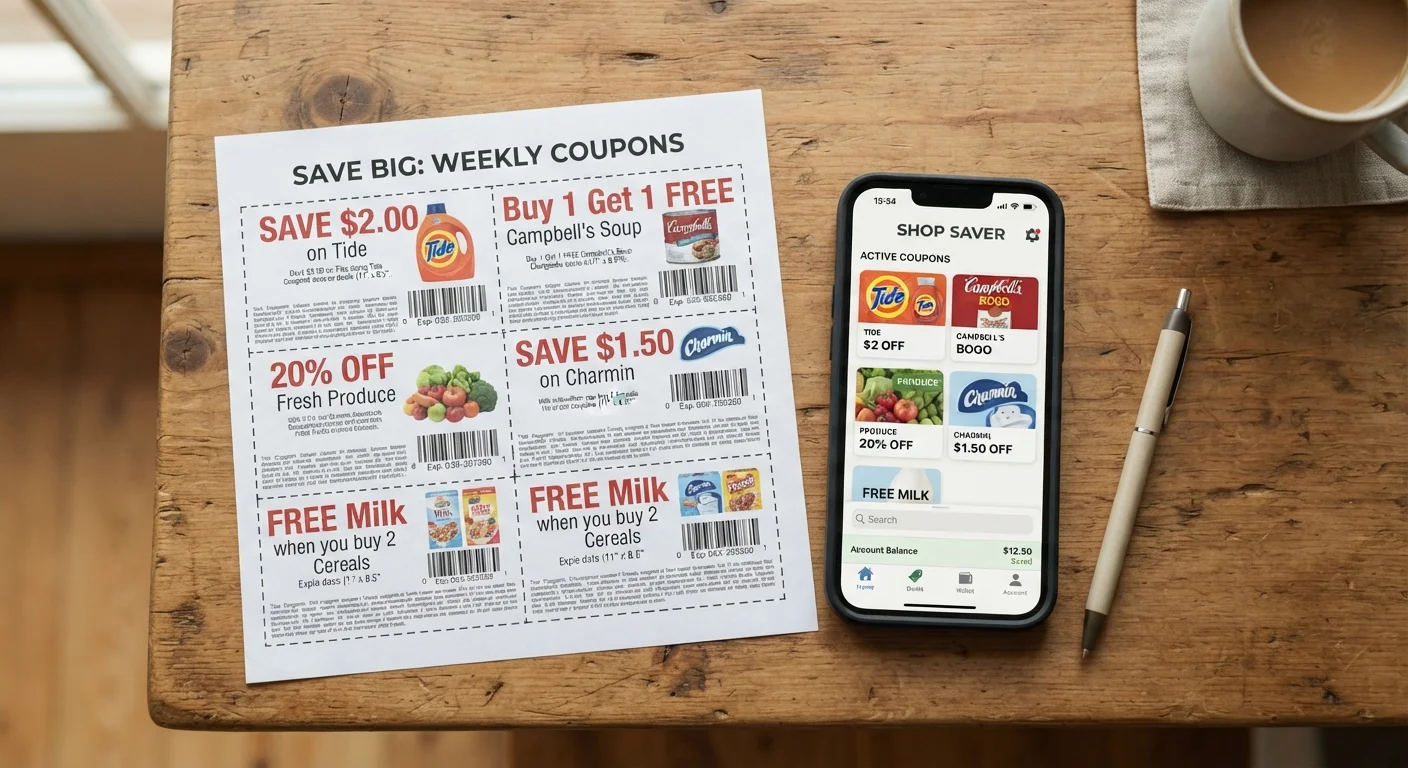
Photo: InsightsChief.com | Your Source Of Trusted Insights editorial
Key Takeaways
- Printable coupons require a printer and paper but can sometimes be used at stores that reject phone-screen versions.
- Digital coupons load directly to loyalty accounts or apply at online checkout, removing the risk of a forgotten paper slip.
- Stacking opportunities differ by format - some stores allow a printed manufacturer coupon alongside a digital store coupon.
- Printable coupons often have stricter limits on how many copies are permitted per computer or account.
- Digital coupons can expire silently without a physical reminder, so active tracking is essential.
How Each Format Actually Works
Printable coupons are PDF or image files - sourced from manufacturer websites, Sunday newspaper inserts reproduced online, or coupon aggregator sites - that you download and print at home. You hand the paper to a cashier, who scans the barcode just like a newspaper coupon. Because they carry a scannable barcode and unique serial number, most modern printable coupons are designed to limit fraud: many sources cap prints at two copies per computer per coupon.
Digital coupons operate through retailer loyalty programs, manufacturer apps, or browser-based promo codes. In a grocery context, you "clip" an offer inside the store's app or website, which links the discount to your loyalty card number. Swipe the card at checkout and the savings deduct automatically. For online purchases, digital coupons take the form of alphanumeric promo codes entered at checkout, or savings applied automatically through browser extensions. See our comparison of browser extensions and coupon websites for how those tools surface digital codes.
| Criterion | Printable Coupons | Digital Coupons |
|---|---|---|
| Redemption method | Hand paper to cashier for scanning | Loyalty card swipe or online code entry |
| Works online? | Rarely accepted at e-commerce checkout | Yes - promo codes and app offers |
| Setup required | Printer, ink, and paper | Smartphone or internet access |
| Expiration visibility | Printed on the coupon - easy to see | App or website - easy to miss |
| Stacking potential | Strong - manufacturer prints + digital store offers | Moderate - depends on retailer policy |
| Fraud risk for retailers | Higher (counterfeit paper coupons exist) | Lower (account-linked, server-enforced) |
| Retailer acceptance | Varies; some stores refuse all printables | Accepted wherever the loyalty program applies |
| Time to obtain | Several minutes (find, download, print) | Seconds (tap to clip in app) |
Restrictions, Limits, and the Fine Print
Both formats carry restrictions, but they manifest differently. Printable coupons frequently state "limit one coupon per purchase" or "do not double" - language that a cashier or store policy enforces at the register. Some smaller or independent retailers refuse printable coupons entirely due to past fraud concerns, so calling ahead is worth the two-minute investment.
Digital coupons tied to loyalty accounts tend to limit redemption by account rather than by transaction. Once you've used an offer, it disappears from your account - there's no re-clipping. This makes them harder to exploit but also means you can't always share a deal with a household member using a different card. Promo codes used at online checkout often carry single-use or per-customer restrictions enforced at the server level.
One often-overlooked nuance involves stacking. Many retailers allow a manufacturer coupon and a store coupon to be used on the same item. If the manufacturer discount is printable and the store discount is digital (loaded to your loyalty card), both can frequently apply together - potentially more savings than either alone. Understanding the difference between manufacturer and store coupons is essential before attempting this strategy.
91%
US shoppers who use coupons
According to Statista consumer research, approximately 91% of US shoppers report using coupons in some form when making purchases.
~60%
Coupon users preferring digital formats
Valassis consumer data has indicated that a majority of coupon users now prefer digital formats over paper, reflecting the shift toward mobile shopping.
2 copies
Typical printable coupon print limit
Most manufacturer coupon sources cap printable coupons at two prints per computer to limit duplication and fraud.
Practical Trade-Offs: Time, Access, and Organization
Printable coupons demand upfront effort: finding the coupon, downloading, printing, cutting or folding, and carrying it to the store. That friction adds up, especially for large hauls. On the other hand, the physical nature of paper means you see exactly what you have - there's no silent expiration that surprises you at checkout.
Digital coupons are faster to acquire but require consistent maintenance. Offers expire, apps update, and loyalty accounts can accumulate dozens of loaded deals that may never get used. Setting a reminder to review your loaded offers before each shopping trip is a practical habit that prevents that waste. For a structured pre-trip review, the pre-shopping coupon checklist provides a useful framework.
Accessibility matters too. Printable coupons require a functioning printer, ink, and paper - costs and logistics that aren't always trivial. Digital coupons require a smartphone or internet access, which, while broadly available, isn't universal. Consider which barriers are lower in your household when choosing a primary format.
Both formats fit within a broader savings strategy. Whether you prefer clipping or tapping, pairing coupons with cashback and rewards programs can layer additional value on top of any discount you secure. For a comprehensive view of how coupons fit into a full savings approach, the complete coupon playbook covers sourcing, stacking, and redemption end to end.
The content provided on our blog site traverses numerous categories, offering readers valuable and practical information. Readers can use the editorial team’s research and data to gain more insights into their topics of interest. However, they are requested not to treat the articles as conclusive. The website team cannot be held responsible for differences in data or inaccuracies found across other platforms. Please also note that the site might also miss out on various schemes and offers available that the readers may find more beneficial than the ones we cover.