
Anchoring, Scarcity, and Bundling: Retail Pricing Tactics Explained

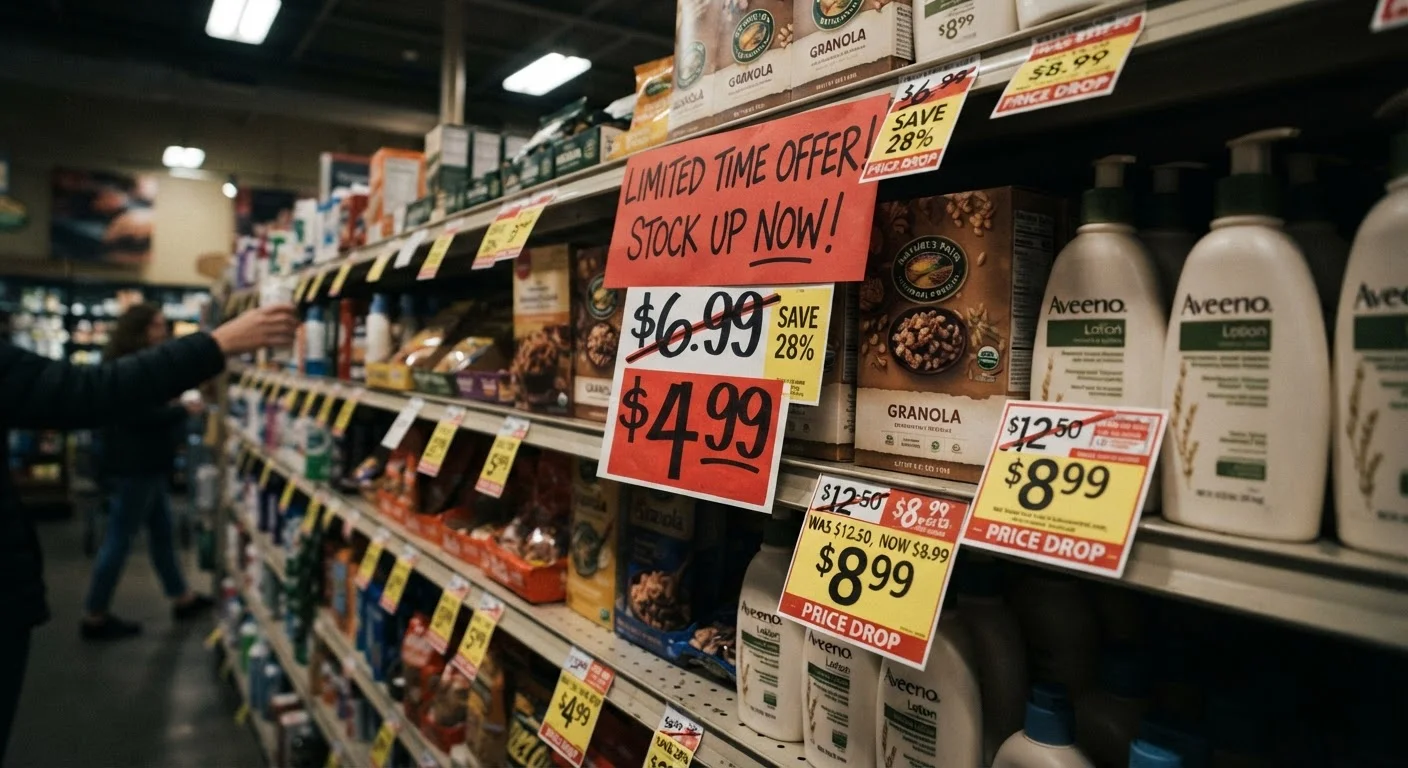
Photo: InsightsChief.com | Your Source Of Trusted Insights editorial
Key Takeaways
- Anchoring uses a high reference price to make the actual selling price feel like a bargain.
- Artificial scarcity creates urgency that can override careful, deliberate decision-making.
- Bundling packages items together in ways that obscure the true per-item cost.
- Charm pricing and odd-number endings exploit how consumers process numbers cognitively.
- Recognizing these tactics doesn't eliminate their effect - but it gives you a measurable pause.
How Retailers Engineer the Perception of Value
Every price tag you see in a retail environment - physical or digital - is the result of deliberate strategy. Retailers and pricing analysts spend considerable effort on how prices are presented, not just what they are. The goal is to shape your perception of value before you consciously evaluate it.
These aren't fringe tricks. Anchoring, scarcity messaging, bundling, and charm pricing are well-documented in consumer behavior research and are applied consistently across grocery, apparel, electronics, and e-commerce. Understanding how each one works is the first step to making decisions based on your actual needs rather than a retailer's framing.
For a complementary look at how impulse buying fits into this picture, see the psychology behind impulse purchases. The tactics below are often the triggers those impulses feed on.
Price Anchoring
Anchoring is the practice of displaying a high reference price - often crossed out or labeled "original" - next to the current selling price. The higher number sets a mental baseline, making the actual price feel like a significant discount even when the original price was rarely, if ever, charged.
Research in behavioral economics consistently shows that people evaluate prices relatively, not absolutely. A $60 item marked down from $100 feels like a deal; the same $60 item with no reference price is assessed on its own merits, often more critically. Retailers exploit this by establishing anchors through manufacturer suggested retail prices (MSRPs), inflated "compare at" figures, or prices that were briefly active during a limited window.
The counter-move: ignore the crossed-out number entirely and ask whether the current price reflects what you'd willingly pay if you'd never seen the higher figure.
Anchoring works by establishing a high reference price that makes the actual selling price feel like a bargain.
Artificial Scarcity and Urgency Signals
"Only 3 left in stock." "Offer ends in 02:14:37." These signals are designed to activate loss aversion - the well-documented tendency to feel losses more acutely than equivalent gains. When something seems about to disappear, the brain shifts from deliberative thinking to faster, more reactive decision-making.
Scarcity signals can be genuine (actual inventory limits, seasonal products) or manufactured (countdown timers that reset, stock levels that don't move). Because they're indistinguishable at a glance, the appropriate default is skepticism. Ask: does this timeline reflect real supply constraints, or is it a display decision?
Urgency framing is also a frequent companion to anchoring - the combination of a "discounted" price with a ticking clock compounds pressure on both fronts. Separating the two helps you evaluate each independently.
Scarcity signals activate loss aversion, pushing decisions toward speed rather than careful evaluation.
Product Bundling
Bundling groups multiple items together at a combined price, presented as a savings over buying each separately. The tactic works on two levels: it increases the total transaction size, and it makes the per-item value harder to assess quickly because you'd need to know the individual prices to calculate whether the bundle is actually cheaper.
Bundles are common in electronics (device plus accessories), grocery (multi-pack pricing), and subscription services (tiered feature packages). Sometimes they do represent genuine value. Often, they include items you wouldn't have chosen independently - meaning you're paying for utility you don't need in order to access the item you do.
The check: identify the item(s) you actually want in the bundle and compare the bundle price against buying just those items separately. Also consider whether the "extra" items have a realistic use in your household or will go unused. For more on how low upfront costs can obscure long-term value, the calculus around bundles often applies.
Bundles obscure per-item cost and often include items you wouldn't have purchased independently.
Charm Pricing and Odd-Number Endings
Prices ending in .99 or .95 are so ubiquitous that shoppers rarely pause to consider why. The mechanism is straightforward: people read numbers left to right, and the leftmost digit disproportionately shapes the initial perception of a price. $4.99 registers closer to $4 than to $5, even though the difference is a single cent.
Studies in pricing psychology have confirmed this effect across cultures and product categories. Some retailers deliberately use round numbers (e.g., $5.00, $20.00) to signal premium positioning - because charm pricing has become so associated with discount-tier products that round numbers now carry a quality heuristic in certain contexts.
Knowing this, the practical habit is to round up mentally before evaluating a price. $19.99 is $20. $149.95 is $150. This simple step eliminates most of the perceptual distortion charm pricing introduces.
Mentally rounding up prices to the nearest dollar eliminates most of the distortion charm pricing creates.
Decoy Pricing
Decoy pricing introduces a third option - typically a mid-tier choice - that makes one of the other options appear more attractive by comparison. A classic structure: a small size at $3, a medium at $6.50, and a large at $7. The medium exists primarily to make the large look like an obvious value, even if you didn't need or want the large before seeing the comparison.
This tactic is common in food service, software subscriptions, and streaming plans. The decoy is usually the option no one chooses - its role is to reshape the perception of the options on either side of it.
The counter-move: before looking at the options side by side, decide what size, tier, or quantity you actually need. Then evaluate only whether that specific option is worth its price in isolation. If you find yourself being "upgraded" by the comparison, that's the decoy working as intended. You might also find that common misconceptions about discounts apply here - a larger size isn't always the savings it appears.
The decoy option exists to make another choice look like an obvious upgrade - not because it is one.
Loss Leader Pricing
A loss leader is a product priced at or below cost, deliberately, to draw shoppers into a store or onto a platform where they're likely to make additional, full-margin purchases. The grocery staples priced unusually low in a weekly circular are a common example - the store accepts a loss on those items expecting that the broader basket will more than compensate.
Loss leaders aren't inherently bad for consumers. If you need only the discounted item and can exercise restraint on everything else, you capture real value. The risk is that store layouts and product placement are specifically designed to make restraint difficult. Entering a store for one item and leaving with six is a predictable outcome retailers plan for.
The discipline: shop with a list and a defined scope. Loss leader deals that align exactly with items you already intended to purchase are genuine opportunities. Those that require a trip you wouldn't otherwise make should be evaluated against the full likely spend, not just the advertised item.
Loss leaders are priced to draw you in - the profit comes from what you add to your basket along the way.
Putting These Tactics in Context
Knowing a pricing tactic by name doesn't make you immune to it - cognitive shortcuts are fast and automatic. What awareness does give you is a moment of friction: a beat before you commit where you can ask whether the deal exists because of your need or because of a retailer's framing.
Build a Pre-Purchase Pause Into Your Routine
A few practical habits help. Before purchasing, check the unit price, not just the sticker price - bundles and bulk packs often look like savings until you run the math. For recurring purchases, layering loyalty program benefits with coupons can produce genuine reductions that aren't tied to manufactured urgency. And if timing matters to your budget, seasonal discount calendars show when markdowns on specific categories tend to be structural rather than theatrical.
Finally, it's worth separating the perception of saving from actual value. A low price manufactured through anchoring or bundle obscuring isn't the same as a low cost of ownership. For a fuller framework, total cost of ownership is the lens frugal shoppers consistently apply before committing.
The content provided on our blog site traverses numerous categories, offering readers valuable and practical information. Readers can use the editorial team’s research and data to gain more insights into their topics of interest. However, they are requested not to treat the articles as conclusive. The website team cannot be held responsible for differences in data or inaccuracies found across other platforms. Please also note that the site might also miss out on various schemes and offers available that the readers may find more beneficial than the ones we cover.