
Seasonal Shopping Calendars: When Retailers Actually Discount Different Categories

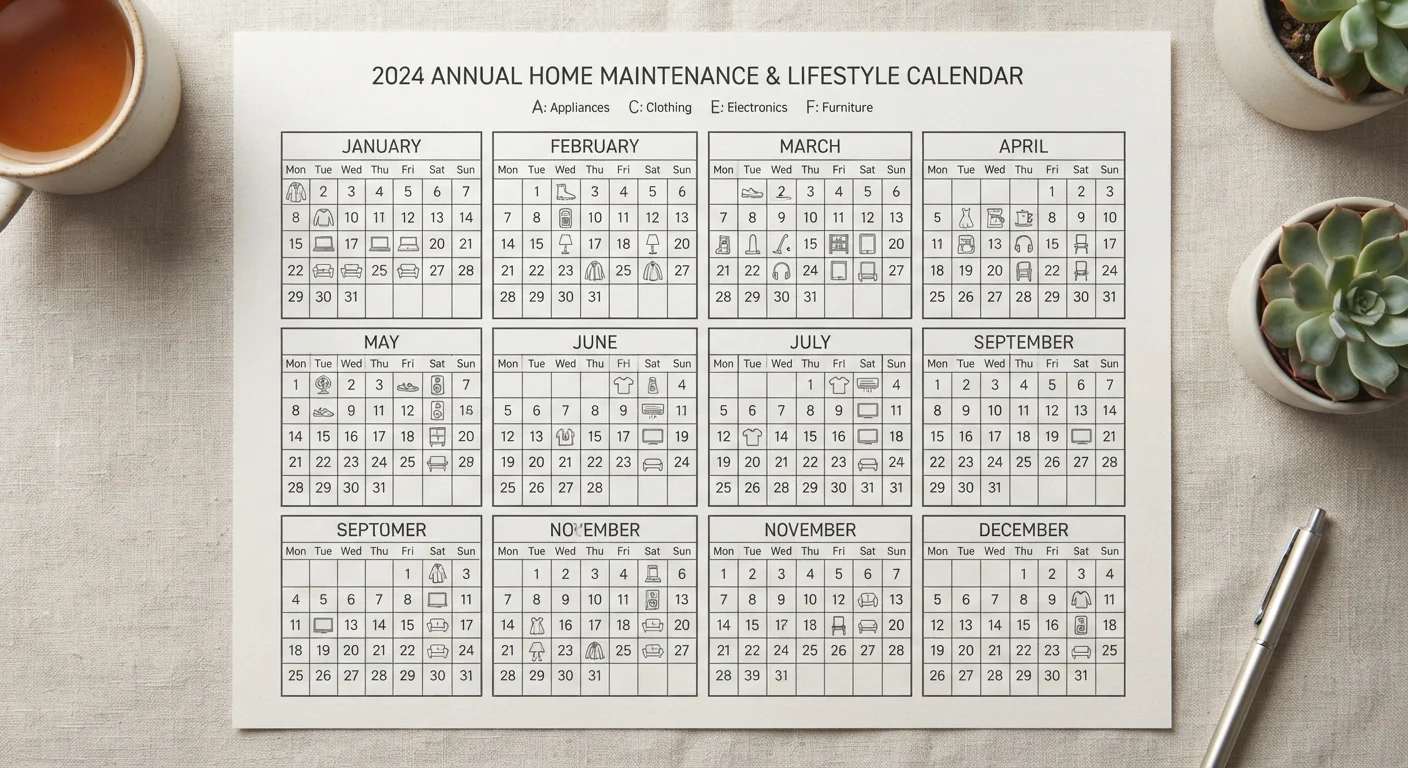
Photo: InsightsChief.com | Your Source Of Trusted Insights editorial
Why Retail Discounts Follow a Calendar
Retailers don't discount randomly. Markdowns are driven by three forces: inventory cycles (clearing old stock before new arrives), demand shifts (heating units sell poorly in summer), and competitive pressure during recognized shopping events. Understanding these mechanics gives you a predictable map rather than a game of chance.
The retail calendar is also shaped by manufacturer model-year releases - particularly in electronics and appliances - and by fashion industry season resets, which happen roughly four times per year. When you understand why prices fall when they do, you can plan major purchases weeks in advance rather than reacting impulsively. Pair this timing knowledge with how coupons and promo codes are structured and you add another discount layer on top of an already-reduced price.
| Appliances: deepest discounts | September-October & January (Consumer Reports, Timing Your Appliance Purchase) |
| Electronics: model-year clearance | January (post-CES) & Black Friday (General retail industry pattern) |
| Winter clothing: end-of-season clearance | January-February (National Retail Federation data) |
| Furniture: lowest prices | February & August-September (Furniture retail industry conventions) |
| Outdoor & lawn: markdown window | Late August-September (Seasonal retail inventory patterns) |
| Back-to-school gear: price floor | Late July-mid August (National Retail Federation annual survey) |
Category-by-Category Markdown Windows
Appliances (major): September and October are historically the strongest months, driven by model-year transitions when manufacturers release updated lines. January offers a secondary window tied to post-holiday retailer promotions. White sales in January also bring linens and small appliances into discount territory.
Electronics: Consumer Electronics Show (CES) in January prompts retailers to clear prior-year inventory, making late January and early February strong windows for televisions and laptops. Black Friday remains a high-volume event, but it's worth noting that not all advertised discounts reflect meaningful reductions from typical street prices - understanding retail pricing tactics like anchoring and bundling helps you separate genuine markdowns from marketing theater.
Clothing and apparel: End-of-season clearance is the most reliable markdown event. Winter apparel drops to clearance pricing in late January and February; summer clothing clears in August. Transitional-season items (spring, fall) have shorter windows, typically 3-4 weeks at season's end.
Furniture: February and August-September are the two primary windows, coinciding with when manufacturers introduce new lines and retailers need floor space. Holiday weekends (Presidents' Day, Labor Day, Memorial Day) are conventional sale triggers in this category.
Outdoor and lawn equipment: Late August through September, as warm-weather demand drops, brings significant markdowns on mowers, grills, and patio furniture. Spring restocking in March can also create brief clearance moments on prior-season items.
Back-to-school supplies and tech: Late July through mid-August is the primary window. Competition among retailers during this period tends to push prices down on notebooks, backpacks, calculators, and entry-level laptops.
Timing Is a Framework, Not a Guarantee
Building Your Personal Shopping Calendar
The practical application is straightforward: before making any significant purchase, identify which markdown window applies to that category and assess how far away it is. If a new refrigerator isn't an emergency, waiting until September could translate to meaningful savings. If you need winter gear in December, you're buying at peak-demand pricing - the opposite of the clearance window.
A few habits sharpen this approach:
- Audit upcoming needs quarterly. Review what you're likely to need in the next three to six months, then check whether a markdown window aligns with that need before deciding when to buy.
- Track base prices before sale events. Price history tools help you verify whether a sale price is genuinely below the recent average, rather than a reset from an artificially inflated anchor.
- Layer other discount types on top of timing. Running through a pre-shopping coupon checklist during a markdown window combines two independent discount levers. Similarly, activating a cashback or rewards program at checkout compounds the benefit of an already-reduced price.
- Don't force timing if the need is urgent. Waiting four months to save on a broken appliance you need now is not a rational trade-off. The calendar is a planning tool, not a constraint.
Seasonal discount patterns exist in travel too - the concept maps directly onto shoulder season travel logic, where demand cycles, not random promotions, drive price differences. The underlying framework is the same across categories.
This article provides general consumer information for educational purposes. Actual prices and discount availability vary by retailer, region, and market conditions. Always verify current pricing before making a purchase decision.
The content provided on our blog site traverses numerous categories, offering readers valuable and practical information. Readers can use the editorial team’s research and data to gain more insights into their topics of interest. However, they are requested not to treat the articles as conclusive. The website team cannot be held responsible for differences in data or inaccuracies found across other platforms. Please also note that the site might also miss out on various schemes and offers available that the readers may find more beneficial than the ones we cover.