
The Psychology Behind Impulse Purchases - and How to Outsmart It

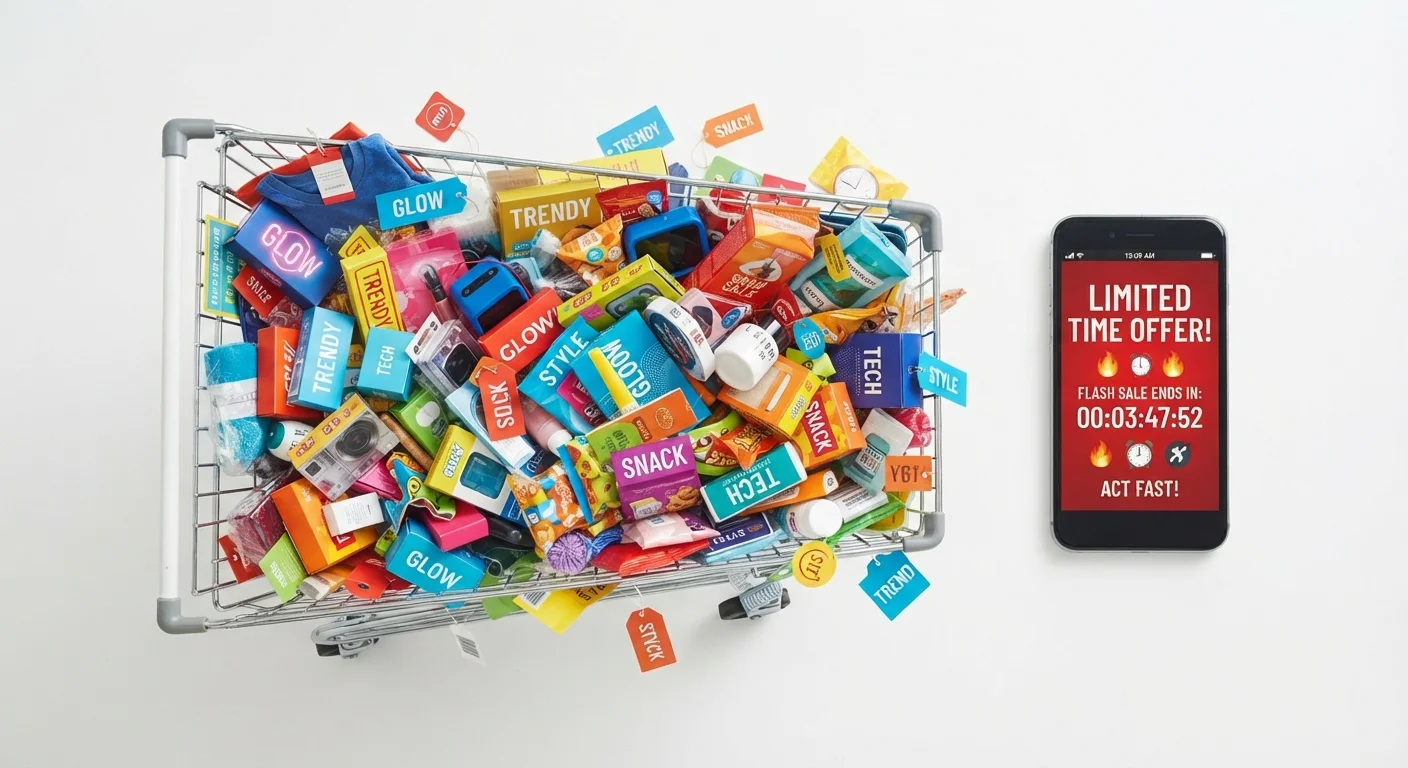
Photo: InsightsChief.com | Your Source Of Trusted Insights editorial
Key Takeaways
- Impulse purchases are driven by identifiable psychological triggers, not random willpower failures.
- Retailers engineer urgency, scarcity, and social proof to bypass deliberate decision-making.
- A brief cooling-off pause - even 10 minutes - measurably reduces unplanned spending.
- Pre-set shopping rules applied before entering a store or website act as effective guardrails.
- Emotional state and physical environment both influence susceptibility to impulse buying.
- Understanding the trigger is the first step to neutralizing its effect on your wallet.
Why Your Brain Is Wired to Buy Now
Impulse buying isn't a character flaw - it's a predictable output of how human brains process reward and risk. When you spot an appealing product, your brain's limbic system fires before conscious reasoning kicks in. Dopamine - a neurotransmitter associated with anticipation of reward - surges in response to novelty, perceived deals, and social validation signals like star ratings or "bestseller" badges.
This neurological sequence is well understood, and retailers invest heavily in exploiting it. Store layouts place high-margin impulse items near checkout lines. E-commerce algorithms surface "customers also bought" suggestions precisely when purchase intent is already elevated. Countdown timers trigger loss aversion - the well-documented tendency to fear losing a deal more than we value an equivalent gain. These aren't accidental design choices; they are deliberate applications of behavioral science.
Understanding this system doesn't eliminate the impulse, but it introduces a crucial moment of recognition: this feeling is a response to a designed trigger, not an objective signal that I need this item.
Impulse Buying Isn't Always Harmful
The Triggers Retailers Rely On
Several core psychological mechanisms underpin most impulse purchases. Knowing them by name makes them easier to spot in the wild.
- Scarcity and urgency: "Only 3 left" and "Sale ends tonight" exploit loss aversion. The brain treats potential loss as more threatening than equivalent gain, pushing faster decisions.
- Social proof: Review counts, bestseller labels, and "trending now" signals leverage our tendency to use others' behavior as a shortcut for quality evaluation.
- Price anchoring: A crossed-out "original" price frames the current price as a bargain even when the discount is marginal. For a deeper look at how this works, see how anchoring and scarcity tactics work in retail pricing.
- Ease of transaction: One-click purchasing removes the natural pause that comes from entering payment details. Friction in checkout is a consumer protection; its removal benefits the retailer.
- Emotional state exploitation: Stress, boredom, and fatigue all lower self-regulatory capacity. Many impulse purchases happen not because the item is compelling but because the buyer's defenses are down.
~33%
Share of retail purchases that are unplanned
Consumer behavior research consistently estimates that roughly one-third of purchases made in retail environments were not planned before the shopping trip began.
10 min
Pause time that reduces impulse purchase likelihood
Behavioral studies suggest that even a brief mandatory delay of around ten minutes between identifying an item and completing a purchase measurably reduces unplanned buying rates.
~40%
Impulse buyers who report post-purchase regret
Surveys on consumer regret indicate that roughly four in ten shoppers who describe a recent purchase as impulsive later report feeling it was a mistake or that the item was not worth the cost.
Practical Frameworks to Pause Before You Spend
The most effective defenses against impulse buying work by inserting a gap between stimulus and action. Here are frameworks grounded in behavioral research:
The Time-Delay Rule
Before purchasing any unplanned item, commit to a fixed waiting period - 24 hours for items under $50, 48-72 hours for larger purchases. During that window, the emotional charge dissipates. If the desire remains after the delay, the purchase may have more genuine merit. Most of the time, it doesn't.
The Pre-Commitment Shopping List
Entering a store or website with a written list acts as a pre-commitment device. List-holders make more deliberate deviations - they have to consciously choose to go off-list - rather than drifting into unplanned spending. Apply the same principle to online carts: add items, then leave without buying and revisit the cart later.
The Utility Test
Ask one concrete question before any unplanned purchase: "Where will this be in six months?" If you can't answer specifically - because the item serves no defined function in your life - that's a reliable signal to pause. This connects to a broader decision-making approach covered in the pre-purchase decision checklist.
Budget as Permission Structure
A pre-set discretionary spending category - sometimes called a "fun money" allocation - channels impulse energy into a bounded container. When the category is exhausted, any impulse purchase requires a deliberate trade-off with another want, which naturally slows spending. For a comprehensive view of building this into your overall purchase approach, smart buying from first principles provides a full framework.
Try the 'Wishlist First' Method
Environmental Adjustments That Reduce Exposure
Behavioral change is easier when the environment supports it. Several low-effort adjustments reduce the frequency and intensity of impulse triggers:
- Unsubscribe from promotional emails: Retail emails are engineered urgency delivered directly to your attention. Fewer triggers mean fewer impulse moments.
- Remove stored payment methods: Reintroducing friction to checkout - even the minor friction of re-entering card details - creates a natural decision pause.
- Avoid browsing without intent: Window-shopping online, whether through apps or email links, significantly increases unplanned purchase rates. Treat retail websites as transactional destinations, not entertainment.
- Shop after eating and rest: Hunger and fatigue are well-documented amplifiers of impulsive decision-making. Physical state matters.
Impulse buying rarely occurs in isolation - it's part of a broader pattern of rushed decisions. Skipping research to save time explores how similar shortcuts compound into costly habits across different purchase categories.
This article is for general informational and educational purposes only and does not constitute financial or personal finance advice. Readers should consult a qualified financial professional for guidance tailored to their individual circumstances.
Frequently Asked Questions
The content provided on our blog site traverses numerous categories, offering readers valuable and practical information. Readers can use the editorial team’s research and data to gain more insights into their topics of interest. However, they are requested not to treat the articles as conclusive. The website team cannot be held responsible for differences in data or inaccuracies found across other platforms. Please also note that the site might also miss out on various schemes and offers available that the readers may find more beneficial than the ones we cover.