
DIY Deck Building: What Makes It Worthwhile - and What Makes It Complicated

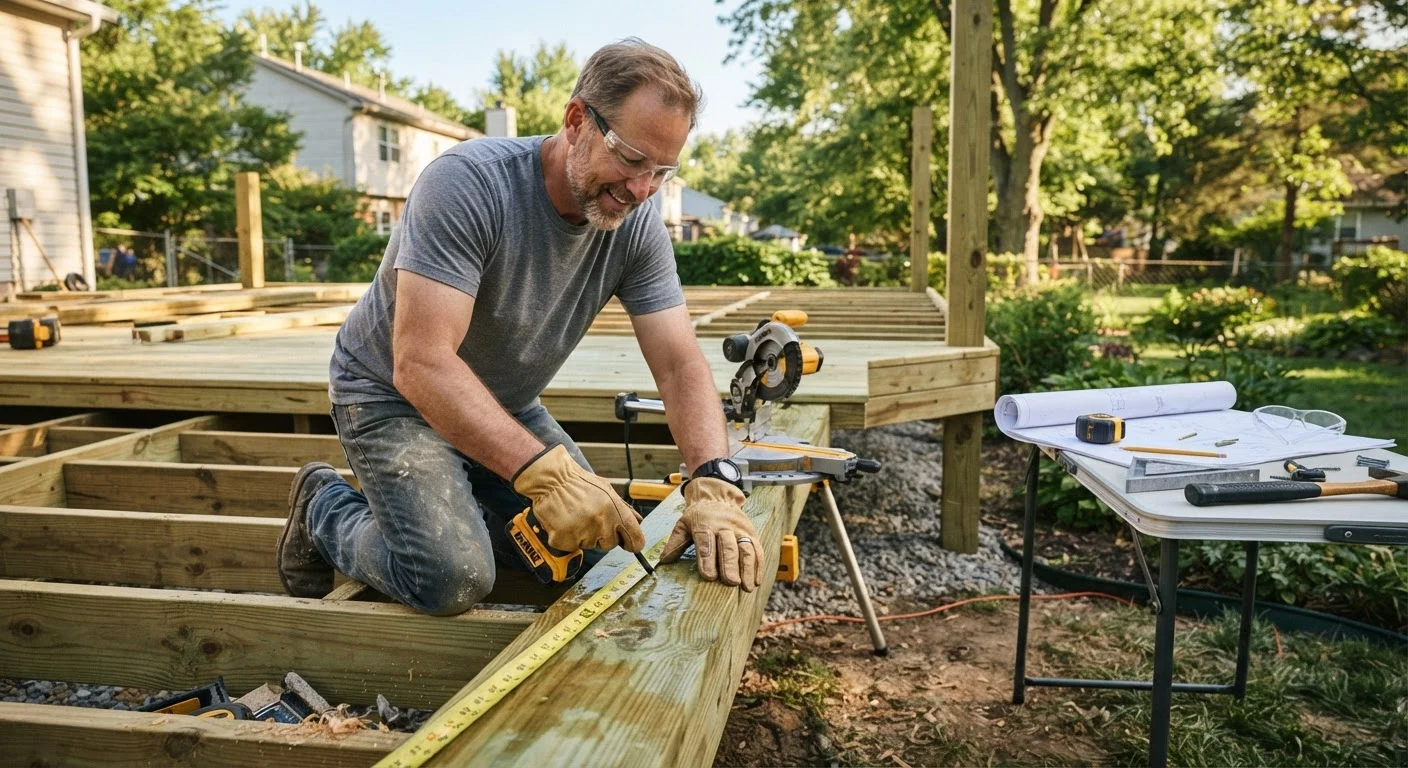
Photo: InsightsChief.com | Your Source Of Trusted Insights editorial
Key Takeaways
- DIY deck building can reduce labor costs significantly, but material and permit expenses still apply.
- Most jurisdictions require a building permit for decks attached to the home or above a certain height.
- Structural errors in deck construction can pose serious safety risks and may affect homeowner's insurance.
- Choosing the right materials and understanding load requirements are essential steps before breaking ground.
- Knowing when to hand off work to a licensed contractor can save money and stress in the long run.
Significant savings on labor costs
Labor typically makes up nearly half a deck project's total cost. Doing the work yourself eliminates that expense, though you'll still pay for materials, tools, and permits.
Full control over materials and design
DIY builders can select their preferred decking material - pressure-treated lumber, composite, or hardwood - and customize dimensions without negotiating changes with a contractor.
Skill development and project confidence
Successfully completing a deck build gives homeowners transferable skills in framing, fastening, and layout that apply to future projects and routine maintenance.
Flexible scheduling on your own timeline
Without contractor availability to work around, you can progress at your own pace - useful for homeowners spreading cost over time by purchasing materials in stages.
Deeper familiarity with your home's structure
Building something yourself means you understand how it was assembled, making future repairs and inspections easier to assess and communicate.
Permits and inspections add time and cost
Most attached or elevated decks require a building permit, which involves submitting plans, paying fees, and scheduling inspections. This process can take weeks depending on your municipality.
Structural errors carry real safety risks
Improperly installed footings, undersized beams, or incorrect ledger connections can lead to deck failure. The American Institute of Architects has noted that deck collapses are among the more common structural failures in residential settings.
Tool investment can be substantial
A deck build requires a post-hole digger, circular saw, drill, level, and possibly a miter saw - costs that add up quickly if you don't already own them, partially offsetting labor savings.
Mistakes can be expensive to correct
Errors in framing or layout may not surface until late in the build, requiring disassembly of completed work. Rework costs in materials and time can erode the savings DIY was meant to deliver.
Electrical work still requires a licensed professional
Outdoor outlets, lighting circuits, or any wiring integrated into the deck must meet code and typically require a licensed electrician in most US states, regardless of who does the rest of the build.
Insurance and resale complications from unpermitted work
An unpermitted deck can complicate a home sale, affect your homeowner's insurance coverage in the event of a claim, or require costly retroactive permitting when the issue surfaces.
Why Homeowners Consider Building Their Own Deck
A deck can add usable outdoor living space, increase home enjoyment, and potentially boost resale appeal. For budget-minded homeowners, the most compelling case for going DIY is the prospect of avoiding contractor labor costs, which can represent 40-60% of a total deck project budget depending on region and complexity. That gap is real, and for someone with solid carpentry fundamentals, bridging it through sweat equity is genuinely achievable.
Beyond cost, many homeowners value the control that comes with DIY - choosing materials, setting their own timeline, and building something they understand from the ground up. That familiarity can also make future repairs easier to handle. If you're already weighing DIY versus professional help on other projects, our guide on DIY home maintenance vs. hiring a professional offers a useful decision framework.
Significant savings on labor costs
Labor typically makes up nearly half a deck project's total cost. Doing the work yourself eliminates that expense, though you'll still pay for materials, tools, and permits.
Full control over materials and design
DIY builders can select their preferred decking material - pressure-treated lumber, composite, or hardwood - and customize dimensions without negotiating changes with a contractor.
Skill development and project confidence
Successfully completing a deck build gives homeowners transferable skills in framing, fastening, and layout that apply to future projects and routine maintenance.
Flexible scheduling on your own timeline
Without contractor availability to work around, you can progress at your own pace - useful for homeowners spreading cost over time by purchasing materials in stages.
Deeper familiarity with your home's structure
Building something yourself means you understand how it was assembled, making future repairs and inspections easier to assess and communicate.
The Real Complications You Should Anticipate
Deck building looks more straightforward on paper than it often is in practice. Permits are the first hurdle most homeowners underestimate. In the majority of US jurisdictions, any deck attached to the house - or elevated more than a foot or two off the ground - requires a building permit and, typically, at least one inspection. Skipping that step can result in fines, a requirement to tear down unpermitted work, or complications when selling your home. Our article on permits, inspections, and renovation rules covers exactly what's at stake.
Structural decisions are the second major complication. Deck ledger attachment, footing depth, and post sizing all affect safety. An undersized footing in a frost-prone climate can heave and destabilize the entire structure. For homeowners unfamiliar with load-bearing concepts, our piece on understanding load-bearing structures provides helpful context on how structural forces work in residential construction.
Permits and inspections add time and cost
Most attached or elevated decks require a building permit, which involves submitting plans, paying fees, and scheduling inspections. This process can take weeks depending on your municipality.
Structural errors carry real safety risks
Improperly installed footings, undersized beams, or incorrect ledger connections can lead to deck failure. The American Institute of Architects has noted that deck collapses are among the more common structural failures in residential settings.
Tool investment can be substantial
A deck build requires a post-hole digger, circular saw, drill, level, and possibly a miter saw - costs that add up quickly if you don't already own them, partially offsetting labor savings.
Mistakes can be expensive to correct
Errors in framing or layout may not surface until late in the build, requiring disassembly of completed work. Rework costs in materials and time can erode the savings DIY was meant to deliver.
Electrical work still requires a licensed professional
Outdoor outlets, lighting circuits, or any wiring integrated into the deck must meet code and typically require a licensed electrician in most US states, regardless of who does the rest of the build.
Insurance and resale complications from unpermitted work
An unpermitted deck can complicate a home sale, affect your homeowner's insurance coverage in the event of a claim, or require costly retroactive permitting when the issue surfaces.
Check Local Codes Before You Design
Where DIY Makes Sense - and Where to Draw the Line
A ground-level platform deck on a relatively flat yard with no ledger attachment is among the most DIY-accessible builds. Add elevation, stairs, a ledger board connection, or complex geometry, and the project difficulty and risk profile rise considerably. Electrical work for outdoor lighting or outlets must be done to code and - in most states - requires a licensed electrician regardless of who builds the deck itself.
It's worth being specific about which phases you can handle and which benefit from professional input. Many homeowners successfully act as their own general contractors, completing the framing and decking themselves while hiring a licensed pro for footing installation or electrical rough-in. That hybrid approach can capture meaningful savings while keeping the highest-risk elements in qualified hands. If you're evaluating where to draw that line, our guide on where DIY ends walks through the decision systematically.
40-60%
Typical labor share of deck project cost
Industry estimates from contractor cost guides generally place labor at roughly half of total deck project budgets, varying by region and deck complexity.
~$15-$35/sq ft
Average DIY material cost range
Material costs vary widely depending on decking type - pressure-treated lumber sits at the lower end, while premium composites and hardwoods can exceed the upper range.
When the structural phase is complete, many of the finish tasks - laying decking boards, installing railings, adding trim - are well within reach for a careful, patient DIYer. And if you do decide to bring in outside help at any stage, knowing what to look for matters. See how to evaluate and hire a contractor before you start making calls.
The content provided on our blog site traverses numerous categories, offering readers valuable and practical information. Readers can use the editorial team’s research and data to gain more insights into their topics of interest. However, they are requested not to treat the articles as conclusive. The website team cannot be held responsible for differences in data or inaccuracies found across other platforms. Please also note that the site might also miss out on various schemes and offers available that the readers may find more beneficial than the ones we cover.