
Drought-Tolerant Plants That Thrive with Minimal Watering

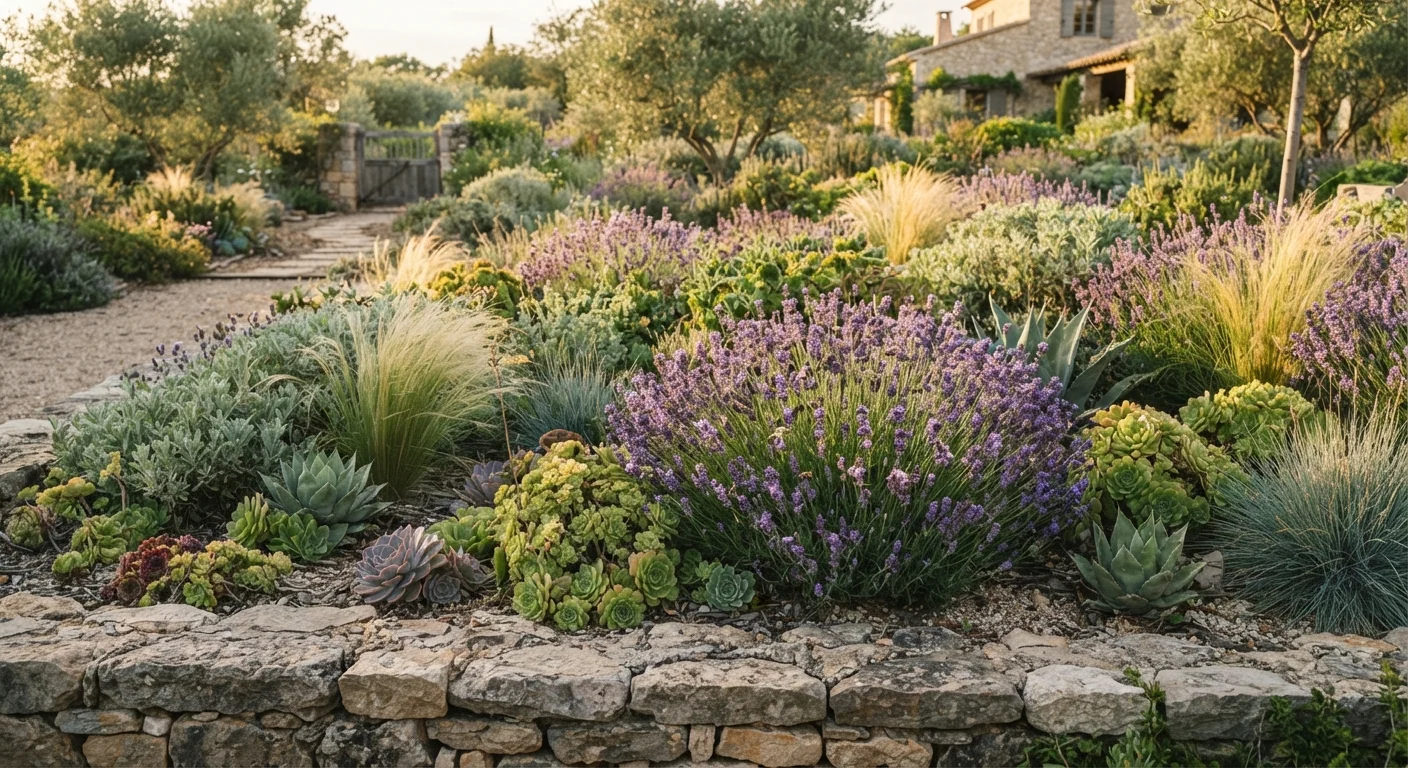
Photo: InsightsChief.com | Your Source Of Trusted Insights editorial
Key Takeaways
- Drought-tolerant plants reduce outdoor water use significantly once established in the landscape.
- Most low-water plants need regular watering during their first growing season to develop strong root systems.
- Matching a plant to your climate zone and soil type is the most reliable predictor of long-term success.
- Grouping plants by water needs - a practice called hydrozoning - makes irrigation more efficient and less wasteful.
- Many drought-tolerant species offer year-round visual interest through foliage, texture, and seasonal blooms.
Why Low-Water Landscaping Makes Sense
Outdoor watering accounts for a substantial portion of household water use - often 30% or more during warmer months, according to the U.S. Environmental Protection Agency. For budget-conscious homeowners, that's a meaningful line item. Shifting toward drought-tolerant plants doesn't mean accepting a sparse or dull yard; it means making smarter choices about what grows where.
The key distinction to understand upfront: drought tolerance is not the same as drought immunity. Nearly every plant on this list needs consistent moisture during its first growing season to establish a deep root system. After that establishment period - typically one full growing season - water demands drop considerably. Getting that early care right sets the stage for years of low-maintenance performance.
If you're newer to gardening, our First-Time Gardener's Roadmap covers the basics of planning and planting before you commit to any particular species. And if you're curious why your watering habits may be working against you, common watering myths are worth reviewing first.
Lavender (Lavandula spp.)
Few plants balance beauty, fragrance, and low water demand as effectively as lavender. Once established, it handles long dry spells with ease, performing best in USDA Hardiness Zones 5-9 depending on the variety. It strongly prefers well-drained, even sandy or gravelly soil - soggy roots are its primary weakness.
Plant lavender in full sun (at least six hours daily) and avoid overhead irrigation, which encourages fungal issues. Light pruning after each bloom cycle keeps plants compact and productive. English lavender varieties tend to be hardier in colder climates, while Spanish and French types suit milder winters.
Once established, lavender handles long dry spells with ease and minimal care.
Agave (Agave spp.)
Agave is a structural statement plant suited to arid and semi-arid climates, thriving across Zones 5-11 depending on species. Its thick, water-storing leaves allow it to go weeks without supplemental irrigation in most regions after establishment. Cold-hardiness varies considerably by species - some tolerate brief freezes while others require frost protection.
Agave suits rocky slopes, xeriscaped borders, and areas with poor, fast-draining soil where other plants struggle. Because most species bloom only once before dying - a process called monocarpic flowering - plan for succession planting using the offshoots (called pups) the parent plant produces around its base.
Agave thrives in poor, fast-draining soil where most other plants struggle to survive.
Russian Sage (Perovskia atriplicifolia)
Russian sage produces airy spikes of violet-blue flowers on silver-gray stems throughout summer and into fall, making it one of the most visually rewarding drought-tolerant perennials available to gardeners in Zones 4-9. It demands full sun and sharp drainage; in heavier soils, consider planting on a slight slope or in a raised bed to improve drainage naturally.
Once established, Russian sage is notably heat- and drought-resistant and largely ignored by deer - a practical bonus in suburban and semi-rural settings. Cut plants back to about six inches in early spring before new growth emerges to maintain a tidy form year after year.
Russian sage delivers months of violet-blue color while tolerating heat, drought, and deer pressure.
Blue Oat Grass (Helictotrichon sempervirens)
Ornamental grasses add movement and year-round structure to water-wise gardens, and blue oat grass is among the most reliable performers in Zones 4-9. Its steel-blue foliage remains attractive across seasons, and the plant forms tidy, self-contained clumps that rarely need dividing. It tolerates dry conditions well once its roots are established and is less aggressive than some other ornamental grasses.
Pair blue oat grass with medium-height flowering perennials for contrast in texture and color. It performs best in full sun and well-drained soil; in humid climates with heavy clay, root rot can be a risk without adequate drainage improvement.
Blue oat grass delivers year-round structure with steel-blue foliage and minimal water demands.
Yarrow (Achillea millefolium)
Yarrow is a tough, adaptable perennial that spreads reliably in Zones 3-9, tolerating poor soils, heat, and drought conditions that would stress less resilient plants. It produces flat-topped flower clusters in shades ranging from white and yellow to deep red and salmon, making it a versatile choice for adding seasonal color to low-water borders.
One important consideration: yarrow can spread aggressively in ideal conditions, so deadheading spent blooms promptly helps keep it from self-seeding beyond its intended area. It thrives in full sun and well-drained soil; in overly rich or consistently moist soil, it tends to flop rather than stand upright.
Yarrow thrives in poor soils and dry conditions that would challenge most flowering perennials.
Sedum (Sedum spp. / Hylotelephium spp.)
Sedums encompass a wide range of groundcovers and upright perennials, nearly all characterized by fleshy, moisture-storing leaves that allow them to handle extended dry periods. Upright types such as 'Autumn Joy' (now reclassified under Hylotelephium) offer late-season interest when many other perennials have finished, making them especially valuable in Zones 3-9.
Low-growing creeping sedums are particularly useful for filling gaps in rocky areas, between paving stones, or on dry slopes where erosion is a concern and irrigation is impractical. Well-drained soil and full to partial sun are the primary requirements; consistent moisture, especially in winter, is the most common cause of failure.
Creeping sedums are particularly useful for stabilizing dry slopes where irrigation is impractical.
Getting the Most From Your Water-Wise Garden
Selecting the right plants is only half the equation. How you prepare and maintain the planting area shapes how well any drought-tolerant species performs. Amending clay-heavy or compacted soils with coarse compost improves drainage and root penetration. A 2-3 inch layer of organic mulch around plant bases reduces evaporation, moderates soil temperature, and suppresses weeds - all of which reduce how often you need to intervene with a hose.
Start With a Soil Test Before Planting
Hydrozoning - grouping plants with similar water requirements together - is one of the most practical habits a water-wise gardener can adopt. It prevents the common mistake of overwatering drought-tolerant plants simply because they share a bed with thirstier neighbors. This principle applies equally whether you're working with an in-ground border or a patio setup. Our guide to container gardening explores how to apply this thinking in smaller spaces.
Finally, keep in mind that even the hardiest low-water plants won't thrive if your yard's drainage is channeling runoff directly into their root zones. Poor drainage causes root rot in plants adapted to dry conditions faster than almost anything else. Understanding how water moves across your property - covered in detail in our article on gutters, downspouts, and drainage - helps you site these plants where they'll genuinely flourish.
The content provided on our blog site traverses numerous categories, offering readers valuable and practical information. Readers can use the editorial team’s research and data to gain more insights into their topics of interest. However, they are requested not to treat the articles as conclusive. The website team cannot be held responsible for differences in data or inaccuracies found across other platforms. Please also note that the site might also miss out on various schemes and offers available that the readers may find more beneficial than the ones we cover.