
Gutters, Downspouts, and Drainage: How Water Finds Its Way Into Your Home

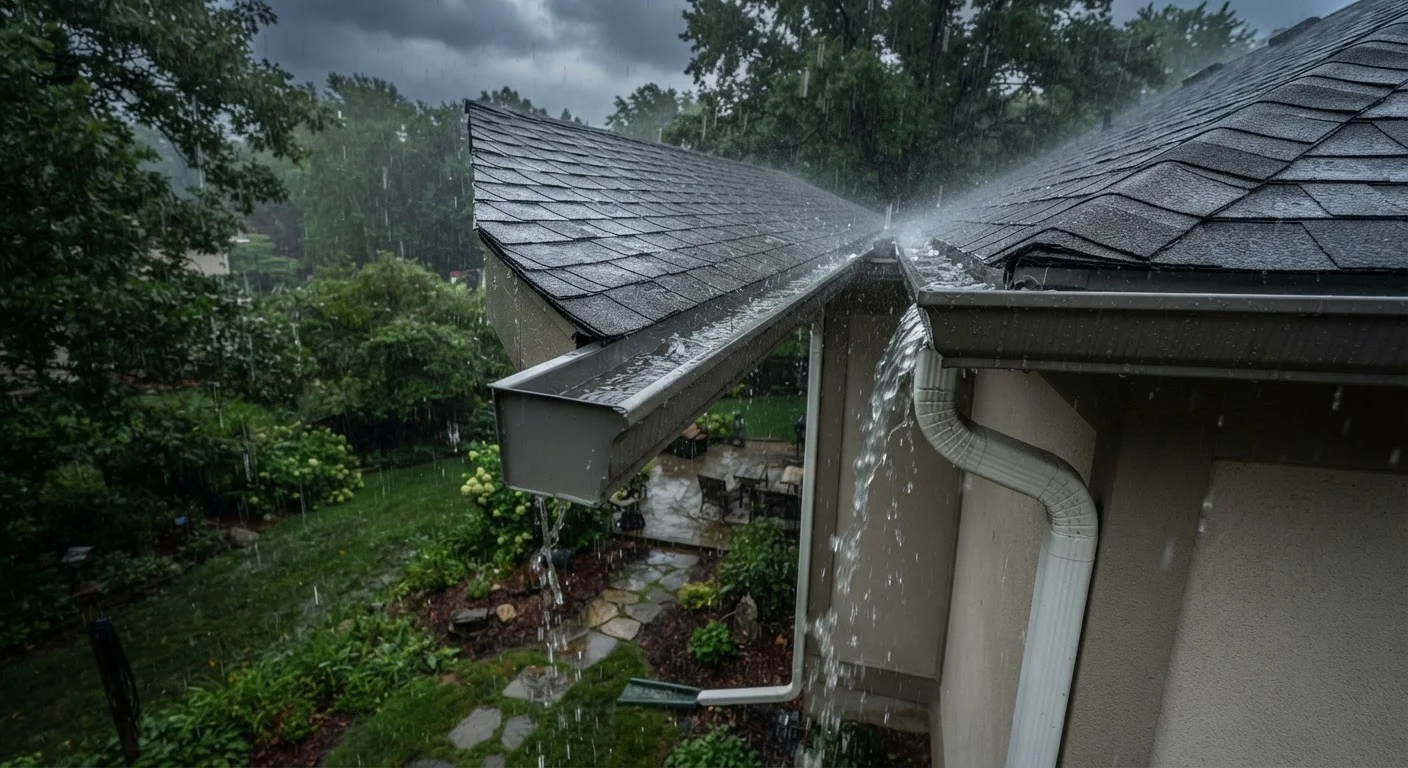
Photo: InsightsChief.com | Your Source Of Trusted Insights editorial
Key Takeaways
- Clogged gutters are one of the most common - and most preventable - causes of water damage in homes.
- Downspouts should discharge water at least 4-6 feet from the foundation to reduce infiltration risk.
- Poor yard grading can redirect rainwater toward your home even when gutters are functioning properly.
- Routine inspections twice a year catch small issues before they become expensive structural problems.
- Water damage from drainage failures can affect foundations, basements, siding, and landscaping simultaneously.
How Your Gutter System Is Designed to Work
Every time rain falls on your roof, your drainage system has one job: move that water off the roof and away from the structure as efficiently as possible. Gutters - the horizontal troughs running along the roofline - catch runoff from the roof surface. That water then travels toward downspouts, the vertical pipes that carry it down to ground level. From there, splash blocks or downspout extensions disperse the flow across the lawn, ideally several feet from the foundation.
The system depends on consistent slope. Gutters should be pitched slightly - roughly a quarter inch of drop per 10 feet of gutter run - so water doesn't pool. Downspouts need to be adequately sized for the roof area they serve; undersized downspouts back up quickly during heavy rain. And the ground below needs to slope away from the home so discharged water doesn't circle back toward the foundation.
When all three components - gutters, downspouts, and grading - work together, your home sheds water reliably after even heavy storms. When any one fails, the consequences tend to compound quickly. As our guide on small roof leaks turning into big problems explains, water intrusion problems rarely stay contained to their point of origin.
What Goes Wrong - and Why It Matters
The most common drainage failure is straightforward: debris accumulates in gutters until water can't flow. Leaves, twigs, shingle granules, and seed pods build up and form blockages that cause gutters to overflow during rain. That overflow doesn't just drip - it cascades directly against your siding, fascia boards, and foundation. Over time, this saturates wood, promotes rot, and drives moisture into wall cavities.
~$10,000
Average cost of basement water damage repair
Water damage restoration costs vary widely, but industry estimates frequently cite figures in this range for moderate basement flooding events, not including mold remediation.
2x/year
Minimum recommended gutter cleaning frequency
Most home maintenance authorities recommend cleaning gutters at least twice annually, with additional cleanings for homes near deciduous or pine trees.
6 inches
Recommended foundation drainage slope over 10 feet
Building guidance widely references a minimum grade of 6 inches of drop over the first 10 horizontal feet from the foundation to encourage surface water runoff away from the structure.
Sagging gutters are another frequent problem. When gutters fill with debris and hold standing water, the added weight causes hangers to pull away from the fascia. Once a gutter sags, it can no longer drain properly, and the problem accelerates. Left unaddressed, gutters can detach entirely, creating both a drainage failure and a physical hazard.
Downspout issues are equally disruptive. A downspout clogged at a joint or elbow can cause water to back up into the gutter above and overflow at the roofline. Downspouts that terminate too close to the foundation - or against a concrete wall - deposit large volumes of water exactly where you don't want it. Downspout extensions, which simply attach to the existing outlet and extend the discharge point outward, are among the most cost-effective fixes available to homeowners.
Yard grading problems often go unnoticed until basement water appears. This is covered in our broader introduction to home maintenance for new owners, but the principle is simple: if the ground around your foundation has settled or slopes inward over the years, rainwater - even water discharged correctly by your downspouts - can migrate back toward the structure.
Routine Maintenance That Prevents Expensive Repairs
The encouraging news is that most gutter and drainage failures are preventable with consistent, low-cost maintenance. Here's what a practical routine looks like:
- Clean gutters at least twice a year. Late fall (after most leaves have dropped) and late spring are the standard windows. Scoop out debris, flush with a garden hose, and check that water flows freely through downspouts.
- Inspect gutters for slope and attachment. Look for sections that are pulling away from the fascia, appear to be sagging, or hold standing water after rain. Rehang loose sections and replace deteriorated hangers as needed.
- Check downspout discharge points. Ensure every downspout terminates at least 4-6 feet from the foundation. Add extensions where necessary, and confirm that splash blocks are directing water away - not pooling it.
- Walk the perimeter after a storm. Look for pooling water near the foundation, erosion channels, or areas where soil appears consistently saturated. These are grading clues worth addressing before they worsen.
- Examine fascia and soffits for rot. Persistent gutter overflow damages the wood behind it. Soft or discolored fascia boards often indicate a drainage problem that's been ongoing longer than the homeowner realized.
Check Gutters After Every Major Storm
Deferring these tasks is a pattern with a predictable outcome. Our article on maintenance tasks homeowners frequently put off documents how small, skipped jobs routinely turn into repairs costing many times more.
When Drainage Problems Go Beyond the Gutters
Not all water intrusion problems trace back to gutters alone. Sometimes the issue is underground: soil that has compacted or settled around the foundation, a high water table, or surface water from neighboring properties that drains toward your home. In these cases, solutions may involve French drains (perforated pipe buried in gravel that intercepts and redirects subsurface water), swales (shallow graded channels that carry surface runoff away from the structure), or more significant regrading work.
These solutions can overlap with landscape design. Directing water away from the home and toward garden beds, rain gardens, or permeable surfaces can serve both drainage and horticultural purposes. Thoughtful planting in areas that naturally collect water - species tolerant of wet conditions - can also reduce erosion while absorbing some runoff. The Garden & Lawn hub covers related outdoor strategies in more depth.
For significant drainage concerns - recurring basement flooding, foundation cracks, or visible soil erosion - consulting a licensed contractor or drainage engineer is the appropriate step. Some work may require permits, and improperly installed drainage systems can redirect water problems onto neighboring properties rather than solving them. Always verify local code requirements before undertaking any substantial grading or drainage modification.
This article is for general informational purposes only. Drainage problems vary significantly by property, region, and construction type. Consult a licensed contractor or structural professional for diagnosis and repair guidance specific to your home.
Frequently Asked Questions
The content provided on our blog site traverses numerous categories, offering readers valuable and practical information. Readers can use the editorial team’s research and data to gain more insights into their topics of interest. However, they are requested not to treat the articles as conclusive. The website team cannot be held responsible for differences in data or inaccuracies found across other platforms. Please also note that the site might also miss out on various schemes and offers available that the readers may find more beneficial than the ones we cover.