
Home Fitness for Every Decade: How Exercise Needs Shift Across Life Stages

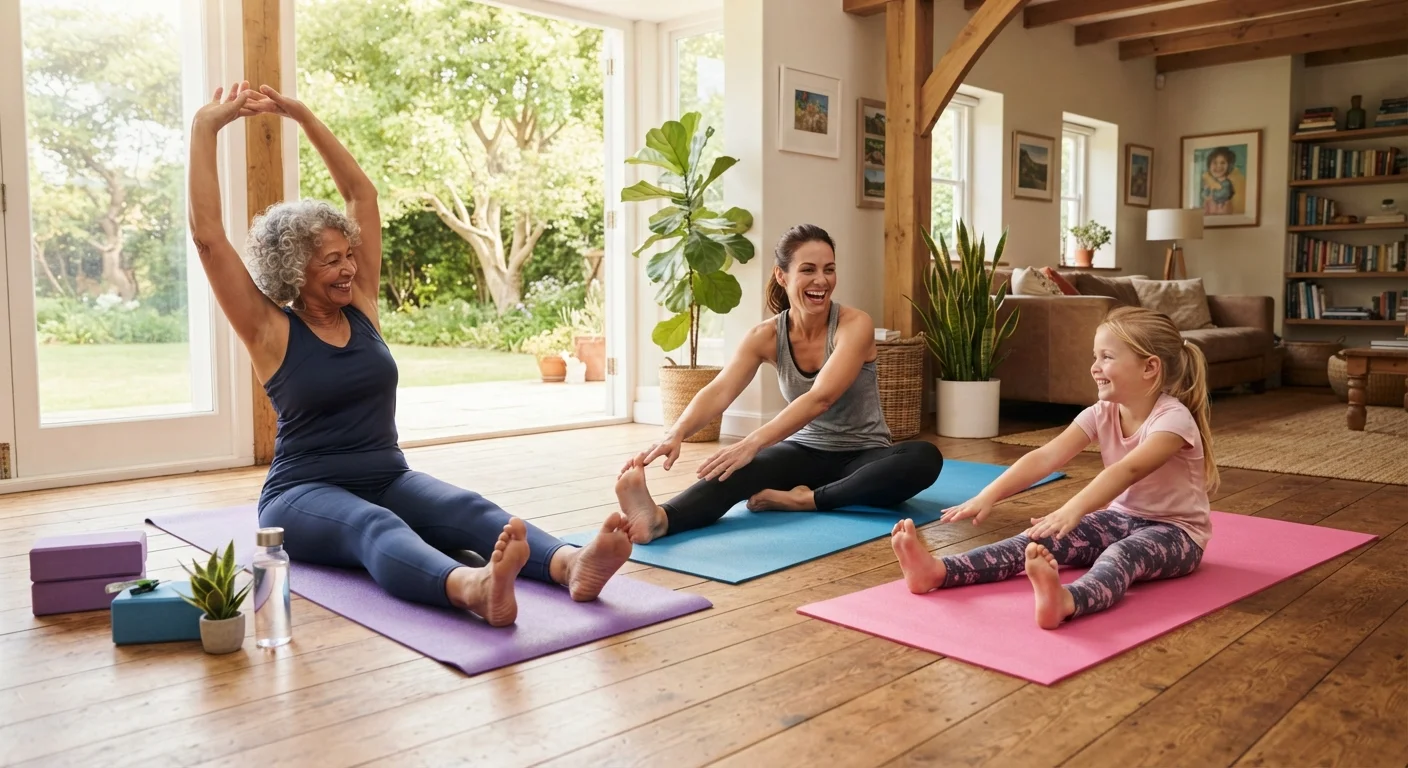
Photo: InsightsChief.com | Your Source Of Trusted Insights editorial
Key Takeaways
- Children need roughly 60 minutes of moderate-to-vigorous activity daily, mostly through active play.
- Teens benefit from a mix of aerobic activity and muscle-strengthening exercises at least three days per week.
- Adults should aim for 150 minutes of moderate aerobic activity weekly, plus two strength sessions.
- Older adults should prioritize balance and flexibility work to reduce fall risk and maintain independence.
- No equipment is required to meet recommended activity levels at any life stage.
- Exercising together as a family reinforces healthy habits across every generation.
Why Exercise Needs Change Throughout Life
Physical activity is one of the most consistently supported pillars of long-term health - yet what constitutes the right type, intensity, and duration shifts considerably as the body develops, matures, and ages. The U.S. Department of Health and Human Services publishes Physical Activity Guidelines that differ specifically by age group, reflecting decades of research into how bodies respond to exercise at each stage of life.
For families managing fitness at home, understanding these differences prevents two common mistakes: under-challenging growing kids and teens who need vigorous daily movement, and over-challenging older family members whose joints and recovery capacity have changed. Getting the balance right doesn't require a gym membership or elaborate equipment - it requires knowing what you're working toward and why.
Just as nutritional requirements shift at each stage of childhood and beyond (see our guide on how family nutrition needs change as kids grow), fitness needs follow a similar developmental arc.
60 min
Daily activity target for children aged 6-17
Per U.S. Department of Health and Human Services Physical Activity Guidelines for Americans, 2nd edition.
150 min
Minimum weekly moderate aerobic activity for adults
Recommended by the U.S. Physical Activity Guidelines for adults aged 18-64 to gain substantial health benefits.
3x/week
Balance training frequency recommended for adults 65+
The Physical Activity Guidelines highlight balance activities as a distinct priority for older adults to reduce fall risk.
Children (Ages 3-12): Movement as a Foundation
For younger children, fitness isn't about structured workouts - it's about accumulating movement throughout the day. The guidelines recommend that school-age children (6-12) get at least 60 minutes of moderate-to-vigorous physical activity daily, with muscle- and bone-strengthening activity included at least three days per week. For preschoolers (3-5), the recommendation is simply to be physically active throughout the day.
At this stage, active play is exercise. Jumping, running, climbing, dancing, and obstacle courses all meet the threshold. The distinction between structured play and structured exercise matters less than total movement time - something explored in depth in our article on keeping kids active indoors.
From a home fitness standpoint, children in this range thrive with minimal or no equipment. A cleared living room floor, a hallway to run through, or a backyard doubles as a fitness space. Consistency and variety matter more than intensity.
For children who resist 'exercise,' reframe every active game as fitness - relay races, freeze dance, and backyard obstacle courses all count toward daily movement goals.
With teens, let them choose the activity format - whether that's a YouTube workout, a jump rope challenge, or a bodyweight routine they designed themselves. Ownership drives consistency.
Teens (Ages 13-17): Building Strength and Habits
Adolescence brings rapid bone growth, hormonal changes, and the opportunity to build muscle and cardiovascular capacity that can last a lifetime. The same 60-minutes-per-day guideline applies for teens, but the composition shifts: at least three of those days per week should include vigorous aerobic activity (such as running, jump rope, or high-intensity bodyweight circuits), and three days should include muscle-strengthening activity (push-ups, resistance bands, or bodyweight squats).
Teens are also at a critical juncture for habit formation. Research consistently shows that adolescents who establish regular physical activity patterns are more likely to remain active into adulthood. Home fitness routines offer privacy and autonomy - two factors that matter considerably to this age group.
Bodyweight training is highly effective for teens and requires no equipment. If budget allows, a resistance band set provides low-cost variety. For households short on space, our room-by-room home fitness reference offers practical setups for every corner of the home.
Adults (Ages 18-64): Balancing Cardio, Strength, and Recovery
For most adults, the weekly target is 150-300 minutes of moderate-intensity aerobic activity (or 75-150 minutes of vigorous activity), combined with muscle-strengthening activities on two or more days per week. This is where many households fall short - not because the volume is unachievable, but because competing demands make consistency difficult.
The good news: the guidelines explicitly recognize that shorter bouts of activity accumulate meaningfully. Three 10-minute walks count. A 20-minute bodyweight circuit during a lunch break counts. This flexibility makes home-based fitness genuinely viable for working parents and caregivers. See our guide on fitting fitness into a packed schedule for evidence-informed strategies.
Don't Skip the Rest Days
Adults also need to account for recovery. As metabolic rate and tissue repair capacity gradually change after the mid-30s, adequate sleep and rest days are not optional extras - they're part of the fitness equation.
Older Adults (65+): Stability, Mobility, and Staying Independent
The aerobic and strength targets for older adults mirror those for younger adults, but two additional priorities become central: balance training and flexibility work. Falls are the leading cause of injury-related death among older Americans, and evidence strongly supports that regular balance exercises - tai chi movements, single-leg stands, heel-to-toe walking - significantly reduce fall risk.
Older adults should aim to include balance and stability activities on three or more days per week, woven naturally into existing routines. Yoga, gentle stretching, and chair-based exercises are appropriate for many individuals in this group, though the right activity level varies significantly by individual health status.
For family members managing chronic conditions, recent joint replacement, or cardiac concerns, this is an area where consulting a healthcare provider or physical therapist before starting a new routine is especially important. The goal is sustained independence, and the right professional guidance helps get there safely.
This article provides general health information only and is not a substitute for personalized medical advice. Always consult a qualified healthcare professional before starting or significantly changing an exercise program, particularly if you have existing health conditions.
Exercising Together as a Multi-Generational Household
One of the most underutilized home fitness strategies is the family workout - not a rigid, one-size-fits-all session, but a shared activity window where each person works at their appropriate level. A walk, a backyard game, a short yoga flow, or a dance session can simultaneously serve the 8-year-old's 60-minute daily target, the parent's aerobic minutes, and the grandparent's balance practice.
Shared movement also reinforces that physical activity is a normal part of daily life rather than a chore. Children who see adults exercising regularly are more likely to continue those patterns themselves. If you're newer to building a routine from scratch, our guide on getting started with home fitness as a beginner covers foundational habits that apply across age groups.
The key is flexibility and inclusion. Modify activities so everyone can participate safely. Celebrate effort over performance. And remember: the household that moves together tends to stay healthier together - on any budget.
The content provided on our blog site traverses numerous categories, offering readers valuable and practical information. Readers can use the editorial team’s research and data to gain more insights into their topics of interest. However, they are requested not to treat the articles as conclusive. The website team cannot be held responsible for differences in data or inaccuracies found across other platforms. Please also note that the site might also miss out on various schemes and offers available that the readers may find more beneficial than the ones we cover.