
Home Fitness on a Tight Schedule: Principles That Actually Hold Up

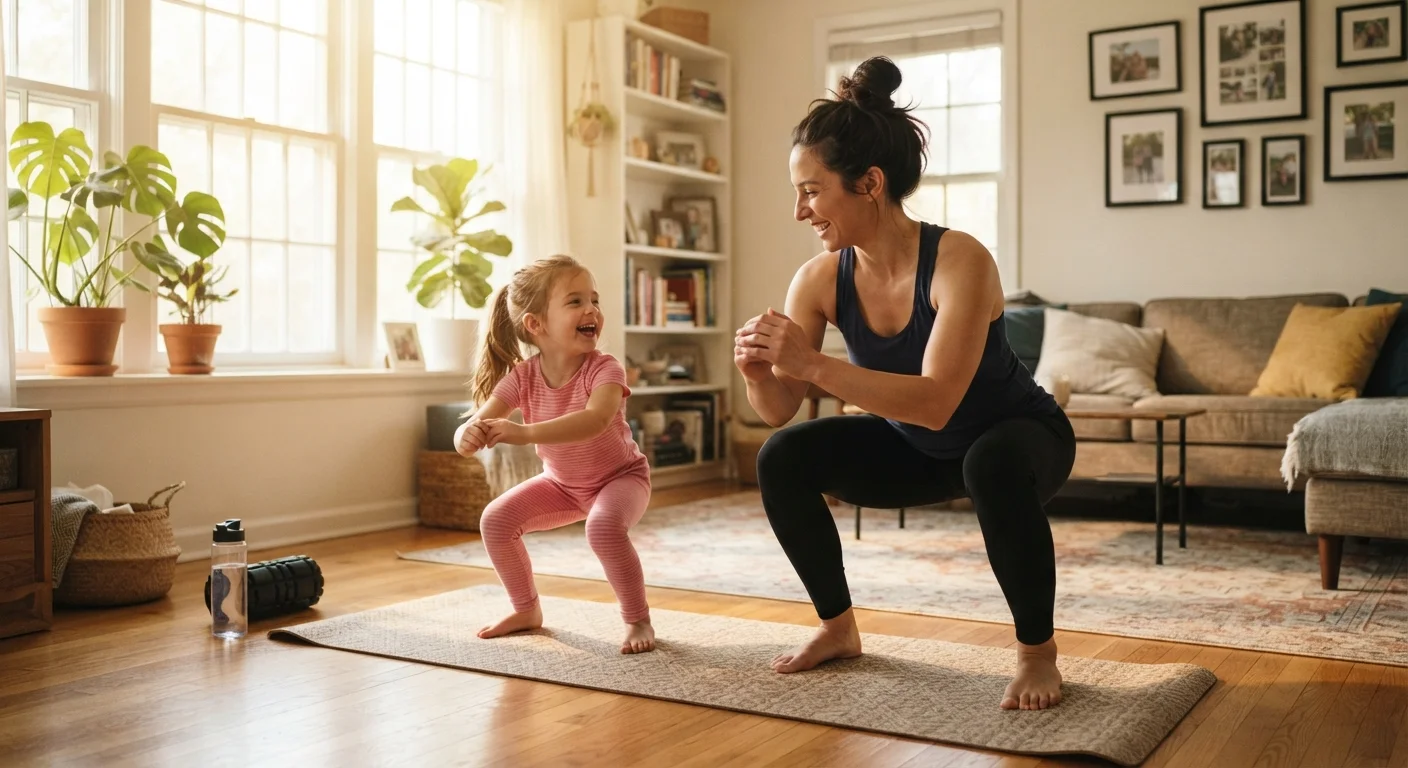
Photo: InsightsChief.com | Your Source Of Trusted Insights editorial
Key Takeaways
- Consistency matters more than session length - even 10-15 minutes of daily movement adds up significantly over time.
- Bodyweight exercises require no equipment and can be adapted for any fitness level or available space.
- Habit stacking - linking exercise to existing daily routines - is one of the most effective ways to build consistency.
- Progressive overload (gradually increasing difficulty) applies at home just as it does in a gym setting.
- Family involvement improves both adherence and overall household activity levels.
- Always consult a qualified healthcare professional before beginning a new exercise program, especially with existing health conditions.
Why Home Fitness Fails - and How to Avoid the Common Traps
Most home fitness attempts stall not from lack of effort, but from unrealistic expectations. People design programs that mirror gym schedules - hour-long sessions, six days a week - then abandon them when life intervenes. Research in behavioral science consistently shows that sustainability hinges on fit between routine and real life, not on the size of ambition.
The two most common traps are over-programming (planning more than your schedule realistically allows) and under-structuring (leaving workouts vague, so they're easily skipped). Both are fixable. The principles below address each directly, giving busy households a framework that holds up under the pressure of packed calendars.
For those just starting out, our beginner's guide to home fitness covers foundational mindset and movement patterns worth reviewing first.
Core Principles for Fitting Movement Into a Busy Day
The following practices are grounded in exercise science and behavioral research. They are not prescriptions for any individual - consult a healthcare professional if you have existing health conditions or concerns before changing your activity level.
Anchor workouts to an existing daily habit using 'habit stacking'
Commit to a minimum effective dose rather than an ideal session length
Prioritize compound, multi-joint movements to maximize efficiency
Schedule exercise as a non-negotiable calendar appointment
Involve the household to reduce barriers and increase accountability
Plan for disruption by having a fallback 'floor routine'
For a practical look at how these principles apply room by room, see our small-space home fitness reference.
Making Progress Without a Gym
One of the most persistent myths is that home workouts plateau quickly. In reality, stalling usually reflects a missing principle: progressive overload - the gradual increase in challenge over time. Slowing a push-up down, reducing rest periods, or adding a single repetition each week all count. Our guide to progressive overload at home explains this in detail.
150 min
Weekly moderate activity recommended for adults
The CDC and WHO both recommend at least 150 minutes of moderate-intensity aerobic activity per week for adults - achievable in sessions as short as 10 minutes.
~21 min
Average daily movement needed to meet guidelines
Spread across seven days, the 150-minute weekly recommendation works out to roughly 21 minutes per day - well within reach for most busy households.
2×
Improvement in adherence with social support
A review published in the British Journal of Health Psychology found that social support from family or friends was associated with meaningfully higher exercise adherence compared to solo commitment.
If your routine has stopped producing results, understanding why home workouts plateau can help you diagnose and fix the issue. You can also track real progress with metrics that go beyond the scale.
Quick Wins You Can Start Today
These actions don't require equipment, a restructured schedule, or any financial outlay. They're immediate entry points into a more active day.
For a broader look at how small movement habits compound over time, see movement throughout the day. And if you're curious how a home routine compares to a gym membership over the long run, what the research actually says offers a clear-eyed comparison.
This article is for general informational purposes only and is not a substitute for professional medical advice. Consult a qualified healthcare provider before starting any new exercise program.
The content provided on our blog site traverses numerous categories, offering readers valuable and practical information. Readers can use the editorial team’s research and data to gain more insights into their topics of interest. However, they are requested not to treat the articles as conclusive. The website team cannot be held responsible for differences in data or inaccuracies found across other platforms. Please also note that the site might also miss out on various schemes and offers available that the readers may find more beneficial than the ones we cover.