
Keeping Kids Active Indoors: Structured Play vs. Structured Exercise

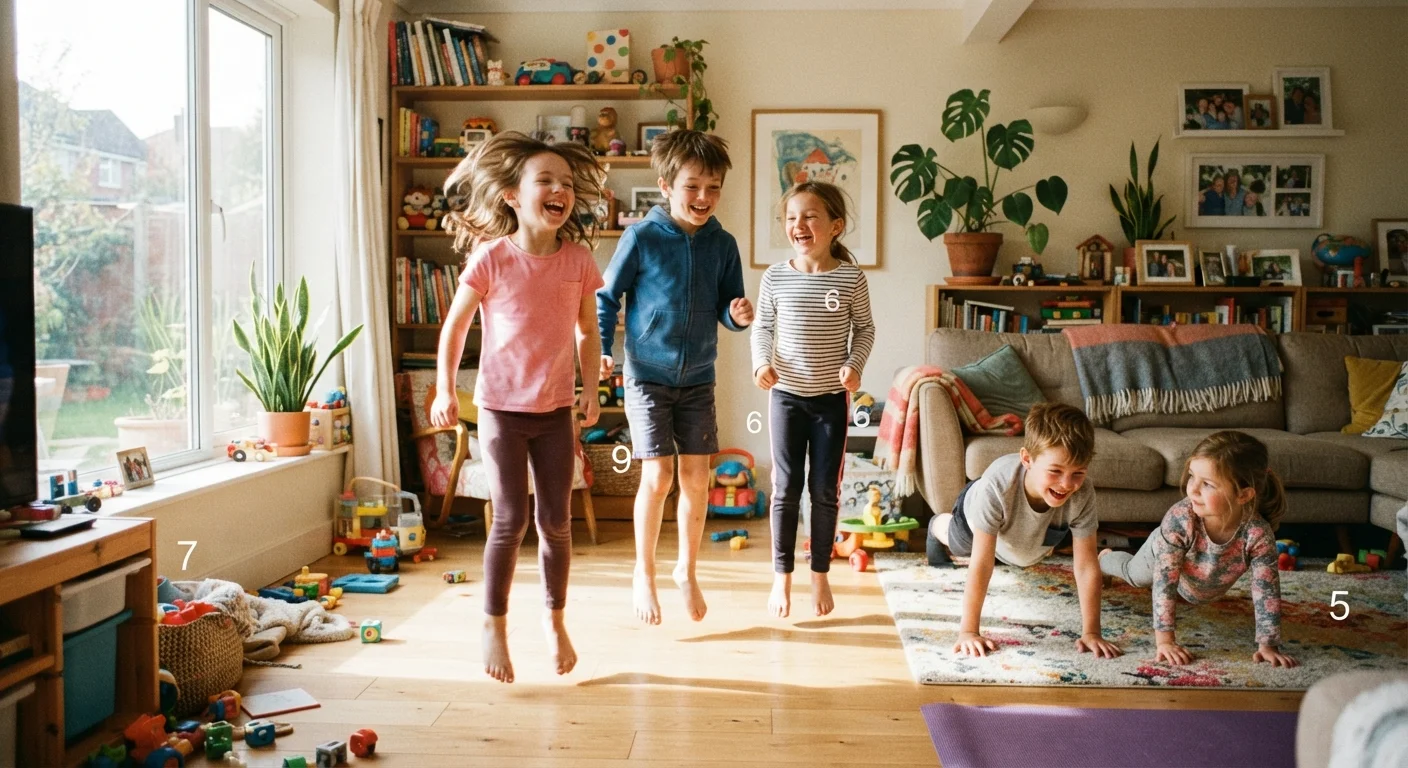
Photo: InsightsChief.com | Your Source Of Trusted Insights editorial
Key Takeaways
- Structured play and formal exercise both contribute meaningfully to children's physical health and development.
- Children ages 3-5 benefit most from unstructured active play; older children can handle more deliberate exercise routines.
- Blending both approaches at home requires minimal equipment and little extra cost.
- Consistency matters more than intensity - short daily movement sessions add up significantly over time.
- Always consult a pediatrician before starting a new physical activity program with your child.
What Each Approach Actually Means
Structured play refers to child-led or loosely facilitated activity that has a goal - building a fort, playing freeze tag, dancing to music - but follows the child's natural curiosity and energy. It is active by design, but not scripted. Structured exercise, by contrast, involves an adult-directed plan: a set number of jumping jacks, a beginner yoga flow, or a follow-along fitness video with defined sets and reps.
Both qualify as physical activity, and both count toward the 60 minutes of daily movement that major public health guidelines recommend for school-age children. The distinction lies in who is directing the movement and how much cognitive engagement accompanies it. Understanding this difference helps families choose the right mix at the right developmental stage - especially when keeping kids moving indoors on a tight budget. For a broader look at how physical needs evolve, see how exercise needs shift across life stages.
Comparing the Two Approaches Side by Side
The table below outlines how structured play and structured exercise differ across the criteria most relevant to families managing active kids at home.
| Structured Play | Structured Exercise | |
|---|---|---|
| Who directs activity | Child (with loose facilitation) | Adult (planned routine) |
| Best age range | Ages 3-8 primarily | Ages 8-12 and up |
| Equipment needed | None - uses household items | None to minimal (mat, ball) |
| Motivation source | Intrinsic - fun and curiosity | External structure and goals |
| Skill development focus | Motor coordination, creativity | Strength, endurance, form |
| Ease of implementation | Very easy - minimal planning | Moderate - requires planning |
| Long-term habit formation | Strong - enjoyment-driven | Moderate - needs variety |
As the comparison shows, neither approach dominates across every dimension. Structured play has a clear edge for motivation and emotional engagement in younger children; structured exercise edges ahead when deliberate skill development or cardiovascular progression is the goal.
The Developmental Case for Play
Research in child development consistently links child-directed active play to gains in motor coordination, spatial reasoning, and social skills - particularly in children under age eight. When a child decides to hop on one foot, balance on a cushion, or invent an obstacle course from couch pillows, they are self-regulating physical challenge in a way that adult-prescribed routines rarely replicate.
Play-based movement also tends to produce intrinsic motivation, meaning children return to it voluntarily. This is a meaningful long-term advantage: habits formed around enjoyment are generally more durable than those built around obligation. The role of consistent daily routines applies here - embedding active play into predictable parts of the day (after school, before dinner) reinforces the behavior without pressure.
Make the Environment Do the Work
The Case for Adding Structured Exercise
As children approach the middle elementary years (roughly ages 8-12), many are ready for more intentional movement. Structured exercise introduces concepts like progressive challenge, repetition, and deliberate rest - building blocks of physical literacy that carry into adulthood. Bodyweight movements such as squats, push-ups, and planks require no equipment and can be safely introduced with proper form guidance.
Structured routines also offer predictability that some children find reassuring, particularly those who respond well to clear expectations. For families already exploring a family fitness routine at home, incorporating a short guided session two or three times per week can complement daily free play without replacing it.
This article provides general health and wellness information for educational purposes only and is not a substitute for advice from a qualified healthcare provider. Consult your child's pediatrician before beginning any new physical activity program.
Building a Practical Indoor Blend
For most families, the most realistic strategy is a blended weekly schedule that reserves certain windows for free active play and others for short guided movement. A sample structure might look like:
- Weekday mornings or afternoons: 20-30 minutes of child-directed active play (dance party, indoor obstacle course, active storytelling games)
- Two to three times per week: A 15-20 minute structured session the family does together - bodyweight circuits, beginner yoga, or a follow-along kids' fitness video
This blend respects developmental needs, stays budget-friendly (no equipment required), and keeps engagement high. It also sidesteps a common trap: treating exercise as punishment or a chore, which can undermine a child's relationship with movement long-term. For perspective on how similar trade-offs play out for adults, walking vs. structured exercise for everyday adult wellness explores comparable evidence. And if you're curious how screen time fits into the picture, the difference between educational play and screen time offers useful context on digital engagement versus active play.
The content provided on our blog site traverses numerous categories, offering readers valuable and practical information. Readers can use the editorial team’s research and data to gain more insights into their topics of interest. However, they are requested not to treat the articles as conclusive. The website team cannot be held responsible for differences in data or inaccuracies found across other platforms. Please also note that the site might also miss out on various schemes and offers available that the readers may find more beneficial than the ones we cover.