
The Myth That Paying Off Your Car Loan Ends Your Vehicle Costs

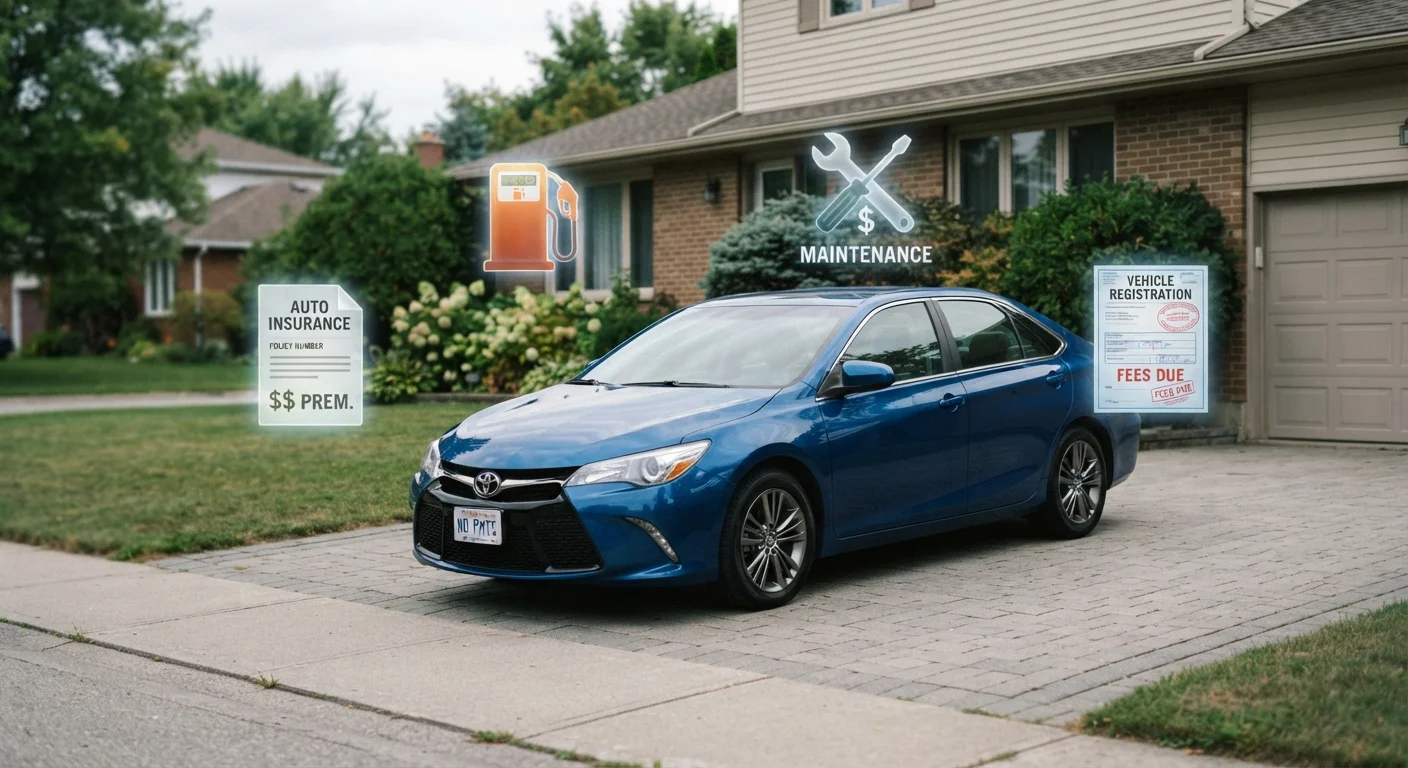
Photo: InsightsChief.com | Your Source Of Trusted Insights editorial
Key Takeaways
- Paying off a car loan eliminates only one of many ongoing vehicle expenses.
- Older paid-off vehicles often carry higher maintenance and repair costs than newer ones.
- Insurance, registration, fuel, and depreciation continue regardless of loan status.
- Drivers who stop budgeting for vehicle costs after payoff are often caught off guard by large repair bills.
- Total cost of ownership includes at least six distinct expense categories beyond the monthly payment.
Why the 'Free Car' Feeling Is a Financial Illusion
The month your final car payment clears is genuinely worth celebrating - but it's easy to make a costly leap in logic: treating that cleared payment as though the car itself has become free. It hasn't. The loan was one line item in a longer list of expenses that continue uninterrupted the moment you own the title outright.
For a realistic picture of what drivers actually spend each year, see The True Annual Cost of Owning a Car in the US. The numbers make clear that the monthly payment - while often the largest single line item - rarely accounts for more than half of total vehicle costs.
The myth isn't harmless. Drivers who mentally retire their vehicle budget after payoff often stop setting aside money for repairs, and one unexpected breakdown can wipe out months of perceived savings.
Myth
Once the car is paid off, my vehicle costs drop dramatically.
Fact
The loan payment disappears, but insurance, fuel, maintenance, and registration continue - and repair costs often increase as a vehicle ages.
For many drivers, the monthly loan payment is the single biggest vehicle expense, so its disappearance feels transformative. In practice, the remaining cost categories - insurance, fuel, routine maintenance, registration fees, and unplanned repairs - can collectively exceed what the loan payment was. A paid-off vehicle that's seven or more years old is statistically entering its higher-repair phase, which can offset the savings from eliminating the payment.
Myth
Older cars are always cheaper to own than newer ones.
Fact
Older vehicles typically cost less to purchase and insure, but they often require more frequent and expensive repairs, narrowing or eliminating the savings advantage.
Age and mileage correlate with component wear. Timing belts, water pumps, suspension parts, and transmissions all have finite service lives. A vehicle with 120,000 miles may be debt-free, but a single major repair - say, a transmission replacement - can run $2,000-$5,000 depending on the vehicle. Fuel economy also tends to decline with age, adding to running costs. The total picture varies widely by make, model, and maintenance history, so generalizing that older always means cheaper is unreliable.
Myth
If I skip comprehensive and collision coverage on a paid-off car, I'll always save money.
Fact
Dropping optional coverages reduces premiums, but it transfers significant financial risk to you if the vehicle is damaged, stolen, or totaled.
Once a lender no longer requires comprehensive and collision coverage, dropping them is legally permitted and does reduce the insurance bill. However, the decision should be based on the vehicle's current market value versus the cost of coverage and your ability to absorb a replacement cost out of pocket. A vehicle worth $8,000-$12,000 may still justify carrying those coverages, depending on your financial cushion. This is a personal financial calculation, not a blanket money-saving rule.
Myth
Routine maintenance is optional if the car seems to be running fine.
Fact
Many maintenance intervals are designed to prevent failures that show no warning signs until they become serious - and expensive - problems.
Engine oil degradation, coolant breakdown, and brake fluid moisture absorption happen on a timeline, not because a warning light appears. Skipping scheduled services can accelerate wear on components that are far more expensive to replace than to maintain. A $75 oil change that gets deferred for an extra 5,000 miles won't cause an immediate problem, but the cumulative effect of chronic deferral on engine longevity is well-documented. Maintenance is a recurring cost that pays for itself in avoided repairs.
Myth
Depreciation only matters when you're buying or selling - not while you own.
Fact
Depreciation affects your net financial position continuously, influencing insurance payouts, trade-in leverage, and the cost-benefit of major repairs.
If a paid-off vehicle worth $6,000 is totaled, your insurance payout (if you carry comprehensive coverage) is based on its actual cash value - not what you paid for it or what repairs would cost. Depreciation also determines whether a major repair makes financial sense: spending $4,000 to fix a vehicle worth $5,000 is a very different proposition than spending $4,000 on one worth $15,000. Understanding where your vehicle sits on its depreciation curve is practical knowledge, not just trivia for buyers and sellers.
The Hidden Cost Categories That Survive Loan Payoff
Every vehicle on the road carries at least five recurring cost categories that have nothing to do with financing:
- Insurance premiums - required in nearly every US state and repriced at each renewal based on your record, location, and the vehicle's age and value.
- Fuel - one of the most volatile line items, tied to driving habits and local pump prices, not to your lender.
- Routine maintenance - oil changes, tires, brake pads, filters, and fluid replacements accumulate predictably over miles driven.
- Registration and taxes - annual fees vary by state but rarely disappear; some states tie them to vehicle value.
- Unplanned repairs - older vehicles are statistically more likely to need significant repairs, often at the worst possible moment.
The Complete Guide to Total Cost of Vehicle Ownership in the US breaks down how these categories interact across a vehicle's full lifespan.
$12,000+
Average annual cost of car ownership in the US
AAA's annual Your Driving Costs study consistently finds that total vehicle ownership costs - including depreciation, fuel, insurance, and maintenance - exceed $12,000 per year for the average American driver.
~$1,000
Typical annual maintenance and repair spending
US Bureau of Labor Statistics Consumer Expenditure Survey data indicates households spend roughly $900-$1,100 per year on vehicle maintenance and repairs, a figure that tends to rise with vehicle age.
47%
Share of ownership cost that is not the loan payment
Analysis of AAA cost data suggests that for a mid-size sedan financed over five years, non-financing costs - fuel, insurance, maintenance, fees - represent roughly half or more of total ownership spending.
Correcting the Most Common Car Cost Myths
Several widespread beliefs about vehicle costs persist largely because they're partially true - which makes them more dangerous than outright fiction. The myth-fact pairs below address the ones most likely to affect household budgets.
If these misconceptions sound familiar, Ownership Cost Assumptions That End Up Costing Drivers More goes deeper on the thinking errors that quietly inflate what drivers pay over time.
The Repair Reserve Rule Most Drivers Ignore
Budgeting After Payoff: What a Realistic Approach Looks Like
Financial planners commonly suggest redirecting a portion of the former monthly payment into a dedicated vehicle fund once a loan is paid off. This isn't about being pessimistic - it's about acknowledging that deferred costs don't disappear; they just arrive as lump sums instead of monthly bills.
For drivers comparing whether to keep a paid-off older vehicle or move to something newer, the tradeoffs are more nuanced than they first appear. The New Car vs. Used Car: Which Is Cheaper to Own? analysis shows that a vehicle's age and mileage profile matter significantly to the repair and insurance cost equation.
Drivers new to car ownership who want a ground-up understanding of what to plan for can start with Understanding Car Ownership Costs: A Starting Point for New Drivers.
This article is for general informational purposes only and does not constitute financial or legal advice. Consult a qualified financial professional for guidance specific to your situation.
The content provided on our blog site traverses numerous categories, offering readers valuable and practical information. Readers can use the editorial team’s research and data to gain more insights into their topics of interest. However, they are requested not to treat the articles as conclusive. The website team cannot be held responsible for differences in data or inaccuracies found across other platforms. Please also note that the site might also miss out on various schemes and offers available that the readers may find more beneficial than the ones we cover.