
New Car vs. Used Car: Which Is Cheaper to Own?

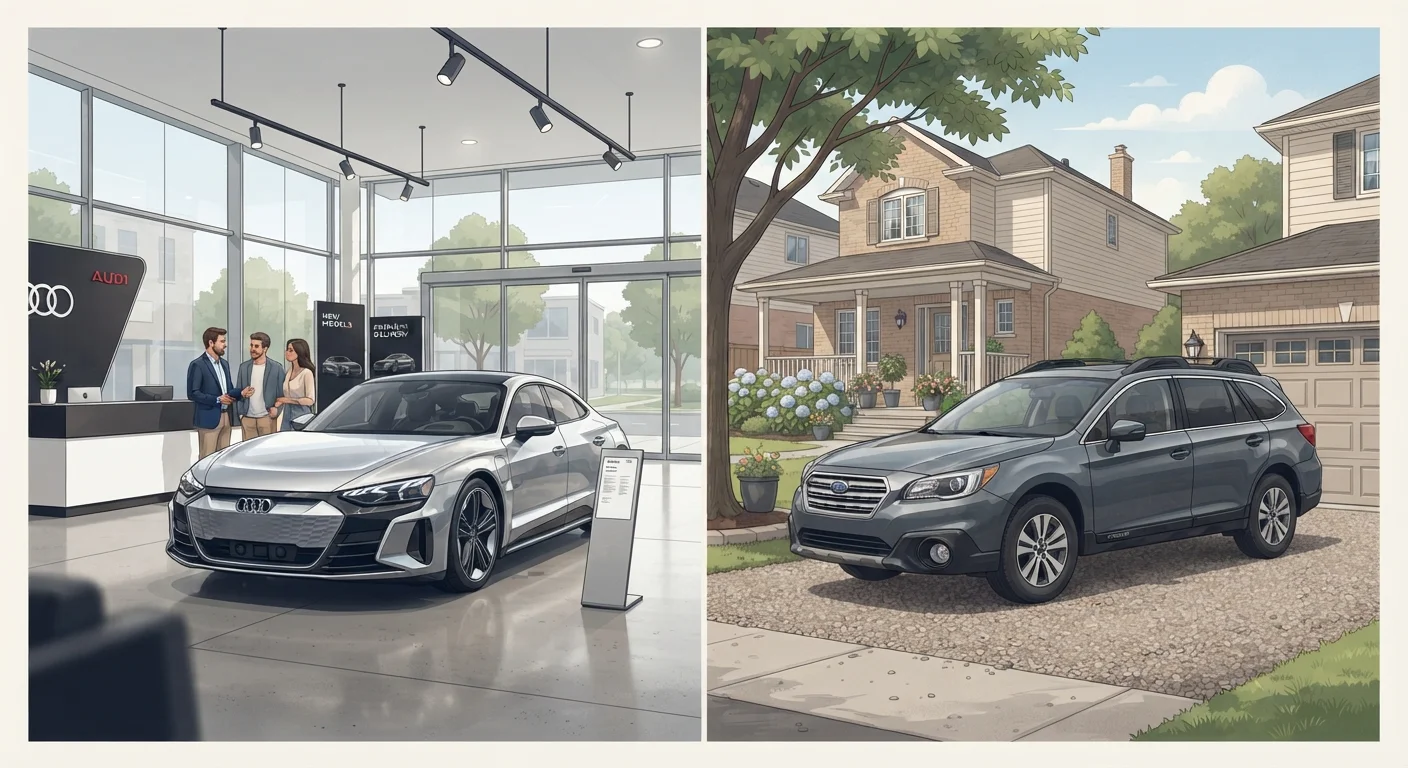
Photo: InsightsChief.com | Your Source Of Trusted Insights editorial
Key Takeaways
- A new car typically loses 15-25% of its value in the first year alone - its single largest ownership cost.
- Used cars avoid the sharpest depreciation drop but often carry higher repair and financing costs.
- Insurance premiums are generally higher on new vehicles than on comparable used models.
- A certified pre-owned vehicle can offer a middle ground between warranty coverage and lower depreciation exposure.
- Total ownership cost depends heavily on how long you keep the vehicle, not just the purchase price.
- Neither new nor used is universally cheaper - the right answer depends on your specific budget and usage pattern.
Why Purchase Price Is a Misleading Starting Point
Sticker price is where most buyers focus their attention, but it represents only a fraction of what a vehicle actually costs to own. The total cost of vehicle ownership spans depreciation, financing interest, insurance, fuel, maintenance, and registration - and the balance between those categories shifts dramatically depending on whether the car is new or used.
A new car purchased at $35,000 and a used car purchased at $20,000 are not $15,000 apart in true cost over five years. The gap narrows or even reverses depending on how each vehicle depreciates, what repairs it needs, and what rate you finance it at. Understanding those dynamics is what allows budget-conscious households to make a genuinely informed choice.
| Criterion | New Car | Used Car |
|---|---|---|
| Purchase Price | Higher | Lower |
| First-Year Depreciation | 15-25% of value | Mostly already absorbed |
| Financing Rate | Often lower | Often higher |
| Insurance Premiums | Generally higher | Generally lower |
| Annual Registration | Higher (value-based fees) | Lower as vehicle ages |
| Warranty Coverage | Full factory warranty | Limited or none |
| Repair Risk | Low in early years | Moderate to high |
| Safety Technology | Latest standards | Varies by model year |
Depreciation: The Biggest Number Most Buyers Ignore
Depreciation is consistently the largest single ownership cost for most drivers, yet it rarely appears in monthly budget conversations. Depreciation hits hardest in a vehicle's first year, when a new car can shed 15-25% of its value. By year three, cumulative depreciation on many models reaches 40-50% of the original purchase price.
A used car buyer effectively transfers that early loss to the original owner. Buying a well-maintained three-year-old vehicle means you absorb a shallower depreciation curve going forward. This is one of the strongest financial arguments for the used market - particularly for buyers who don't intend to keep a vehicle for a decade or more.
15-25%
New car value lost in year one
Industry estimates consistently place first-year depreciation in this range for most mainstream vehicle segments.
~40-50%
Cumulative depreciation by year three
Vehicle valuation data from sources such as Edmunds and Kelley Blue Book indicate most non-luxury vehicles lose roughly half their value within three years.
$12,000+
Average annual new car ownership cost
AAA's annual 'Your Driving Costs' study estimates average total new vehicle ownership cost exceeds $12,000 per year when all expense categories are included.
Financing, Insurance, and Registration Costs Compared
Beyond depreciation, three recurring cost categories behave differently for new versus used vehicles.
Financing
New car loans typically carry lower interest rates than used car loans - sometimes significantly so, particularly when manufacturer-subsidized rates are available. However, a larger principal on a new vehicle can mean total interest paid exceeds what you'd pay on a higher-rate used loan with a smaller balance. Run the full amortization, not just the monthly payment.
Insurance
Comprehensive and collision premiums are generally higher on new vehicles because replacement cost is higher. Lenders also require full coverage on financed vehicles, removing the option to drop to liability-only. On a paid-off used car with lower market value, some owners reduce coverage levels - though this involves trade-offs that vary by individual situation and should be evaluated carefully.
Registration
Most US states calculate annual registration fees on a vehicle's value or age. New cars typically cost more to register each year, with fees declining as the vehicle ages. This is a modest but real recurring savings on the used side. See the full breakdown of ownership cost categories for state-by-state context.
Maintenance and Repair: Where Used Cars Can Surprise You
New cars come with factory warranties - typically three years or 36,000 miles bumper-to-bumper, with longer powertrain coverage - which absorbs most unexpected repair costs during the early ownership period. Routine maintenance (oil changes, tires, brakes) applies regardless of age.
Used vehicles, especially those purchased outside a certified pre-owned program and beyond warranty, expose buyers to repair risk that is genuinely hard to predict. A vehicle history report and a pre-purchase inspection by an independent mechanic can reduce that uncertainty, but cannot eliminate it. Budget-minded buyers should maintain a dedicated repair reserve - often cited in the range of $100-$150 per month - rather than assuming low purchase price means low total cost.
The myth that older cars are always cheaper ignores the reality that maintenance costs tend to rise with mileage and age, often offsetting the savings from a lower purchase price.
How Holding Period Changes the Math
One of the most important variables in new-versus-used comparisons is how long you keep the vehicle. A new car buyer who sells after three years absorbs peak depreciation with little offset. A buyer who holds the same car for ten years spreads that depreciation loss over a far longer period, reducing its annual cost impact while also maximizing the value of the factory warranty and newer safety systems.
Used car buyers who purchase vehicles with 40,000-60,000 miles and hold them to 150,000+ miles often achieve the lowest per-mile ownership cost - provided the vehicle is mechanically sound and maintained consistently. The fundamentals of ownership cost planning are the same regardless of which path you choose: know your full cost structure before you sign.
This article provides general financial information for educational purposes only. Individual results vary based on vehicle choice, financing terms, location, and usage. Consult a qualified financial adviser for guidance specific to your situation.
The content provided on our blog site traverses numerous categories, offering readers valuable and practical information. Readers can use the editorial team’s research and data to gain more insights into their topics of interest. However, they are requested not to treat the articles as conclusive. The website team cannot be held responsible for differences in data or inaccuracies found across other platforms. Please also note that the site might also miss out on various schemes and offers available that the readers may find more beneficial than the ones we cover.