
Loyalty Programs vs. Cashback Apps: Two Different Tools for One Goal

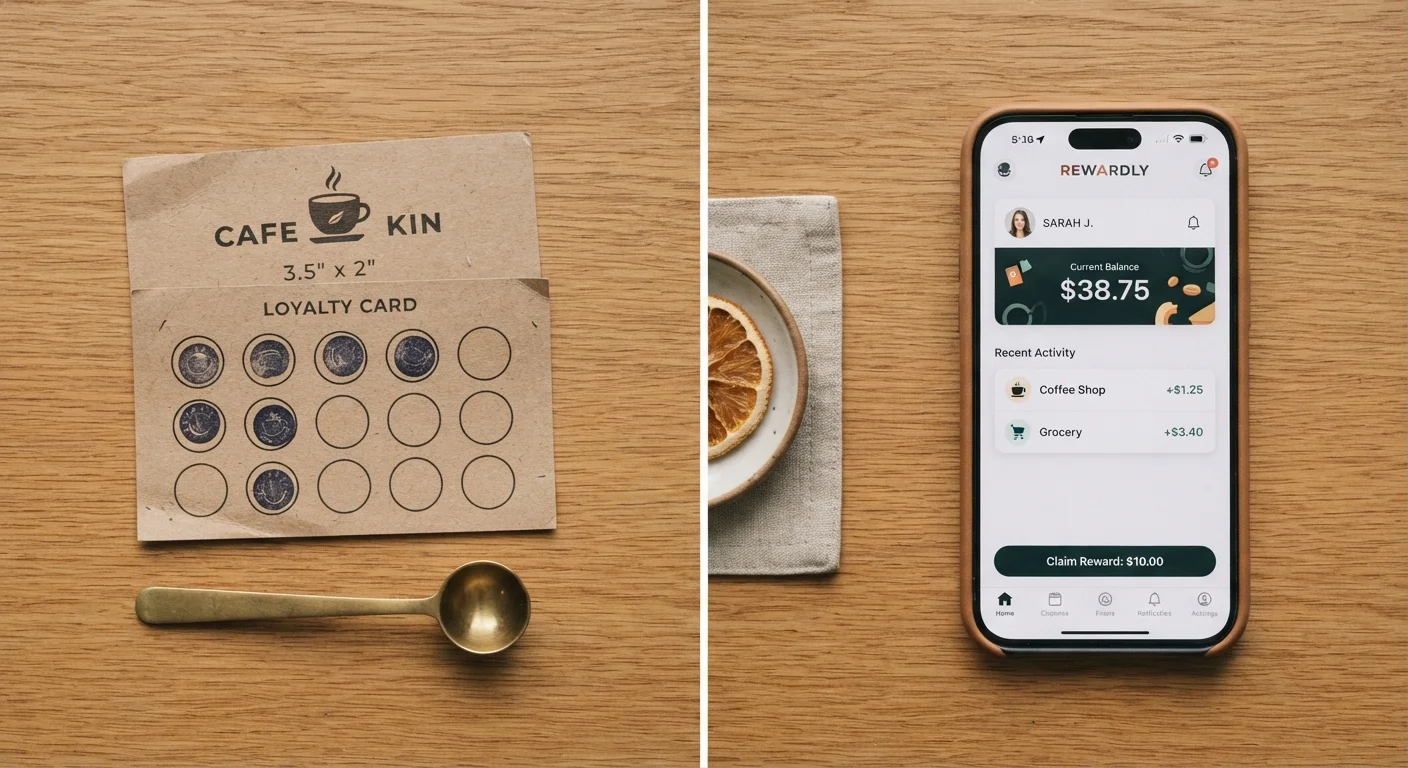
Photo: InsightsChief.com | Your Source Of Trusted Insights editorial
Key Takeaways
- Loyalty programs are controlled by retailers; cashback apps are independent third-party platforms.
- Loyalty rewards often come as points or store credit, while cashback apps typically pay out in actual cash or gift cards.
- Both tools can often be used together at the same checkout - they are not mutually exclusive.
- Loyalty programs incentivize brand loyalty; cashback apps incentivize purchase volume across many brands.
- Reading program terms carefully matters - expiration policies and redemption minimums vary widely.
How Each System Actually Works
Store loyalty programs are run directly by retailers. When you sign up - typically via a store card, app, or email account - your purchases are tracked and converted into points, fuel rewards, or member-only pricing. The retailer controls every aspect: earn rates, redemption rules, expiration windows, and what qualifies. Because the program lives inside the retailer's ecosystem, your rewards generally stay there too.
Cashback apps operate outside any single retailer's control. Platforms like these partner with hundreds of merchants and earn referral or affiliate revenue when their users make qualifying purchases. A portion of that revenue gets passed back to you as cashback. You activate an offer, shop, submit a receipt or link your card, and the rebate posts to your account. Once you hit a payout threshold, you withdraw via PayPal, direct deposit, or gift card.
The structural difference matters: loyalty programs are a retention tool for one brand; cashback apps are a rebate aggregator across many brands. Neither is inherently superior - they solve slightly different problems.
| Criterion | Store Loyalty Programs | Cashback Apps |
|---|---|---|
| Who controls it | The individual retailer | Independent third-party platform |
| Reward currency | Points, store credit, or discounts | Cash, PayPal, or gift cards |
| Where rewards can be spent | Usually only at that retailer | Anywhere (cash equivalent) |
| Retailer coverage | Single retailer or chain | Many retailers in one app |
| Sign-up requirement | Store account or loyalty card | App account; no store relationship needed |
| Typical earn rate | 1-5% in points (store-specific) | 0.5-10% depending on offer |
| Non-monetary perks | Free shipping, member events, tiers | Rare; primarily rebate-only |
| Point/reward expiration | Common; varies by program | Account-level; varies by platform |
What You Actually Earn - and How You Get It
Loyalty rewards are usually denominated in points or store currency. A program might award one point per dollar spent, then let you redeem 100 points for $1 off a future purchase - effectively 1% back. Some programs attach those points to specific products, delivering higher returns on selected SKUs. Tiered programs reward heavier spenders with escalating earn rates, but the value per point rarely changes: you're earning the right to spend more at the same place.
Cashback apps quote rebates as a flat dollar amount or percentage per offer. A grocery offer might pay $0.50 back on a specific product; a retailer portal might offer 3% back on an entire cart. These payouts convert to real currency rather than store-specific credit, giving you more flexibility in how you use the value. That said, most apps impose minimum payout thresholds - commonly $5 to $20 - before you can withdraw.
~$360
Average annual loyalty program redemption per active member
According to Bond Brand Loyalty's annual loyalty report, active program members who regularly redeem average several hundred dollars in value per year - though results vary significantly by program type and spending level.
$5-$20
Typical minimum payout threshold on cashback apps
Most major cashback app platforms require users to accumulate between $5 and $20 in rebates before funds can be withdrawn, which can delay access to smaller earned amounts.
70%+
US consumers enrolled in at least one loyalty program
Industry estimates consistently show the majority of American adult shoppers belong to at least one retail loyalty program, though active engagement rates are considerably lower than enrollment rates.
For a deeper look at how reward currencies compare beyond just cashback, see cashback, points, and miles explained.
Privacy, Data, and Business Model Trade-offs
Both systems collect purchase data - that's part of the value exchange. Loyalty programs give retailers granular visibility into what individual customers buy, enabling targeted promotions and personalized pricing. That data stays with one company and is governed by their privacy policy.
Cashback apps aggregate purchase behavior across many retailers. Because these platforms earn revenue by connecting shoppers to merchants, understanding their business model helps you calibrate expectations. Our article on how cashback apps actually make money breaks down the mechanics and what they mean for users.
Neither approach is risk-free from a data perspective. Reading the privacy policy of any program you join - and checking how long your data is retained - is reasonable due diligence. If sharing purchase history with a third-party aggregator is a concern, loyalty programs at individual retailers offer a more contained alternative.
Check Terms Before Assuming You Can Stack
Using Both Tools Together
The most practical takeaway is that these tools are not competing choices - most shoppers can use both simultaneously. Scan your loyalty card at checkout, and separately submit the same receipt to a cashback app. Many retailers permit this, and it effectively layers two different savings mechanisms on one transaction.
Groceries are among the easiest categories to stack both systems. Our guide to grocery cashback explains how loyalty cards, apps, and reward cards overlap in practice. For the broader picture of how all these pieces fit together across your spending, The Complete Picture on Cashback and Rewards is a useful reference. If you prefer not to use a credit card at all, cashback options for cash-only shoppers covers debit-linked and receipt-scanning alternatives that work alongside loyalty programs.
One caution worth noting: always verify that stacking is permitted under the specific program's terms. Some cashback portals exclude purchases that also earn loyalty rewards, or vice versa. Checking before you shop prevents disappointment at payout time.
The content provided on our blog site traverses numerous categories, offering readers valuable and practical information. Readers can use the editorial team’s research and data to gain more insights into their topics of interest. However, they are requested not to treat the articles as conclusive. The website team cannot be held responsible for differences in data or inaccuracies found across other platforms. Please also note that the site might also miss out on various schemes and offers available that the readers may find more beneficial than the ones we cover.