
Attic Insulation and Ventilation: What They Do and Why Both Matter

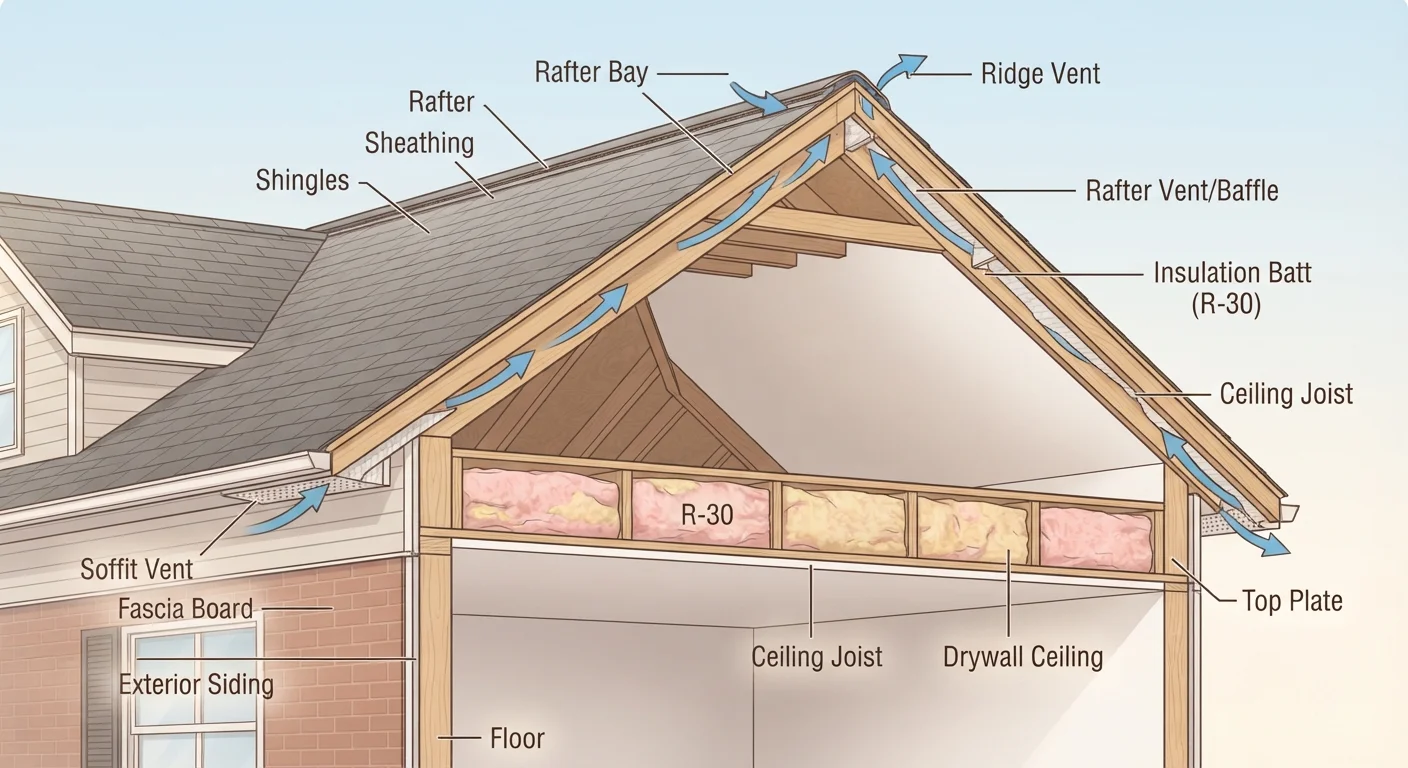
Photo: InsightsChief.com | Your Source Of Trusted Insights editorial
Key Takeaways
- Insulation slows heat movement; ventilation moves air - they perform different jobs and both are necessary.
- Poor attic ventilation can cause moisture buildup, leading to mold, rot, and premature roof deck failure.
- Inadequate insulation forces your heating and cooling system to work harder, increasing energy bills.
- Ice dams in winter are a common symptom of imbalanced attic insulation and ventilation.
- Adding insulation without addressing ventilation can make moisture problems significantly worse.
- A visual inspection twice a year can catch early warning signs before they become costly repairs.
How Attic Insulation Actually Works
Insulation doesn't generate heat or cold - it resists the movement of thermal energy. In winter, it keeps the warmth your heating system produces inside the living space rather than letting it escape upward through the ceiling. In summer, it slows the transfer of heat from a scorching attic into the rooms below.
The effectiveness of insulation is measured by its R-value: the higher the number, the greater the resistance to heat flow. Fiberglass batts, blown-in cellulose, and spray foam are common attic insulation types, each with different R-values per inch and different installation considerations.
One practical point that surprises many homeowners: insulation on the attic floor (between the ceiling joists below) is the norm in most homes. This separates the conditioned living space from the unconditioned attic. When insulation is missing or thin in spots - often around recessed light fixtures, attic hatches, or pull-down stairs - those gaps can account for a disproportionate share of heat loss. Sealing air leaks before adding insulation makes the whole system more effective, as described in our guide to weatherproofing before winter.
Seal Air Leaks Before Adding Insulation
What Attic Ventilation Does - and Why It's Not Optional
While insulation slows heat transfer, ventilation manages the air itself. A properly ventilated attic allows outside air to flow in through soffit vents (located at the eave line) and exit through ridge vents or gable vents near the peak. This continuous airflow serves two primary purposes.
First, it prevents heat buildup in summer. Without ventilation, an attic can reach temperatures well above 130°F, stressing roofing materials and radiating heat into living spaces. Second - and often underappreciated - ventilation controls moisture year-round. Everyday household activities like cooking, bathing, and breathing generate water vapor that rises. If it reaches a cold attic and condenses on wood surfaces, the result over time can be mold, rot, and structural damage to the roof deck and rafters.
Blocked soffit vents are among the most common ventilation problems. Insulation installed carelessly can cover soffit openings, cutting off the intake side of the airflow circuit. Ventilation baffles (also called rafter baffles or insulation dams) are inexpensive channels installed between rafters that keep the path to soffit vents open even when insulation is deep.
Bathroom and Kitchen Exhaust Fans Must Vent Outside
Why These Two Systems Must Work Together
Insulation and ventilation are sometimes treated as separate upgrades, but they function as a system. Adding more insulation to an attic with blocked or inadequate ventilation can actually worsen moisture problems by trapping humid air with no escape route. Conversely, a well-ventilated attic with too little insulation will bleed conditioned air and force your HVAC system to compensate - which shows up directly on your energy bills. Our article on HVAC maintenance for homeowners covers how attic conditions affect your overall heating and cooling system.
Ice dams are a textbook example of what happens when the two systems are out of balance. Heat escaping through poorly insulated attic floors warms the roof sheathing unevenly. Snow melts near the peak and flows toward the cold eaves, where it refreezes into a ridge of ice. That ice can force water under shingles and into the home. Better insulation reduces the heat loss; adequate ventilation keeps the roof deck closer to outdoor temperatures throughout - together, they address the root cause.
R-38 to R-60
Recommended attic insulation range for cold and mixed climates
According to the U.S. Department of Energy's insulation guidelines for Zone 4-7 climates across much of the continental United States.
Up to 20%
Potential heating and cooling energy savings from proper insulation
The U.S. EPA's ENERGY STAR program has cited air sealing and insulation together as capable of reducing total energy costs by this range, though results vary by home and climate.
1 per 150 sq ft
Common minimum ventilation ratio (net free area to attic floor area)
This ratio is a frequently cited baseline in U.S. building codes, though specific requirements vary by jurisdiction and roof design.
Warning Signs and When to Act
You don't need specialized equipment to spot many attic problems. A basic inspection with a flashlight twice a year can reveal:
- Thin or uneven insulation - visible joists or inconsistent depth across the floor
- Frost or condensation on the roof deck or rafters in cold weather
- Mold or dark staining on wood surfaces, particularly near the eaves
- Blocked soffit vents - visible from inside the attic at the perimeter
- Pest activity - damaged or disturbed insulation, droppings, or entry points
If you notice structural concerns, suspect asbestos-containing insulation (common in homes built before the 1980s), or face electrical hazards such as knob-and-tube wiring, stop and contact a licensed professional before proceeding. Delayed attention to attic issues often leads to compounding damage, as outlined in our overview of deferred maintenance costs. When the work involves structural components, it's also worth understanding which parts of your home carry load - see our explainer on load-bearing walls for context.
Frequently Asked Questions
The content provided on our blog site traverses numerous categories, offering readers valuable and practical information. Readers can use the editorial team’s research and data to gain more insights into their topics of interest. However, they are requested not to treat the articles as conclusive. The website team cannot be held responsible for differences in data or inaccuracies found across other platforms. Please also note that the site might also miss out on various schemes and offers available that the readers may find more beneficial than the ones we cover.