
HVAC Filters, Ducts, and Vents: What Homeowners Actually Need to Maintain

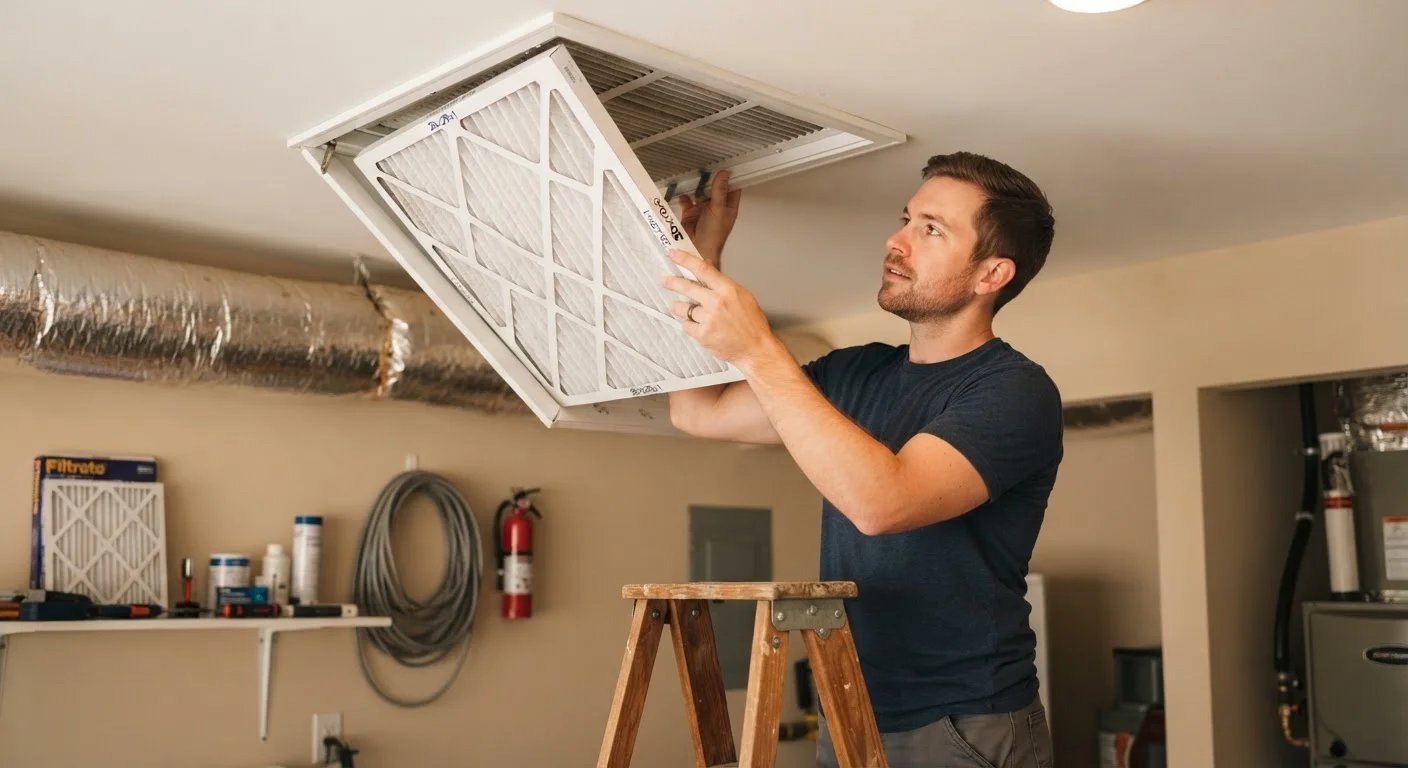
Photo: InsightsChief.com | Your Source Of Trusted Insights editorial
What Homeowners Are Actually Responsible For
Your HVAC system has dozens of components, but only a handful require routine attention from you as a homeowner. Understanding which tasks fall within your scope - and which require a licensed technician - helps you protect the system without overstepping into hazardous territory. See our practical DIY-vs-pro framework for a broader look at where that line sits.
The three components most homeowners can and should maintain are air filters, supply and return vents, and accessible ductwork (visually inspecting, not modifying). Gas connections, refrigerant lines, electrical components, and internal coil cleaning fall firmly in licensed-technician territory.
Air Filters: The Most Important Routine Task
Air filters are the single highest-impact maintenance item a homeowner controls. A clogged filter forces the blower motor to work harder, raises energy consumption, and can cause the system to overheat or freeze up. Filters are typically located in the return air grille (a large louvered vent, often in a hallway or ceiling) or in the air handler cabinet itself.
How Often to Change Filters
- 1-inch fiberglass or basic pleated filters: every 30 days
- 2- to 4-inch pleated filters: every 60-90 days
- 5-inch or thicker media filters: every 6-12 months
- Homes with pets or allergy sufferers: shorten each interval by roughly half
Check the filter monthly regardless of the schedule - visible gray loading means it's time to change, not wait. A filter's MERV rating (Minimum Efficiency Reporting Value) indicates how fine a particle it captures; higher MERV removes more allergens but restricts airflow more. Always verify your system's manual or manufacturer spec before upgrading to a higher-MERV filter, since some systems cannot handle the added resistance.
MERV Rating
Minimum Efficiency Reporting Value - a standardized scale (1-16 for residential use) rating how effectively a filter captures airborne particles. Higher numbers capture smaller particles but restrict airflow more.
Return Air Grille
The large louvered vent that pulls room air back into the HVAC system for conditioning. Filters are often housed here or nearby in the air handler.
Static Pressure
The resistance to airflow within the duct system. Closing vents or using overly restrictive filters raises static pressure, forcing the blower to work harder.
Flex Duct
Flexible, insulated ductwork made of a wire coil covered with plastic and wrapped in insulation. Common in residential systems; prone to kinking, tearing, and disconnecting at joints.
Heat Exchanger
A component in gas furnaces that separates combustion gases from the air circulated into living spaces. Cracks can allow carbon monoxide to enter the home - always inspected by a professional.
Supply Vent
An outlet vent that delivers conditioned (heated or cooled) air into a room. Usually smaller than return vents and often adjustable with a damper blade.
Vents and Registers: Keep Them Clear and Clean
Supply vents push conditioned air into rooms; return vents pull room air back to the air handler. Both need to stay clear and reasonably clean.
What Homeowners Should Do
- Vacuum vent covers monthly when dusting - a brush attachment works well.
- Remove vent covers seasonally and wipe the interior surfaces within reach using a damp cloth.
- Ensure no furniture, rugs, or drapes block supply or return vents. Blocked vents create pressure imbalances that strain the system.
- Check that adjustable dampers on supply registers are open (unless you're intentionally redirecting airflow).
Closing too many supply vents is a common mistake that can build excessive static pressure in the ductwork and damage the blower. As a rule of thumb, keep at least 80% of vents open at any time.
Ductwork: Inspect, Don't Repair (Unless You Know What You're Doing)
Leaky ducts are surprisingly common - the U.S. Department of Energy has noted that duct leakage in typical homes can account for a significant share of heating and cooling energy loss. While full duct sealing and testing require professional equipment, homeowners can do a useful visual inspection of accessible ducts in unfinished basements, crawl spaces, and attics.
What to Look For
- Disconnected sections or visible gaps at joints
- Visible tears or holes in flex duct insulation
- Dark streaks or dust accumulation around duct connections (a sign of leakage)
- Condensation or rust on metal ducts, which may indicate a moisture problem
If you spot a disconnected joint on an accessible section, foil-backed metal tape (not standard duct tape, which degrades quickly) can serve as a temporary fix - but have a technician assess the system properly. Never attempt to modify, add to, or resize ductwork without professional guidance; improper changes can create pressure and airflow problems that shorten equipment life. For context on how your attic's ventilation interacts with duct performance, see our guide on attic insulation and ventilation.
When to Call a Licensed HVAC Technician
Certain tasks should never be DIY projects, both for safety and because they often require permits or certification:
- Refrigerant handling (legally requires EPA Section 608 certification)
- Evaporator and condenser coil cleaning (improper chemicals damage coils)
- Blower motor or capacitor replacement
- Duct testing, sealing, and balancing
- Any work on gas-fired furnaces or heat exchangers
Most manufacturers and HVAC industry guidance recommends a professional tune-up once per year - typically in spring for cooling systems and fall for heating systems. This visit catches refrigerant issues, checks electrical connections, and verifies heat exchanger integrity (a cracked heat exchanger can allow combustion gases into living spaces, which is a serious safety hazard).
Building a routine that includes both homeowner tasks and annual professional service is the most cost-effective approach over the long run. Our annual home maintenance calendar can help you schedule these tasks so nothing gets missed. Skipping maintenance rarely saves money - to see why, take a look at what delayed tasks actually cost.
The content provided on our blog site traverses numerous categories, offering readers valuable and practical information. Readers can use the editorial team’s research and data to gain more insights into their topics of interest. However, they are requested not to treat the articles as conclusive. The website team cannot be held responsible for differences in data or inaccuracies found across other platforms. Please also note that the site might also miss out on various schemes and offers available that the readers may find more beneficial than the ones we cover.