
Soil pH Explained: Why It Matters More Than What You Plant

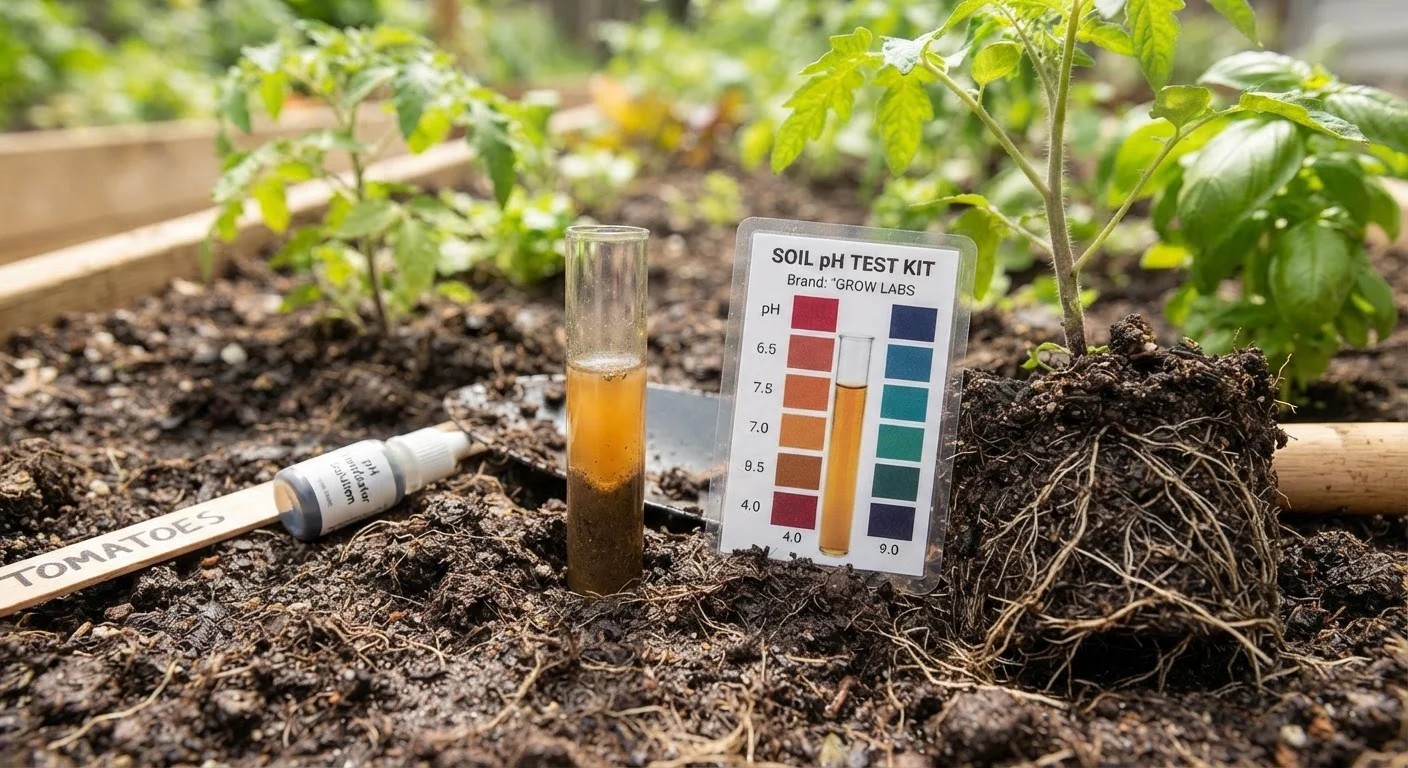
Photo: InsightsChief.com | Your Source Of Trusted Insights editorial
Key Takeaways
- Soil pH determines whether nutrients in your soil are chemically available to plant roots, regardless of how much you fertilize.
- Most vegetables, herbs, and lawn grasses thrive in a slightly acidic pH range of 6.0-7.0.
- Inexpensive home test kits or mail-in soil tests can accurately measure your garden's pH.
- Lime raises pH in acidic soils; sulfur or acidifying fertilizers lower pH in alkaline soils.
- Amendments work gradually - expect several months before seeing measurable shifts.
- Raised beds offer greater control over starting pH than in-ground plots with established soil chemistry.
The Hidden Controller of Garden Nutrients
You can add compost, choose the right varieties, and water consistently - but if your soil pH is off, your plants may still struggle. That's because pH doesn't just describe a chemical property of your soil; it governs whether the nutrients already in your soil are chemically accessible to plant roots at all.
Nitrogen, phosphorus, potassium, iron, and a range of micronutrients each have a specific pH window in which they dissolve into soil water and become absorbable. Outside those windows, they form compounds that roots simply cannot take up. A plant showing yellowing leaves or stunted growth might not need more fertilizer - it might need its soil chemistry corrected first.
If you've ever puzzled over a vegetable garden that underperforms despite your best efforts, pH is one of the first variables worth investigating. See our guide to common vegetable garden problems for a broader look at what might be going wrong.
6.0-7.0
Optimal pH range for most vegetable crops
According to university extension agronomists, the majority of common vegetables absorb nutrients most efficiently within this slightly acidic range.
~40%
US cropland with pH outside optimal range
USDA soil surveys indicate that a significant portion of agricultural and residential soils in the US fall outside the optimal pH window for common crops without amendment.
10x
Acidity difference per one pH unit
Because pH is logarithmic, each whole-number step represents a tenfold change in hydrogen ion concentration - making precise testing more important than rough estimates.
Reading the pH Scale and What the Numbers Mean
The pH scale runs from 0 (extremely acidic) to 14 (extremely alkaline), with 7.0 as the neutral midpoint. For practical gardening purposes, the range of concern is roughly 5.0 to 8.0 - the span in which most common plants can survive, even if not always thrive.
- Below 6.0: Acidic conditions. Nutrients like phosphorus and calcium become less available. Acid-loving plants such as blueberries, azaleas, and rhododendrons are notable exceptions.
- 6.0-7.0: The sweet spot for most vegetables, herbs, and lawn grasses. Nutrient availability is broad and relatively balanced.
- Above 7.5: Alkaline conditions. Iron, manganese, and zinc become scarce, which can cause chlorosis - the yellowing between leaf veins that indicates nutrient stress.
Because the scale is logarithmic, a soil at pH 5.0 is ten times more acidic than one at 6.0. This means what looks like a small numerical gap can represent a significant chemical difference - and a meaningful impact on plant health.
How to Test Your Soil pH
Testing is the essential first step before any amendment. Guessing at your pH - or assuming it's fine - is one of the most common reasons garden improvements don't deliver results.
Home Test Kits
Liquid reagent kits and paper pH strips are inexpensive and accessible at garden centers. You mix a small soil sample with distilled water, apply the reagent or strip, and match the resulting color to a reference chart. These tools are useful for a quick directional read.
Digital pH Meters
A probe-style meter inserted directly into moist soil gives a more precise numerical reading. Accuracy varies by model, so calibrating regularly with a buffer solution helps maintain reliability.
Cooperative Extension Soil Tests
Many US land-grant universities operate extension services that offer mail-in soil testing at modest cost. These lab tests return precise pH readings alongside nutrient profiles and often include tailored amendment recommendations for your specific soil type - making them especially useful before establishing a new garden bed.
Test Before You Amend
Adjusting pH: Raising and Lowering Effectively
Once you know your pH, correcting it is a matter of applying the right amendment at the right rate - and being patient. Soil chemistry doesn't change overnight.
Raising pH (Making Soil Less Acidic)
Ground limestone - either calcitic or dolomitic - is the standard amendment for raising pH. Dolomitic lime also supplies magnesium, which can be beneficial if your soil test shows a deficiency. Application rates depend on your current pH, your target pH, and your soil texture. Sandy soils require less amendment than clay-heavy soils to achieve the same shift. Work lime into the top several inches of soil and retest after three to six months.
Lowering pH (Making Soil Less Alkaline)
Elemental sulfur is the most widely recommended amendment for reducing pH. Soil bacteria convert it into sulfuric acid over time, gradually acidifying the soil. The process is slower than adding lime, particularly in cooler temperatures. Organic matter - especially composted pine bark or leaf mold - can contribute modest acidification over time as well. Our overview of mulch types and their soil effects covers how different organic materials interact with soil chemistry.
One important caution: avoid over-amending. Adding too much lime or sulfur can create new imbalances. Always amend based on a soil test result, not an estimate.
pH Management Across Different Garden Setups
Where and how you garden affects how much control you have over pH - and how quickly adjustments work.
In-ground beds inherit the pH of your native soil, which may have been shaped by decades of rainfall, plant decomposition, and local geology. Acidic soils are common in the humid eastern US; alkaline soils are more typical in arid western regions. Starting with a test before planting anything new is especially important in these situations.
Raised beds offer a distinct advantage: you can set the starting pH by choosing or blending your growing medium before filling the bed. This is particularly valuable if your native soil requires significant correction. For a full comparison of the tradeoffs involved, our raised bed vs. in-ground gardening guide walks through the decision in detail.
Lawns deserve attention here too. Turf grasses generally prefer a pH of 6.0 to 7.0. If your lawn is dense, green, and responsive to fertilization, pH is likely in range. If it's thin and slow to respond despite regular feeding, a soil test is a worthwhile diagnostic step. This connects directly to fertilizer effectiveness - see our lawn fertilization guide for how timing and application interact with soil conditions.
Frequently Asked Questions
The content provided on our blog site traverses numerous categories, offering readers valuable and practical information. Readers can use the editorial team’s research and data to gain more insights into their topics of interest. However, they are requested not to treat the articles as conclusive. The website team cannot be held responsible for differences in data or inaccuracies found across other platforms. Please also note that the site might also miss out on various schemes and offers available that the readers may find more beneficial than the ones we cover.