
Turning Household Objects Into Exercise Equipment

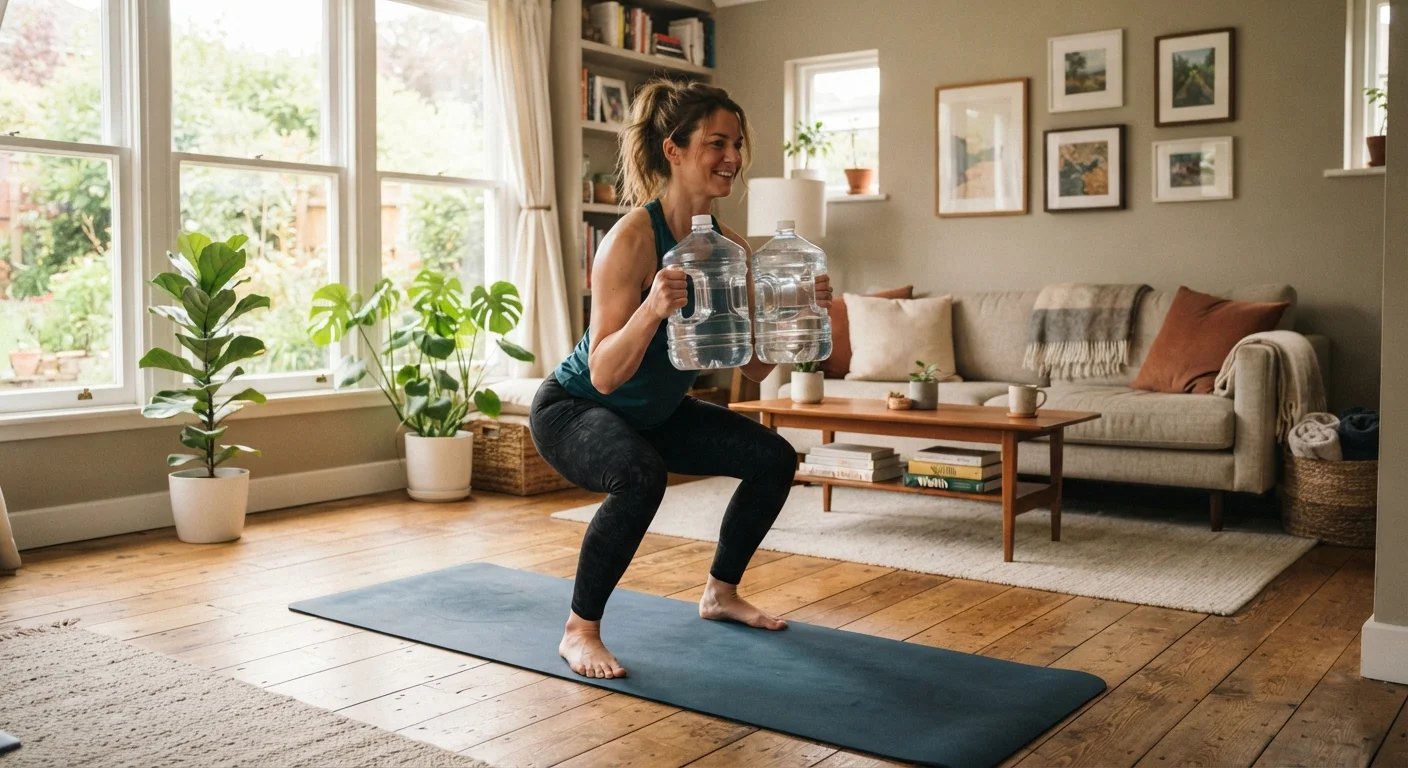
Photo: InsightsChief.com | Your Source Of Trusted Insights editorial
Key Takeaways
- Common household items like water jugs, towels, and chairs can effectively substitute for basic gym equipment.
- Proper form and surface stability matter more with improvised equipment - always prioritise safety over load.
- Household substitutes work best for low-to-moderate intensity strength and mobility work, not heavy lifting.
- Inspect any improvised equipment before each use and stop immediately if it feels unstable or unsafe.
- Consult a healthcare professional before starting a new exercise routine, especially with existing health conditions.
Why Your Home Already Has a Gym Inside It
Gym memberships and home fitness equipment carry real costs that many households can't absorb. The good news: a surprising range of everyday objects can replicate the resistance, stability, and mobility challenges that standard gym tools provide. The key is knowing which substitutions are genuinely effective - and which carry risks worth avoiding.
This isn't about replacing a structured fitness program. It's about removing the equipment barrier so that movement happens consistently, even on tight weeks. If you're new to exercising at home, our beginner's guide to home fitness covers foundational habits and movement patterns worth building first.
Below are seven household objects with proven utility as exercise tools - along with honest guidance on how to use them safely.
Filled water jugs or gallon bottles
A gallon of water weighs approximately 8.3 pounds - making filled gallon jugs a practical substitute for light dumbbells. They're suitable for bicep curls, lateral raises, overhead presses, and weighted lunges at low-to-moderate intensity.
Safety note: Use bottles with secure, tight-fitting lids and check for cracks before each session. The handle on a gallon jug is not engineered for repetitive load, so grip the body of the bottle rather than relying solely on the handle for heavier movements.
A full gallon jug weighs over eight pounds - a practical stand-in for a light dumbbell.
A sturdy dining chair
A non-wheeled dining chair with four solid legs opens up a wide range of exercises: incline push-ups (hands on seat), decline push-ups (feet on seat), tricep dips, step-ups, and seated core work. The seat height provides a useful elevated surface that a floor alone can't offer.
Safety note: The chair must be placed on a non-slip surface and braced against a wall for dips. Test stability before putting your full weight through it. Avoid chairs with wheels, folding joints, or lightweight construction.
A four-legged dining chair supports incline push-ups, tricep dips, and step-ups with no additional gear.
Towels for resistance and sliding
On a smooth floor, folded towels under your feet or hands create a sliding surface that adds instability and resistance to movements like mountain climbers, hamstring curls (lying on your back, feet on towels), and pike slides. This challenges core stabilisation in a way static exercises don't.
Safety note: Only use this technique on clean, smooth hard floors. Carpet does not provide consistent slide. Keep movements slow and controlled - the reduced friction amplifies the difficulty quickly.
Towels on smooth floors turn mountain climbers and hamstring curls into genuinely challenging stability work.
A loaded backpack for weighted resistance
A school or hiking backpack filled with books, canned goods, or sealed bags of rice can add meaningful resistance to squats, lunges, push-ups, and step-ups. Unlike handheld objects, a properly fitted backpack distributes load across both shoulders, keeping your hands free for balance.
Safety note: Keep total pack weight modest - start light and progress gradually. Tighten all straps so the load doesn't shift during movement. Avoid this substitution for overhead pressing, where spinal loading increases significantly.
A tightly packed backpack distributes load evenly across your shoulders, making weighted squats and lunges accessible.
Stairs for cardio and lower-body conditioning
If your home has a staircase, it functions as a built-in cardio and strength tool. Step-ups, stair walks, slow stair lunges, and calf raises on a step edge are all effective lower-body exercises. Even a single stair step near a doorway can serve as a platform for calf raises.
Safety note: Always use the handrail for balance, especially during lateral or reverse movements. Wear supportive footwear - socks on stairs significantly increase fall risk. Avoid running stairs at high intensity if you're new to this type of exercise.
Stairs are an underused cardio and lower-body tool already built into millions of US homes.
A wall for isometric strength work
Wall sits are among the most effective isometric (static-hold) exercises for building quad endurance and lower-body strength, requiring nothing but a flat wall and floor space. Walls also serve as a balance aid for single-leg exercises and can anchor resistance during certain stretches.
Safety note: Ensure the wall surface is clear of protruding fixtures and the floor directly beneath you is non-slip. During a wall sit, keep your knees aligned over your feet and your lower back pressed firmly against the wall.
Wall sits build serious quad endurance with nothing but a flat surface and body weight.
Canned goods for precision low-weight work
Standard 15-ounce or 28-ounce cans provide consistent, grip-friendly weight for wrist curls, light shoulder exercises, and rotator cuff rehabilitation movements. Their uniform shape makes them easier to hold correctly than irregular objects, reducing the chance of grip fatigue skewing your form.
Safety note: Use cans with intact seams and no visible dents or damage. While the weight is low, maintaining proper posture during repetitive movements still matters - poor shoulder mechanics at any load can cause discomfort over time.
Canned goods offer a uniform, grip-friendly option for precise low-weight shoulder and wrist exercises.
Putting It All Together Safely
Improvised equipment introduces variables that purpose-built gear is engineered to eliminate: shifting weight distribution, less predictable grip surfaces, and objects not designed to bear dynamic load. Before every session, take a moment to check that whatever you're using is structurally sound, properly positioned, and appropriate for the movement you're attempting. Our home fitness safety checklist walks through exactly what to assess.
Start lighter than you think you need to
For broader ideas on how to structure movement across different rooms and family members, see our room-by-room fitness reference and our guide to building a family fitness routine at home.
This article is for general informational purposes only and is not a substitute for professional medical or fitness advice. If you have any health conditions, injuries, or concerns, consult a qualified healthcare provider before beginning or modifying any exercise routine.
The content provided on our blog site traverses numerous categories, offering readers valuable and practical information. Readers can use the editorial team’s research and data to gain more insights into their topics of interest. However, they are requested not to treat the articles as conclusive. The website team cannot be held responsible for differences in data or inaccuracies found across other platforms. Please also note that the site might also miss out on various schemes and offers available that the readers may find more beneficial than the ones we cover.