
Whole Foods vs. Processed Foods: What Families Actually Need to Know

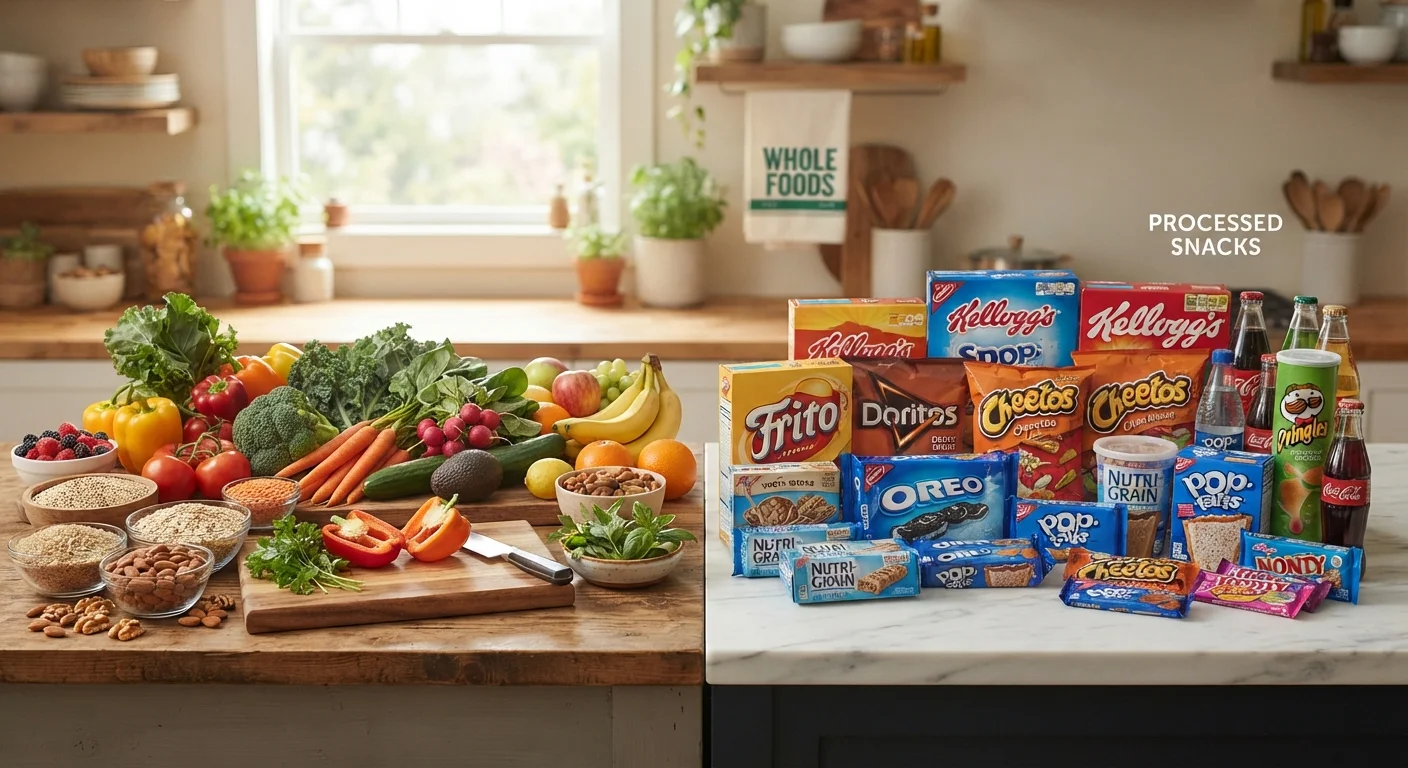
Photo: InsightsChief.com | Your Source Of Trusted Insights editorial
Key Takeaways
- "Processed" covers a wide spectrum - from canned beans to heavily sweetened snack cakes.
- Most families eat a practical mix of both; the goal is informed choices, not rigid elimination.
- Ultra-processed foods high in added sugar, sodium, and refined grains warrant the most attention.
- Whole foods are nutritionally dense, but frozen and canned options can offer comparable value.
- Reading ingredient lists and nutrition labels is the most reliable tool for comparing any two foods.
- Budget-friendly whole food staples like oats, lentils, and frozen vegetables are widely accessible.
What 'Whole' and 'Processed' Actually Mean
The terms "whole foods" and "processed foods" appear constantly in nutrition conversations, yet both are routinely oversimplified. Understanding what they actually describe helps families make more grounded decisions at the grocery store.
Whole foods are foods consumed in or close to their natural state - an apple, a handful of rolled oats, a raw chicken breast, a cup of cooked lentils. They haven't been substantially altered from what they were when harvested or raised. Their nutrient profiles - fiber, vitamins, minerals, and phytonutrients - remain largely intact.
Processed foods, by contrast, span an enormous range. The NOVA classification system, developed by nutrition researchers at the University of São Paulo, categorizes foods into four groups based on the extent and purpose of processing. Group 1 covers unprocessed and minimally processed foods (plain frozen peas, pasteurized milk). Group 2 includes culinary ingredients like oils, flour, and salt. Group 3 covers processed foods - think canned fish in water, cheese, or cured meats. Group 4 - often called ultra-processed foods - includes products with long ingredient lists of additives, emulsifiers, colorings, and flavor enhancers that have no home-cooking equivalent: mass-market packaged snacks, sweetened beverages, and reconstituted meat products.
This distinction matters because lumping all processed foods together leads families to avoid nutritious, affordable options (like low-sodium canned beans) while underestimating the impact of ultra-processed ones (like sweetened breakfast pastries). For a deeper dive into reading the label on any product, see our guide on nutrition label literacy.
How They Differ Nutritionally - and When It Matters
In general, whole foods offer higher fiber, more micronutrients, and fewer additives than their heavily processed counterparts. A whole grain like brown rice retains its bran and germ layers - sources of B vitamins, fiber, and minerals - which are stripped away when grains are refined. Similarly, whole fruit delivers fiber that slows sugar absorption, while fruit juice often removes it.
| Criterion | Whole Foods | Processed Foods (Ultra-Processed Tier) |
|---|---|---|
| Fiber content | Generally high; naturally present | Often low; frequently removed during processing |
| Added sugar | None (natural sugars only) | Often high; listed under many names on labels |
| Sodium levels | Minimal, naturally occurring | Frequently elevated; used for preservation and flavor |
| Micronutrient density | High; vitamins and minerals intact | Variable; may be added back via fortification |
| Ingredient list length | Short or single-ingredient | Often lengthy with additives and emulsifiers |
| Typical cost per serving | Varies widely; staples are often low-cost | Varies; convenience packaging can add cost |
| Shelf life | Often shorter (fresh items); longer for dried/frozen | Extended by preservatives and packaging |
That said, processing isn't inherently destructive. Some nutrients actually become more bioavailable through cooking or controlled processing. Lycopene in tomatoes, for example, is more readily absorbed from cooked tomato products than from raw tomatoes. Fortification - the deliberate addition of nutrients during processing - also means that certain processed foods like enriched bread and fortified cereals deliver vitamins and minerals many families wouldn't otherwise get enough of. Our explainer on food fortification covers this in detail.
Where the nutritional gap becomes meaningful is in the ultra-processed tier: products engineered for palatability often contain high levels of added sugar, sodium, and saturated fat alongside very little fiber or micronutrients. Research associations between high ultra-processed food intake and health outcomes - including cardiovascular risk and metabolic concerns - are accumulating, though most studies are observational and establish correlation rather than direct causation. Families should be aware of this evidence while recognizing that individual dietary patterns, not isolated foods, drive long-term outcomes.
57%
Share of US calories from ultra-processed foods
A study published in BMJ Open (2016) estimated that ultra-processed foods accounted for approximately 57% of energy intake in the US diet, based on national dietary survey data.
4-1
NOVA processing tiers that include whole or minimally processed options
Three of NOVA's four classification groups encompass foods ranging from unaltered whole foods to lightly processed culinary staples - only the fourth group describes ultra-processed products.
~$1.50
Estimated cost per serving of dried lentils (a whole food staple)
USDA Economic Research Service data consistently shows legumes among the lowest-cost protein and fiber sources available in US supermarkets, though prices vary by region and retailer.
A Practical Framework for Budget-Conscious Families
Few families can or should aim to eat exclusively whole foods. Cost, time, access, and cultural preferences all shape real-world eating. The more useful question isn't "whole or processed?" but "where on the processing spectrum does this item sit, and what does its label tell me?"
Some practical anchors for grocery decisions:
- Prioritize whole food staples with long shelf lives - dried lentils, oats, brown rice, and canned beans are affordable, versatile, and nutritionally dense. These rarely need label scrutiny.
- Treat frozen produce as nutritionally comparable to fresh - vegetables are typically frozen shortly after harvest, preserving most vitamins. See how fresh, frozen, and canned options compare in our piece on fresh vs. frozen vs. canned produce.
- Use ingredient lists, not front-of-pack claims - a short, recognizable ingredient list is a reliable signal of lower processing. "Multigrain" or "natural" on the front of a package means nothing specific without checking the list and nutrition facts panel.
- Reserve ultra-processed foods as occasional items - rather than eliminating them with an all-or-nothing approach, consciously limiting their frequency tends to be more sustainable for families.
For broader context on what a nutritionally adequate family diet looks like day to day, our article on what a balanced diet actually means for a family of four offers a grounded breakdown by age and need.
A Note on Organic vs. Processed
This article is for general informational purposes only and does not constitute medical or dietary advice. Consult a registered dietitian or qualified healthcare professional for guidance tailored to your family's specific health needs.
The content provided on our blog site traverses numerous categories, offering readers valuable and practical information. Readers can use the editorial team’s research and data to gain more insights into their topics of interest. However, they are requested not to treat the articles as conclusive. The website team cannot be held responsible for differences in data or inaccuracies found across other platforms. Please also note that the site might also miss out on various schemes and offers available that the readers may find more beneficial than the ones we cover.