
Nutrition Label Literacy: Reading Food Packaging Without Getting Confused

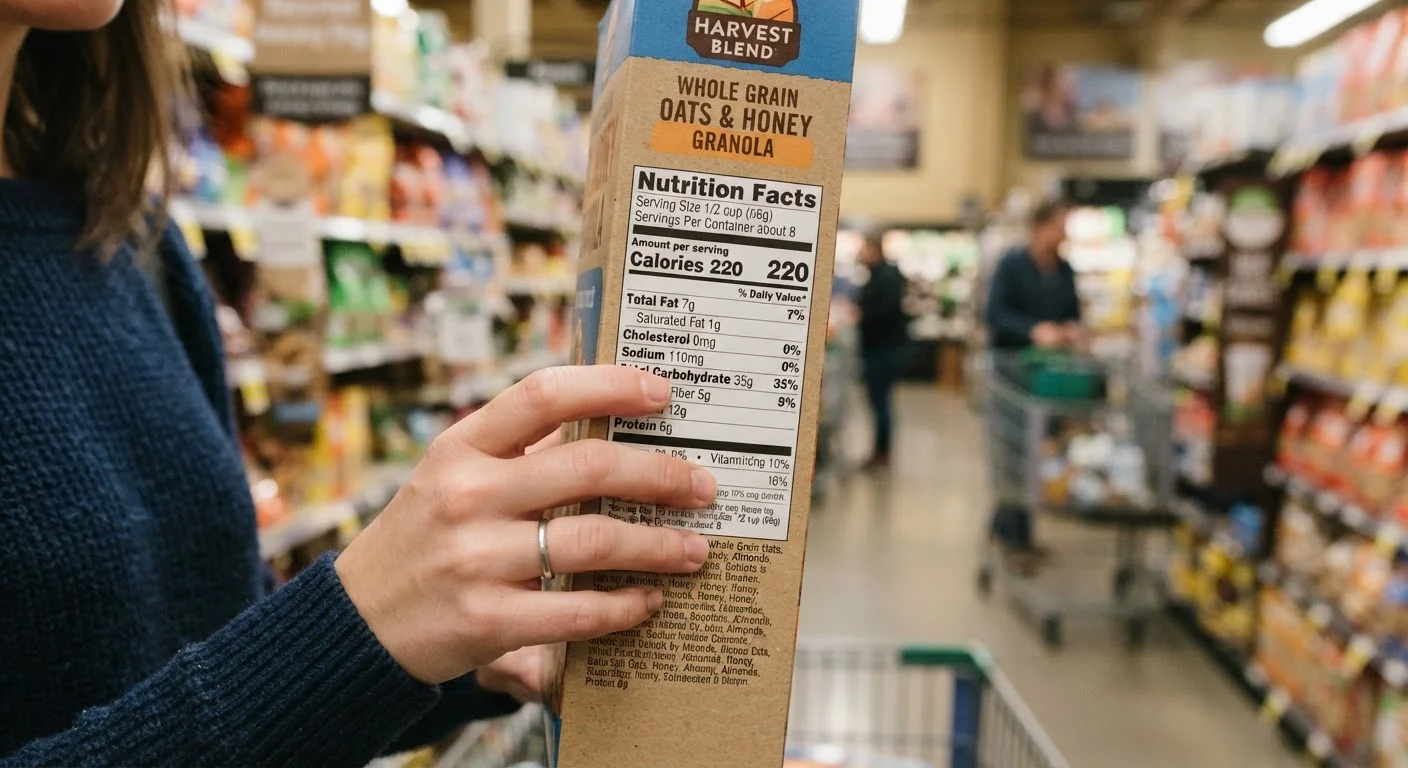
Photo: InsightsChief.com | Your Source Of Trusted Insights editorial
Key Takeaways
- Serving size controls every other number on the label - always check it first.
- % Daily Value guides whether a nutrient is high or low relative to a standard 2,000-calorie diet.
- Ingredients are listed by weight descending, so the first few items dominate the product.
- Front-of-package claims are marketing language and are not regulated the same way as the Nutrition Facts panel.
- Comparing labels per serving - not per package - prevents common calorie and cost miscalculations.
Why Nutrition Labels Confuse Shoppers
Nutrition facts panels contain more information than most people realize - and are structured in ways that can obscure as much as they reveal. Front-of-package marketing adds another layer of noise. Words like "wholesome," "low-fat," or "a good source of fiber" are crafted to attract attention, while the actual regulated data sits on the back or side of the package in small print.
Front-of-Package Claims Can Mislead
The good news: once you know what each section of the label actually measures, reading it becomes a reliable habit rather than a guessing game. The steps below walk through the panel in the order that makes it easiest to interpret - regardless of which aisle you're in or how rushed the shopping trip is.
If you'd like to understand how fortified nutrients like added vitamins and minerals appear on labels, the explainer on food fortification covers what those additions mean and why they're there.
Nutrition Facts Panel
The regulated label on packaged foods providing serving size, calorie count, and nutrient breakdown.
Ingredient List
Listed by weight in descending order; reveals what the product is primarily made of.
Smartphone calculator
Useful for scaling nutrient values when your actual portion differs from the labeled serving size.
Step-by-Step: Decoding the Nutrition Facts Panel
Work through the following steps the next time you're at the store or reviewing items already in your pantry. Each step builds on the last, so reading the label in sequence helps you avoid the most common misinterpretations.
Start with the serving size - before anything else
The serving size listed at the very top of the Nutrition Facts panel is the anchor for every number that follows. All calorie counts, nutrient amounts, and % Daily Values on the label apply to that specific amount - not necessarily the whole package.
Check how many servings are in the container. A bag of chips labeled "150 calories" may contain 3.5 servings, meaning the bag totals over 500 calories. Compare the labeled serving size to how much your household actually eats in a sitting.
Note the calorie count in context
Calories reflect the energy a single serving provides. Neither high nor low calories automatically make a food good or poor - context matters. A 200-calorie handful of nuts delivers very different nutrients than 200 calories of a sweetened snack cake.
Rather than fixating on calories alone, use them alongside the nutrient breakdown in the next steps to judge overall value for your family's needs.
Interpret % Daily Values for key nutrients
The % Daily Value (DV) column tells you how much of a nutrient one serving contributes toward a general daily reference intake based on a 2,000-calorie diet. It does not account for your family's individual needs, but it works as a consistent comparison tool across products.
Nutrients to seek higher DVs in: dietary fiber, calcium, iron, potassium, and vitamins D and C.
Nutrients to seek lower DVs in: sodium, saturated fat, and added sugars.
Read the ingredient list from top to bottom
Ingredients are listed in descending order by weight - the first ingredient makes up the largest proportion of the product. If added sugar (under any of its many names: corn syrup, dextrose, maltose, cane juice) appears within the first three ingredients, the product is predominantly sweetened.
A shorter ingredient list generally means less processing, though length alone is not a definitive quality measure. For a deeper look at how processing levels affect nutritional value, see our guide to whole vs. processed foods.
Identify added sugars separately from total sugars
The Nutrition Facts panel now requires a separate line for added sugars, distinct from naturally occurring sugars found in fruit or dairy. A plain yogurt may show 12g of total sugar - all from naturally occurring lactose - while a flavored variety shows 12g total sugar with 8g added sugars. That distinction meaningfully changes the nutritional picture.
Dietary guidelines generally suggest limiting added sugars as a share of total daily calories; the label's % DV for added sugars helps you track this across products without doing the math yourself.
Cross-compare products using the same serving size
To make fair comparisons, ensure you're looking at the same serving size across two products. Some cereals list nutritional info per ¾ cup while others use 1 cup - comparing them directly produces misleading results. Adjust figures proportionally, or use a phone calculator when the difference matters.
This skill is especially valuable for budget-conscious shoppers weighing store-brand against name-brand options. Once you're confident reading labels, you can put that skill to work when building a grocery list around nutritional goals.
Use the 5% and 20% Rule
Spotting patterns across your regular purchases often reveals where common family nutrition missteps quietly add up. Our article on where family grocery nutrition goes wrong covers the most frequent patterns and how to address them.
This Is General Nutrition Education Only
This article is for general informational and educational purposes only and is not a substitute for professional medical or dietary advice. Consult a qualified healthcare provider or registered dietitian for guidance specific to your family's health needs.
The content provided on our blog site traverses numerous categories, offering readers valuable and practical information. Readers can use the editorial team’s research and data to gain more insights into their topics of interest. However, they are requested not to treat the articles as conclusive. The website team cannot be held responsible for differences in data or inaccuracies found across other platforms. Please also note that the site might also miss out on various schemes and offers available that the readers may find more beneficial than the ones we cover.