
Electric Vehicle vs. Gas Vehicle: Breaking Down the Ownership Costs

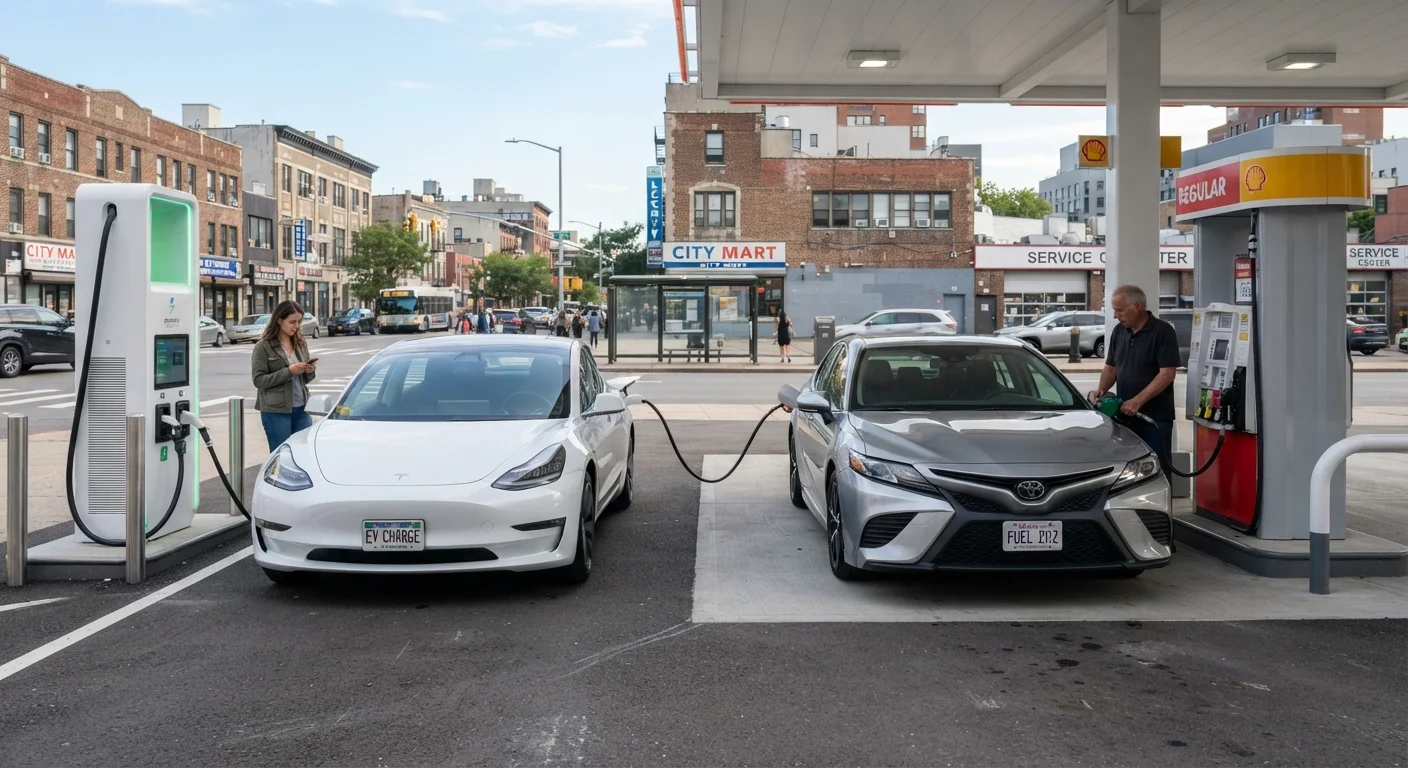
Photo: InsightsChief.com | Your Source Of Trusted Insights editorial
Key Takeaways
- EVs typically cost more upfront but less to fuel and maintain over time.
- Gas vehicles carry lower purchase prices but higher long-term fuel and service expenses.
- Insurance, depreciation, and charging infrastructure can shift the EV advantage significantly.
- Total cost of ownership depends heavily on annual mileage, local electricity rates, and driving habits.
- Federal and state incentives may reduce EV purchase costs, but eligibility varies widely.
Purchase Price and Incentives
The sticker price gap between comparable EVs and gas vehicles remains real. Entry-level electric vehicles typically carry a purchase price premium of several thousand dollars over similarly sized gas-powered counterparts. That said, federal tax credits - currently up to $7,500 for qualifying new EVs under the Inflation Reduction Act - can shrink that gap meaningfully for eligible buyers. State-level rebates and utility incentives may add further relief, though eligibility rules vary by income, vehicle price cap, and assembly location.
For a fuller picture of how purchase price fits into overall ownership, see our complete guide to total vehicle ownership costs. If you're also weighing new versus used options within each powertrain, our new vs. used car cost comparison breaks that down separately.
Fuel and Energy Costs
This is where EVs tend to build their strongest financial case. Electricity, measured in kilowatt-hours, is generally less expensive per mile than gasoline - though the margin varies considerably by region. The U.S. Energy Information Administration consistently shows that driving on electricity costs less per mile than gasoline in most U.S. states, though areas with high electricity rates (parts of California, Hawaii, and New England) narrow the advantage.
A rough framework: a gas vehicle averaging 30 MPG driven 12,000 miles per year consumes roughly 400 gallons annually. At $3.50 per gallon, that's about $1,400 in fuel. An EV covering the same miles at 3.5 miles per kWh uses approximately 3,400 kWh - at a national average near $0.16/kWh, that's roughly $545. The difference compounds over years of ownership.
~$545
Estimated EV annual energy cost (12,000 miles)
Based on 3.5 miles/kWh efficiency and a national average residential electricity rate near $0.16/kWh.
~$1,400
Estimated gas vehicle annual fuel cost (12,000 miles)
Based on 30 MPG average fuel economy and a reference pump price of $3.50 per gallon.
30-40%
EV maintenance cost reduction vs. gas vehicles
U.S. Department of Energy analyses estimate EVs cost meaningfully less per mile to maintain over a vehicle's life.
For a detailed methodology on projecting fuel expenses over a vehicle's lifespan, our lifetime fuel cost calculator guide walks through the math.
Maintenance and Repairs
EVs have significantly fewer moving parts than internal combustion engine vehicles. They eliminate oil changes, transmission fluid, spark plugs, timing belts, and exhaust system maintenance. According to data from the U.S. Department of Energy, EV maintenance costs run meaningfully lower on a per-mile basis than comparable gas vehicles - estimates generally range from 30% to 40% less over the vehicle's life.
Gas vehicle owners should budget for oil changes (roughly $75-$150 each, every 5,000-7,500 miles), periodic transmission service, and a higher likelihood of complex drivetrain repairs as mileage accumulates. EVs are not maintenance-free - brake fluid, cabin air filters, tire rotations, and eventual battery health checks still apply - but the overall service burden is lower.
Track Your Real Driving Costs
See the vehicle ownership costs by category reference for a full breakdown of typical maintenance line items across both powertrains.
Insurance, Depreciation, and the Full Picture
Insurance premiums for EVs tend to run higher than for comparable gas vehicles - partly due to higher repair costs for EV-specific components and the cost of battery replacement in collision scenarios. Differences vary by insurer and model, but budgeting an additional $200-$500 annually is a reasonable starting assumption.
Depreciation is the largest single cost for most vehicle owners, regardless of powertrain. EVs experienced steep depreciation in the used market through the early 2020s as new model introductions and falling new EV prices pressured resale values. This trend may moderate as the market matures, but it introduces uncertainty into long-term cost projections.
| Cost Category | Electric Vehicle | Gas Vehicle | |
|---|---|---|---|
| Typical Purchase Price Premium | Higher by several thousand dollars | Lower baseline price | |
| Federal Incentives Available | Up to $7,500 (eligibility varies) | Generally none | |
| Annual Fuel/Energy Cost (est.) | ~$500-$800 at avg. rates | ~$1,200-$2,000 at avg. prices | |
| Routine Maintenance Cost | Lower (no oil changes, fewer parts) | Higher (oil, filters, more services) | |
| Insurance Premiums | Typically $200-$500 more annually | Generally lower | |
| Depreciation Risk | Higher uncertainty in used market | More predictable resale trends | |
| Refueling Convenience | Requires charging access at home or public | Gas stations widely available |
For a comprehensive view of what US drivers actually spend across all cost categories annually, our true annual cost of owning a car article aggregates the full picture. The bottom line: run the numbers for your specific mileage, local energy prices, and expected ownership duration before concluding which powertrain works harder for your budget.
The content provided on our blog site traverses numerous categories, offering readers valuable and practical information. Readers can use the editorial team’s research and data to gain more insights into their topics of interest. However, they are requested not to treat the articles as conclusive. The website team cannot be held responsible for differences in data or inaccuracies found across other platforms. Please also note that the site might also miss out on various schemes and offers available that the readers may find more beneficial than the ones we cover.