
Staying Healthy While Traveling: What Long-Haul Passengers Should Know

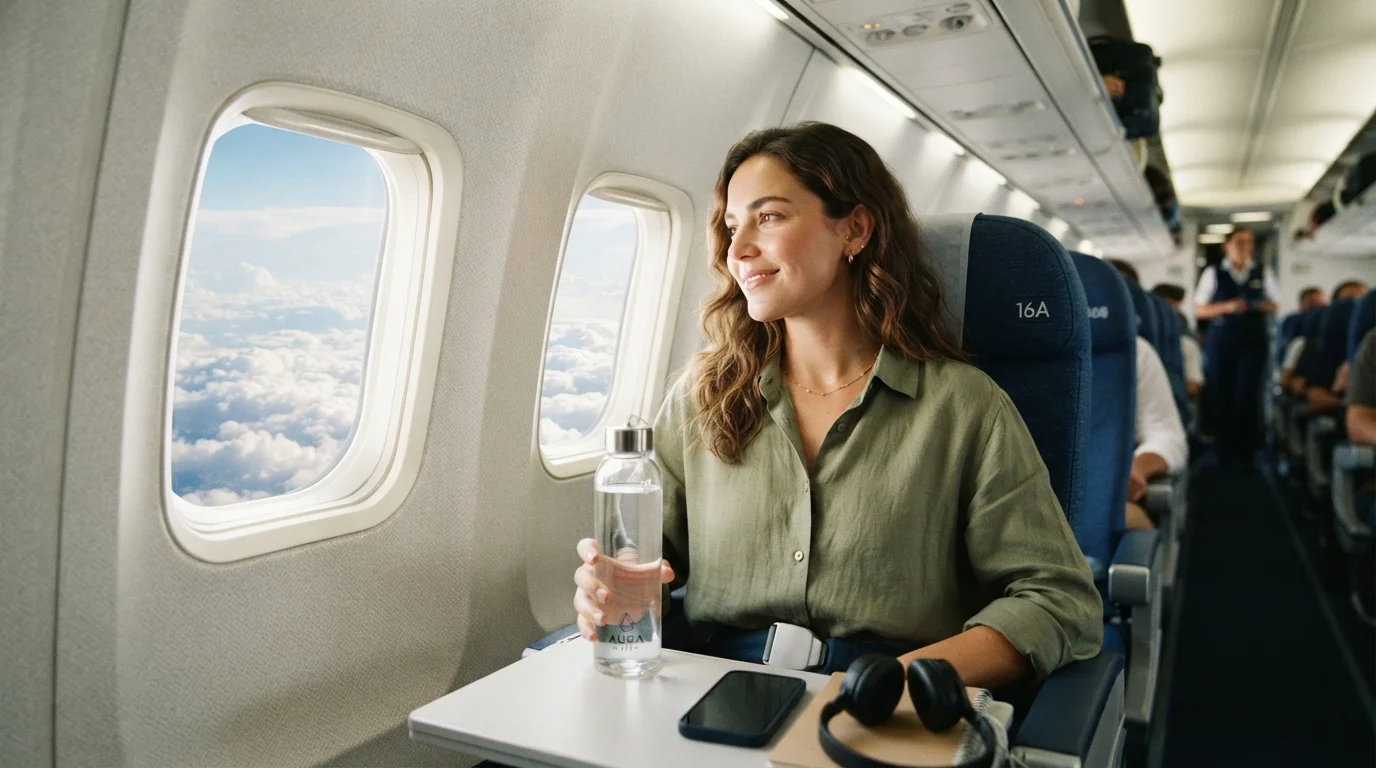
Photo: InsightsChief.com | Your Source Of Trusted Insights editorial
Key Takeaways
- Dehydration is one of the most preventable causes of in-flight discomfort - water intake matters more than most passengers realize.
- Prolonged sitting increases circulation risks; brief, regular movement throughout a long journey is an evidence-supported habit.
- Cabin pressure and dry air affect sleep quality, digestion, and immune resilience in ways passengers can partially offset.
- Simple pre-departure preparation - including sleep timing and meal choices - shapes how well the body handles long transit.
- Consult a qualified healthcare professional before travel if you have existing health conditions or concerns about long-haul flying.
Why Long-Haul Travel Is Hard on the Body
A flight lasting more than six hours puts the body through a surprisingly demanding set of conditions. Cabin pressure is typically maintained at the equivalent of 6,000-8,000 feet above sea level, which reduces blood oxygen saturation slightly compared to sea level. Combined with very low cabin humidity - often below 20 percent - the body loses moisture faster than passengers usually notice. The result is fatigue, dry airways, and, for some, headaches that are frequently blamed on the flight itself rather than dehydration.
Extended sitting compounds these effects. When the body stays still for hours, circulation slows, lower limbs can swell, and muscles tighten. Understanding what's actually happening makes it far easier to respond with practical habits rather than guesswork. For a broader look at what to organize before an international journey, see this end-to-end pre-trip guide.
Hydration: The Most Underrated In-Flight Habit
The general guidance from aviation medicine researchers is to drink water consistently throughout a long flight rather than waiting until thirst arrives - thirst is a late signal of fluid deficit, not an early warning. A practical benchmark many travel health practitioners suggest is around 250ml (roughly 8 oz) of water per hour of flight, though individual needs vary. Caffeine and alcohol are both diuretics and can accelerate fluid loss in an already dry environment, so moderating both during the flight is worth considering.
Carrying an empty refillable bottle through security and filling it before boarding removes one barrier to staying hydrated. Moisturizing nasal passages - using a saline spray available at most pharmacies - can also reduce irritation from dry cabin air, which may support immune defenses in the upper respiratory tract.
Below 20%
Typical aircraft cabin relative humidity
Aircraft manufacturers and aviation health researchers consistently note that cabin humidity is far lower than most indoor environments, accelerating passenger fluid loss.
6,000-8,000 ft
Effective cabin altitude during cruise
Commercial aircraft cabins are pressurized to an equivalent altitude that modestly reduces blood oxygen saturation compared to sea level, contributing to fatigue on long flights.
Movement and Circulation During the Flight
Staying seated for prolonged periods is associated with reduced circulation in the lower limbs. For most healthy travelers, standing up and walking the aisle for a few minutes every 60-90 minutes is a reasonable and evidence-aligned habit. Simple seated exercises - ankle rotations, calf raises, and gentle knee lifts - can be done without leaving your seat and help keep blood moving between walks.
Compression socks, which apply graduated pressure to the lower legs, are widely used by long-haul travelers and are generally considered low-risk for healthy adults. If you have a circulatory condition, a history of deep vein thrombosis, or other relevant health concerns, speak with your doctor before flying to discuss whether additional precautions make sense for your situation. The principles here connect directly to a broader point: brief, regular movement woven into daily life supports physical health in transit just as it does at home.
Sleep, Jet Lag, and Recovery
Sleep quality in the air is rarely equivalent to sleep on the ground, but it can be meaningfully improved. Noise-canceling headphones or earplugs, an eye mask, a neck pillow, and a light blanket create conditions that support sleep more than none of those things. If your destination is in a significantly different time zone, beginning to shift your sleep schedule by 30-60 minutes per day in the days before departure is a low-effort strategy that some aviation health researchers suggest may reduce adjustment time.
Melatonin is frequently discussed in relation to jet lag. It is available over the counter in the US and is generally considered low-risk for short-term use by healthy adults, but appropriate timing and dosage vary by individual and direction of travel. Discuss its suitability with a healthcare provider rather than self-prescribing. For a deeper look at the physiology involved, this science-grounded guide to jet lag covers what the research actually says.
“The passenger cabin is a unique physiological environment. Simple behavioral choices - how much you drink, how often you move, how you prepare for sleep - have a measurable effect on how travelers feel during and after a long flight.”
— Aviation Medicine Research Community, General position reflected in published aviation health literature
This article provides general health information for educational purposes only. It is not a substitute for professional medical advice. If you have any health conditions or concerns related to travel, consult a qualified healthcare professional before your journey.
The content provided on our blog site traverses numerous categories, offering readers valuable and practical information. Readers can use the editorial team’s research and data to gain more insights into their topics of interest. However, they are requested not to treat the articles as conclusive. The website team cannot be held responsible for differences in data or inaccuracies found across other platforms. Please also note that the site might also miss out on various schemes and offers available that the readers may find more beneficial than the ones we cover.