
Everything to Sort Out Before an International Trip

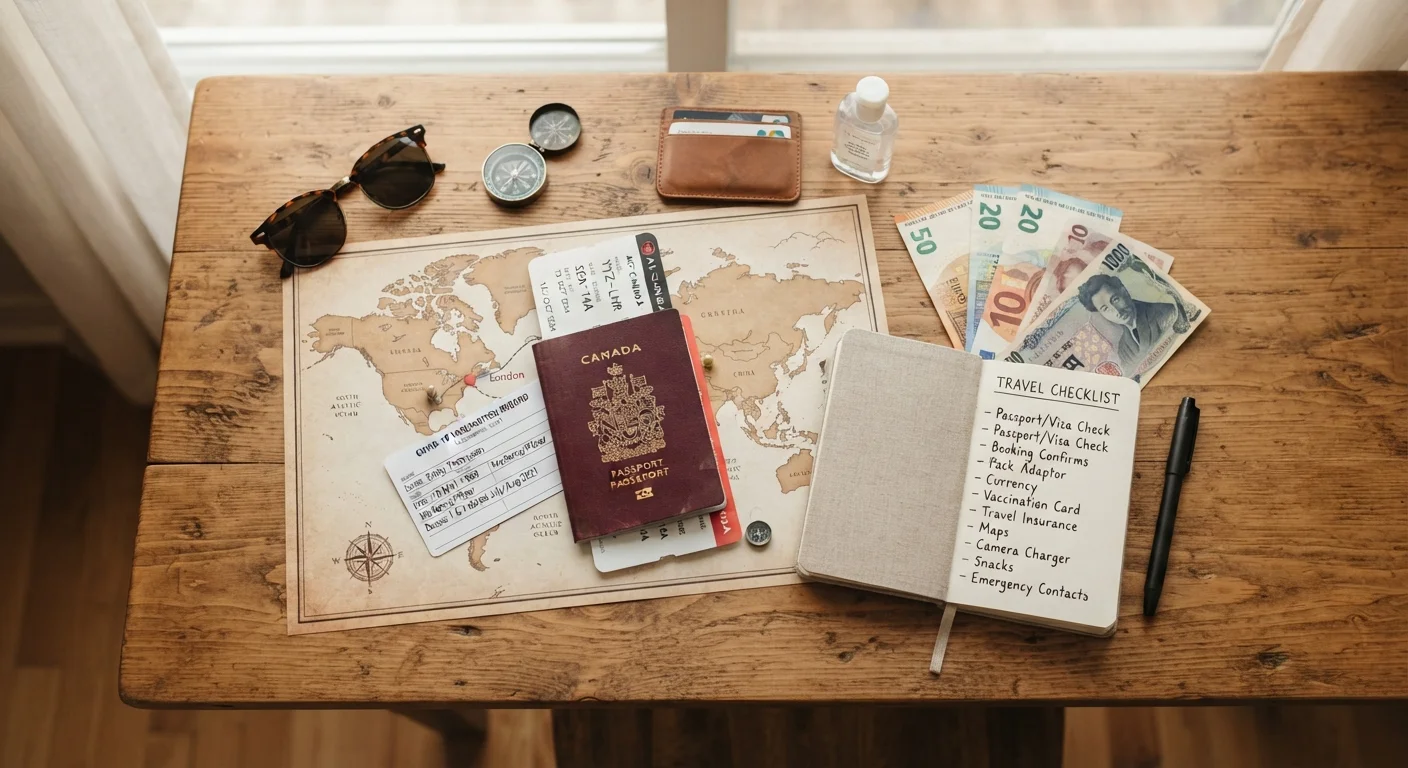
Photo: InsightsChief.com | Your Source Of Trusted Insights editorial
Key Takeaways
- Passport and visa processing can take weeks - start the paperwork at least three months out.
- Vaccination requirements vary by destination and sometimes by your recent travel history.
- Notifying your bank and carrying a backup payment method prevents being stranded without funds.
- A local SIM or international data plan is cheaper than roaming fees for most travelers.
- Understanding local customs, laws, and emergency contacts reduces risk and stress abroad.
Documents and Entry Requirements
The paperwork side of international travel is the least forgiving - mistakes here can end a trip before it begins. Work through this systematically, not the week before departure.
Passport validity: Many countries require your passport to be valid for at least six months beyond your travel dates. Check the specific rule for each country on your itinerary. If your passport is expiring soon, apply for renewal as early as possible; processing backlogs at the U.S. State Department have, at times, stretched to several months.
Visas: Visa requirements depend on your citizenship and destination. Some countries offer visa-free entry or visa-on-arrival for U.S. passport holders; others require advance applications, supporting documents, and fees. Use the State Department's official country information pages or the destination country's embassy website - not third-party summary sites - to confirm current requirements. Always verify directly with official sources before travelling, as rules can change.
Travel authorizations: Several countries that don't require a traditional visa now require electronic travel authorizations (ETAs or similar). The European Union's ETIAS program and Canada's eTA are examples. These are separate from visas and often overlooked.
Supporting documents: Depending on destination, you may also need proof of onward travel, accommodation bookings, travel insurance, or sufficient funds. Keep digital and physical copies of all key documents, stored separately from the originals.
For a broader pre-trip document strategy, see the pre-trip planning checklist covering documents alongside flights and accommodation.
Visa Rules Change - Always Verify Officially
Health Preparation and Vaccinations
Health preparation for international travel is individual - it depends on your destination, your medical history, and how long you'll be away. This section covers general considerations; always consult a licensed healthcare provider or travel medicine clinic for guidance specific to your situation.
Destination-specific vaccines: The U.S. Centers for Disease Control and Prevention (CDC) maintains destination-by-destination vaccine recommendations on its Travelers' Health portal. Some vaccines (like yellow fever) require a certificate that border officials may check. Others are strongly recommended but not mandated. Book a travel medicine appointment at least six to eight weeks before departure, since some vaccines require multiple doses over time.
Routine vaccines: Confirm that routine immunizations - such as influenza, measles-mumps-rubella, and tetanus - are up to date. These are often overlooked when travelers focus only on destination-specific shots.
Prescription medications: If you take prescription medications, bring enough supply for the entire trip plus a buffer. Carry a letter from your doctor and keep medications in original labeled containers. Research whether any of your medications are controlled or restricted in your destination country - some common U.S. medications are illegal in certain countries.
Travel insurance with medical coverage: Standard health insurance often provides limited or no coverage abroad. A travel insurance policy that includes emergency medical evacuation is worth understanding before you go. Compare plans and read policy terms carefully - coverage details vary significantly.
For general wellbeing advice during long journeys, the long-haul health guide covers evidence-informed habits for staying well in transit.
Book your travel medicine appointment at least eight weeks before departure - not two. Several vaccines require multiple doses spaced weeks apart, and skipping doses reduces effectiveness.
Before leaving home, photograph every card in your wallet - front and back - and email the images to yourself. If your wallet is stolen, you'll have every card number and issuer phone number accessible from any device.
Money, Cards, and Currency
Financial hiccups - a blocked card, unexpected ATM fees, or arriving in a cash-only destination with no local currency - are among the most disruptive and preventable international travel problems.
Notify your bank and card issuers: Let every financial institution know your travel dates and destinations before you leave. Fraud monitoring systems frequently flag foreign transactions and freeze accounts. A quick call or app notification prevents this.
Carry at least two payment methods: No single payment method works everywhere. A chip-and-PIN credit card with no foreign transaction fees covers most urban situations; cash is essential in rural areas, smaller vendors, markets, and countries where card acceptance is limited. Bring a modest amount of local currency for arrival - airports and early expenses before you find a good ATM rate.
Understand ATM fees and exchange rates: Airport currency exchange booths typically offer poor rates. ATMs at local banks abroad generally give better rates, though your home bank may charge withdrawal fees. Dynamic currency conversion (being offered the option to pay in U.S. dollars abroad) almost always costs more - decline it and pay in local currency.
Emergency access: Know how to reach your bank's international collect number if your card is lost or stolen. Services like wire transfers can get funds to you internationally in an emergency, though they take time and carry fees.
For a fuller reference on managing travel costs, the travel savings planning reference covers cost benchmarks and strategies across every trip stage.
Communication and Connectivity
Staying reachable - by family back home and by local emergency services - is a practical safety issue, not just a convenience one.
International phone options: Your U.S. carrier's international roaming plan is often the simplest option but rarely the most economical. Purchasing a local SIM card at your destination typically provides significantly cheaper data and call rates. Unlocked phones accept foreign SIMs. Alternatively, international eSIM services allow you to pre-load a data plan before departure without swapping physical SIMs.
Offline maps and downloads: Download offline maps for every city or region you'll visit. Apps like Google Maps and others allow this before travel. Don't rely on real-time navigation - it's a quick way to drain data and a liability when connectivity drops.
Emergency numbers: Research the local emergency number for each country you'll visit - it is not always 911. In the EU it's 112; in the UK it's 999; other countries have their own. Note the nearest U.S. embassy or consulate contact information as well.
Share your itinerary: Leave a copy of your full itinerary - accommodation addresses, flight numbers, and contact details - with a trusted person at home. If anything goes wrong, they can coordinate assistance.
Local Norms, Safety, and Logistics
Practical country knowledge reduces both risk and friction. A small amount of research pays outsized dividends once you're on the ground.
Local laws and customs: Laws that seem trivial at home can carry serious penalties abroad - photographing government buildings, jaywalking, dress codes at religious sites, rules around alcohol or medications, and tipping norms all vary dramatically. The State Department's country pages and Consular Information Sheets are reliable starting points.
Transportation: Research how you'll move around - whether that's licensed taxis, rideshare apps, metro systems, or rental vehicles. Some countries require an International Driving Permit (IDP) alongside your U.S. license to rent or drive legally. The IDP is issued by AAA in the U.S. and requires a valid driver's license.
Accommodation address in local script: Have your accommodation address written in the local language or script. Showing a driver or asking a local becomes straightforward; spelling it out phonetically does not.
Register with the Smart Traveler Enrollment Program (STEP): The U.S. State Department's free STEP program registers your trip with the nearest U.S. embassy or consulate. It allows the embassy to contact you in a crisis and helps family reach you in an emergency.
As you finalize logistics, the night-before-flight checklist is a useful final pass to catch anything missed closer to departure.
This article provides general travel information for educational purposes only. Entry requirements, health recommendations, and local laws change frequently. Always verify current requirements with official government sources, your destination country's embassy, and qualified healthcare and legal professionals before travelling.
The content provided on our blog site traverses numerous categories, offering readers valuable and practical information. Readers can use the editorial team’s research and data to gain more insights into their topics of interest. However, they are requested not to treat the articles as conclusive. The website team cannot be held responsible for differences in data or inaccuracies found across other platforms. Please also note that the site might also miss out on various schemes and offers available that the readers may find more beneficial than the ones we cover.