
Jet Lag Is Real - Here's What the Science Says About Managing It

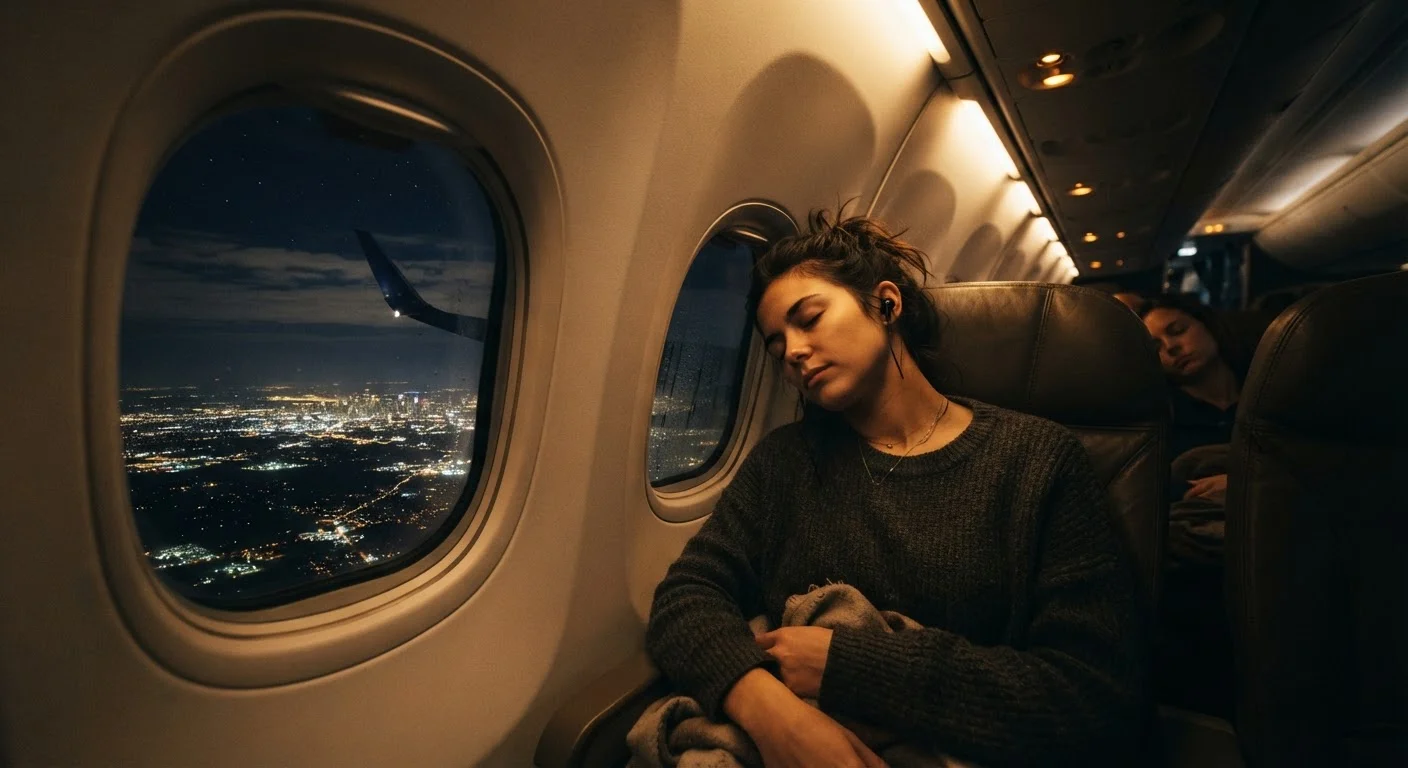
Photo: InsightsChief.com | Your Source Of Trusted Insights editorial
Key Takeaways
- Jet lag is a real physiological condition, not just ordinary travel tiredness.
- Eastward travel typically produces more severe symptoms than westward travel.
- Light exposure is the single most powerful tool for resetting your circadian rhythm.
- Strategic sleep timing, hydration, and meal schedules all support faster adjustment.
- Most people adjust at roughly one time zone per day without any intervention.
- Consult a healthcare provider before using any supplement or medication for jet lag.
What's Actually Happening Inside Your Body
Jet lag isn't a vague sense of being tired from a long flight - it's a measurable disruption to your biological clock. The human body runs on a roughly 24-hour internal cycle called the circadian rhythm, regulated by a cluster of neurons in the brain called the suprachiasmatic nucleus (SCN). This internal clock governs when you feel sleepy or alert, when your body temperature dips, when hormones like cortisol rise, and even when your digestive system expects food.
When you fly across multiple time zones rapidly, your SCN is still anchored to your departure location's light-dark cycle. Every cell in your body - from your gut to your liver - is receiving signals that conflict with the local environment. That mismatch is jet lag. It explains why you might feel ravenous at 2 a.m., wide awake at midnight, or profoundly foggy during a midday meeting.
~1 day
Average adjustment per time zone crossed
Chronobiology research commonly cites this as a general guideline, though individual recovery varies significantly.
2+ zones
Time zones typically needed to trigger jet lag
Most sleep medicine sources identify crossing two or more time zones as the threshold for clinically meaningful circadian disruption.
Eastward
Direction associated with worse symptoms
Studies consistently show advancing the circadian clock (eastward travel) is harder for the body than delaying it (westward travel).
The condition is real enough to be formally classified as a circadian rhythm sleep-wake disorder, and research confirms it measurably impairs cognitive performance, mood, and even immune function in the short term.
Why Direction of Travel Matters
One of the most practical things travelers can understand about jet lag is that direction matters as much as distance. Flying eastward - say, New York to London - forces your circadian rhythm to advance, making you sleep and wake earlier than your body wants. Flying westward, like Los Angeles to Tokyo, delays the clock, which most people find more manageable because the human circadian cycle naturally runs slightly longer than 24 hours.
Studies in chronobiology consistently show that eastward travelers report more severe and longer-lasting symptoms. A five-hour eastward jump might feel worse than a seven-hour westward crossing for many people. This knowledge is useful when planning trip itineraries: if you have flexibility, scheduling a return flight that travels westward - or building recovery days into the eastern end of a trip - can meaningfully reduce how disruptive jet lag becomes.
The Evidence-Backed Tools That Actually Help
A lot of jet lag advice circulates online with little grounding in research. Here's what the science actually supports:
- Light exposure: Bright light - particularly morning sunlight - is the most powerful signal for resetting the circadian clock. Timed exposure to natural light at your destination anchors the SCN to local time faster than almost any other intervention. Seek light in the morning if you traveled east; get afternoon light if you went west.
- Sleep timing: Resist napping on arrival if it's daytime locally. Pushing through to a normal local bedtime is uncomfortable but accelerates adjustment. If you must nap, keep it under 20 minutes.
- Meal timing: Eating at times aligned with local meal schedules helps synchronize peripheral clocks in your digestive system. Avoid large, heavy meals when your body clock says it's the middle of the night.
- Hydration: Cabin air is notably dry, and dehydration compounds fatigue. Drinking adequate water throughout the flight and after arrival supports overall recovery - see our long-haul health guide for more on this.
- Pre-travel sleep adjustment: Shifting your sleep schedule by 30-60 minutes per day in the direction of your destination in the days before departure can reduce the mismatch on arrival. A solid pre-travel routine starting the night before departure matters too.
Use Local Sunlight as Your Reset Button
One important note: melatonin is widely discussed as a jet lag remedy. Some research supports its use for shifting sleep timing, but individual responses vary, timing is critical, and it's not appropriate for everyone. Consult a healthcare provider before using any supplement or medication to address jet lag.
This article provides general health information for educational purposes and is not a substitute for professional medical advice. Consult a qualified healthcare provider before making decisions about your health or any supplement use.
Setting Realistic Expectations for Recovery
Understanding the timeline helps travelers plan more effectively. The commonly cited estimate - roughly one day of adjustment per time zone crossed - is a reasonable general guideline, though research shows wide individual variation. Age, baseline sleep quality, overall health, and accumulated sleep debt all influence how quickly you bounce back.
Younger travelers often adapt faster. People who travel frequently across the same routes sometimes develop some tolerance, though the physiology still changes. If jet lag is a known disruptor for you, building buffer days into your schedule before important meetings or events is a practical, evidence-consistent strategy - not an overreaction.
It's also worth distinguishing jet lag from general travel fatigue. Long flights are physically tiring independently of time-zone crossing - cramped seating, disrupted sleep, and low humidity all take a toll. These two things stack on top of each other, which is why crossing the Atlantic in coach feels so draining even for short time-zone differences. If you find that pre-travel stress compounds the experience, our article on airport anxiety addresses the psychological layer separately.
Frequently Asked Questions
The content provided on our blog site traverses numerous categories, offering readers valuable and practical information. Readers can use the editorial team’s research and data to gain more insights into their topics of interest. However, they are requested not to treat the articles as conclusive. The website team cannot be held responsible for differences in data or inaccuracies found across other platforms. Please also note that the site might also miss out on various schemes and offers available that the readers may find more beneficial than the ones we cover.