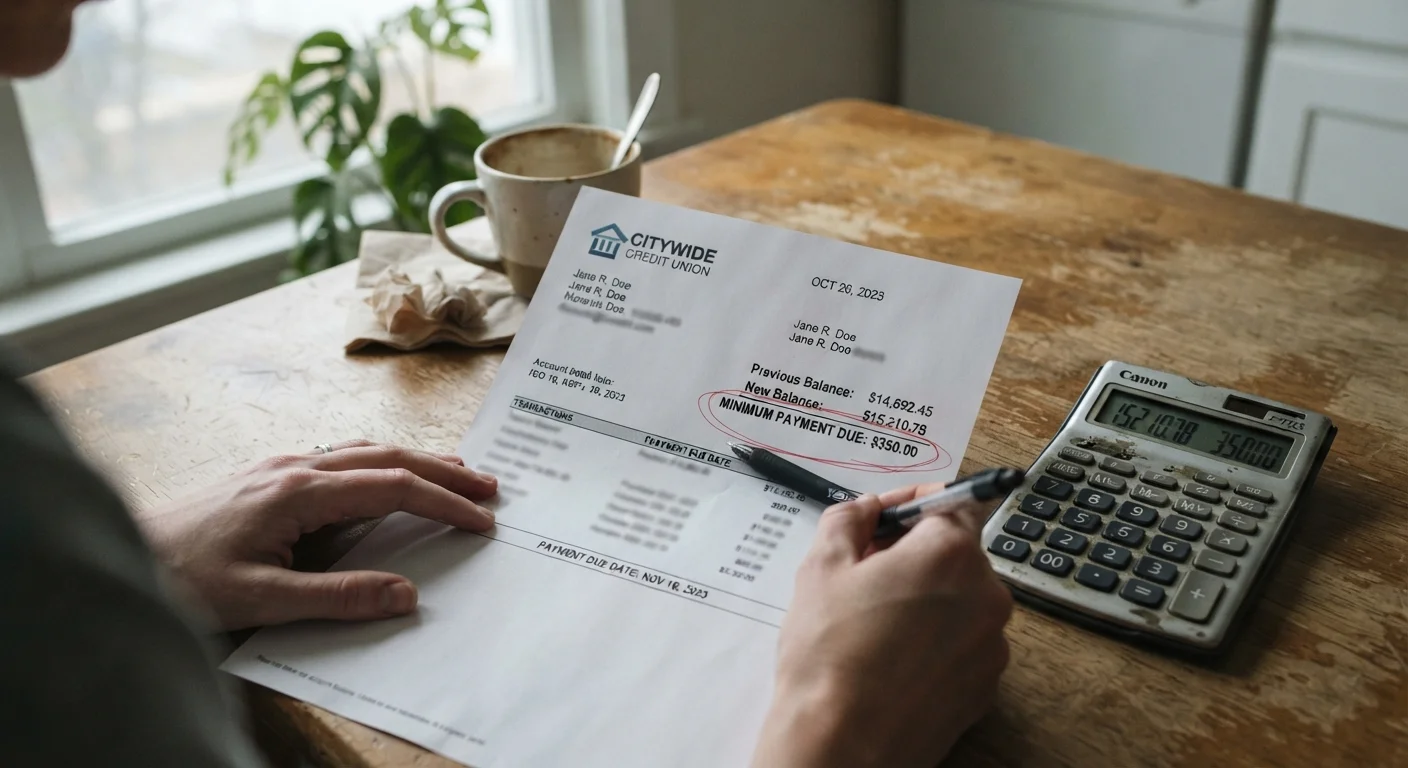
Paying Down Debt While Saving: Is It Possible to Do Both?


Photo: InsightsChief.com | Your Source Of Trusted Insights editorial
Key Takeaways
- Paying down debt and saving simultaneously is possible, but requires deliberate trade-offs based on interest rates.
- High-interest debt typically costs more than savings earn, making aggressive payoff the priority in most cases.
- A small emergency fund should be built before redirecting all spare cash toward debt.
- Employer-matched retirement contributions are often worth capturing even while carrying debt.
- The right balance depends on your interest rates, income stability, and financial safety net.
Builds an emergency buffer while reducing debt
Having even a small savings cushion prevents the cycle of paying down debt only to charge new expenses back to a card when something unexpected comes up.
Captures employer retirement match immediately
An employer match on 401(k) contributions represents a guaranteed return that typically outpaces even high-interest debt costs - deferring it means forfeiting earned compensation.
Reduces financial anxiety on two fronts
Making visible progress on both savings and debt - even if slower - can improve financial confidence and reduce the stress that often derails long-term plans.
Builds lasting savings habits alongside debt payoff
Households that practice saving while in debt tend to continue the habit afterward, rather than struggling to start from scratch once debt is cleared.
High-interest debt grows faster than savings earn
Carrying a 20%+ APR credit card balance while earning 4-5% in savings means the debt is outpacing your returns, making the split financially costly over time.
Slower overall debt payoff increases total interest paid
Every month you carry a balance at high interest is another month of compounding charges - splitting payments extends that timeline and increases the total amount repaid.
Requires consistent discipline to maintain both commitments
Juggling two financial goals on a limited income leaves little margin for error; a single missed month on either goal can require recalibration of the whole plan.
Can obscure which goal should actually take priority
Without a clear decision framework, households risk splitting cash in ways that don't reflect their real interest-rate math, underperforming on both goals simultaneously.
The False Dilemma Most Budgets Create
When money is tight, the instinct is to pick a lane: either throw everything at debt or sock money away for later. Personal finance messaging often reinforces this binary - get out of debt first, then start saving. The reality is more nuanced, and for many households, a strict either/or approach can leave them worse off.
Paying off debt while building savings isn't just a feel-good compromise. It's a strategy that addresses two distinct financial risks at the same time: the ongoing cost of high-interest balances, and the vulnerability that comes from having no financial cushion. Both risks are real, and ignoring either one has consequences.
This article is general financial education, not personalized advice. For guidance tailored to your situation, consult a licensed financial professional. That said, understanding how to think through this trade-off is something every budget-conscious household can benefit from. For a broader look at how debt fits into your overall financial picture, see the end-to-end debt roadmap.
The Core Trade-Off: Interest Rates Tell the Story
The math behind this decision starts with comparing interest rates. If you're carrying credit card debt at 22% APR, every dollar sitting in a savings account earning 4-5% is effectively losing ground. In that scenario, paying down the high-interest balance first is generally the more efficient move.
But that calculation shifts when debt carries lower rates - a federal student loan at 5% or a fixed mortgage - where the gap between what you owe and what savings can earn narrows considerably.
~40%
US adults carrying credit card debt month to month
According to Federal Reserve survey data, a significant share of US households regularly carry revolving credit card balances rather than paying in full.
$1,000
Starter emergency fund commonly recommended
Many nonprofit credit counselors and financial educators suggest a $500-$1,000 liquid buffer as the minimum before shifting focus to accelerated debt payoff.
50-100%
Effective return on employer-matched contributions
A dollar-for-dollar or 50-cent-on-the-dollar employer match represents an immediate return that is difficult to replicate through any other financial strategy.
A practical framework many financial educators suggest:
- Build a minimal emergency fund first - typically $500 to $1,000 - before aggressively attacking debt. Without this buffer, one unexpected expense forces you back onto a credit card, undoing your progress.
- Capture any employer retirement match - this is effectively a 50-100% instant return on those dollars, which almost always beats paying down even high-interest debt.
- Direct remaining surplus toward high-interest debt - once the buffer and match are handled, focus extra cash on the most expensive balances. See our comparison of debt avalanche vs. debt snowball strategies for structuring that payoff.
Pros of Tackling Both at the Same Time
There are real advantages to maintaining progress on both fronts rather than going all-in on one goal.
Builds an emergency buffer while reducing debt
Having even a small savings cushion prevents the cycle of paying down debt only to charge new expenses back to a card when something unexpected comes up.
Captures employer retirement match immediately
An employer match on 401(k) contributions represents a guaranteed return that typically outpaces even high-interest debt costs - deferring it means forfeiting earned compensation.
Reduces financial anxiety on two fronts
Making visible progress on both savings and debt - even if slower - can improve financial confidence and reduce the stress that often derails long-term plans.
Builds lasting savings habits alongside debt payoff
Households that practice saving while in debt tend to continue the habit afterward, rather than struggling to start from scratch once debt is cleared.
The pay-yourself-first approach can be adapted here - automate a small savings contribution and a debt payment before discretionary spending begins, removing the temptation to skip either.
Cons of Splitting Your Focus
A dual approach isn't without its drawbacks, and understanding them helps you calibrate how much to split versus concentrate.
High-interest debt grows faster than savings earn
Carrying a 20%+ APR credit card balance while earning 4-5% in savings means the debt is outpacing your returns, making the split financially costly over time.
Slower overall debt payoff increases total interest paid
Every month you carry a balance at high interest is another month of compounding charges - splitting payments extends that timeline and increases the total amount repaid.
Requires consistent discipline to maintain both commitments
Juggling two financial goals on a limited income leaves little margin for error; a single missed month on either goal can require recalibration of the whole plan.
Can obscure which goal should actually take priority
Without a clear decision framework, households risk splitting cash in ways that don't reflect their real interest-rate math, underperforming on both goals simultaneously.
If your debt carries very high interest rates, the cost of carrying it longer is substantial. As our explainer on minimum payment costs shows, even small delays in paying down high-interest balances can translate to significant extra interest charges over time.
When to Pause Savings and Go All-In on Debt
A Practical Starting Point for Your Budget
Rather than treating this as all-or-nothing, consider mapping your situation against a few concrete questions:
- Do you have at least $500-$1,000 in liquid savings? If not, start there before accelerating debt payments.
- Does your employer offer a retirement match you're not fully capturing? That match is part of your compensation - leaving it on the table is a real cost.
- What are the interest rates on your debts? Rates above roughly 7-8% generally warrant aggressive payoff before prioritizing savings beyond the emergency buffer.
- How stable is your income? Greater uncertainty argues for a larger emergency fund before redirecting cash to debt.
For more on how the fundamentals of budgeting can support this kind of planning, explore our budgeting hub. And if you're weighing whether to restructure your debt before paying it down, understanding debt consolidation is worth reading first.
This article is for general informational and educational purposes only and does not constitute personalized financial, tax, or investment advice. Consult a qualified financial professional before making decisions specific to your financial situation.
The content provided on our blog site traverses numerous categories, offering readers valuable and practical information. Readers can use the editorial team’s research and data to gain more insights into their topics of interest. However, they are requested not to treat the articles as conclusive. The website team cannot be held responsible for differences in data or inaccuracies found across other platforms. Please also note that the site might also miss out on various schemes and offers available that the readers may find more beneficial than the ones we cover.