
Home Maintenance Tasks Worth Doing Yourself - and Those That Warrant a Licensed Pro

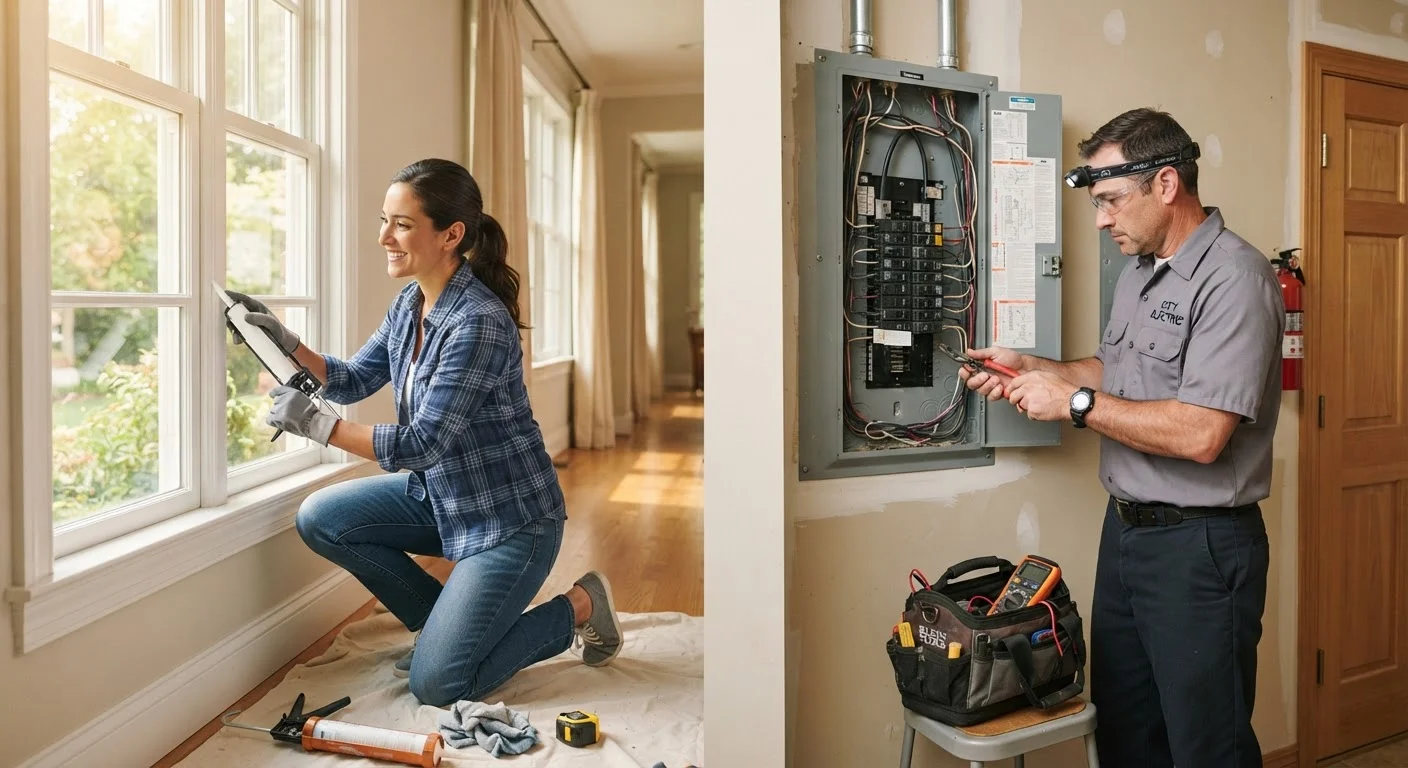
Photo: InsightsChief.com | Your Source Of Trusted Insights editorial
Key Takeaways
- Many routine maintenance tasks - like caulking, filter changes, and gutter cleaning - are safely within reach of most homeowners.
- Electrical, gas, structural, and permit-required work generally calls for a licensed professional to meet code and ensure safety.
- Attempting high-risk tasks without proper training can void homeowner's insurance and create costly liability.
- Knowing the DIY boundary upfront saves money long-term by preventing botched repairs and permit violations.
- Even confident DIYers benefit from an annual professional inspection for systems like HVAC, plumbing, and roofing.
Why the DIY vs. Pro Decision Matters More Than You Think
Every homeowner faces the same recurring choice: tackle the job yourself or call someone in. Get it right and you save real money while keeping your home in good shape. Get it wrong and you may be looking at voided warranties, failed inspections, or repair bills that dwarf what a professional would have charged in the first place.
The line between a reasonable DIY project and one that needs licensed expertise isn't always obvious - and it's rarely about skill alone. Permits, local building codes, insurance requirements, and genuine safety hazards all factor in. Our guide on deferred maintenance costs shows how hesitation in either direction tends to compound problems over time.
The list below breaks down common maintenance tasks by category, explaining what makes each one DIY-friendly or professionally required - so you can make informed decisions before picking up a tool or a phone.
Replacing HVAC Filters - DIY-Friendly
Swapping out your furnace and air handler filters is one of the highest-value, lowest-risk maintenance tasks a homeowner can do. Most filters slide out of an accessible panel without tools, and the correct size is typically printed on the filter's frame. Depending on the filter type and household conditions, replacement intervals generally range from one to three months.
Staying on schedule improves indoor air quality, reduces strain on the system's blower motor, and can extend equipment life. For more detail on what's required and what's best left to a technician, see our guide to HVAC homeowner maintenance.
Filter changes take minutes and cost little - skipping them can shorten expensive HVAC equipment life.
Caulking Windows, Doors, and Tubs - DIY-Friendly
Deteriorated caulk is a leading entry point for water damage and a common source of energy loss. Re-caulking is well within reach for most homeowners: the materials are inexpensive, the technique is learnable with a bit of practice, and the results are immediately visible. The key steps are removing old caulk completely, cleaning and drying the surface, and applying a smooth, continuous bead of the appropriate caulk type (silicone for wet areas, paintable latex for trim).
Interior and exterior caulking should be inspected at least once a year, typically in fall before cold weather arrives.
A tube of caulk costs a few dollars; the water damage it prevents can cost thousands.
Cleaning Gutters - DIY-Friendly With Caution
Clearing gutters of leaves and debris is a task most homeowners can handle with a ladder, gloves, and a garden hose. Clogged gutters redirect water against fascia boards and foundations, leading to rot and drainage problems that compound over time.
That said, ladder safety is a genuine concern - working at height on an extension ladder accounts for a significant share of home DIY injuries. Always use a ladder rated for your weight, keep three points of contact, and avoid leaning out past the ladder's rails. Single-story gutters are generally manageable; multi-story homes may be worth hiring out strictly for safety reasons.
Gutter cleaning is DIY-doable, but ladder safety should always be the deciding factor.
Electrical Panel Work and Wiring - Licensed Pro Required
Any work inside the main electrical panel - adding circuits, replacing breakers, upgrading service - requires a licensed electrician in virtually every US jurisdiction. The same applies to running new wiring through walls, adding outlets, or modifying existing circuits. These tasks involve shock hazards, fire risk, and code requirements that are enforced through permits and inspections.
Unpermitted electrical work can complicate home sales, void homeowner's insurance in the event of a fire, and create hazards that aren't immediately visible. Even experienced DIYers who understand basic wiring are typically prohibited by local code from performing this work on their own homes without a license.
Unpermitted electrical work can void insurance coverage and create invisible hazards for future occupants.
Gas Line Repairs and Appliance Connections - Licensed Pro Required
Natural gas and propane systems require licensed plumbers or gas fitters for any work beyond swapping out an appliance that uses a flexible connector already in place. Installing a new gas line, moving a shutoff valve, or repairing a leak is regulated work in all US states - and for good reason. Gas leaks are invisible, can accumulate rapidly, and pose explosion and carbon monoxide risks.
If you smell gas in your home, leave immediately, avoid switches or open flames, and contact your utility company and emergency services from outside. Do not attempt to locate or repair a gas leak yourself under any circumstances.
Gas line work is never a DIY job - the risks are invisible, fast-moving, and potentially catastrophic.
Painting Interior Walls - DIY-Friendly
Interior painting is one of the most accessible home improvement tasks, requiring modest investment in supplies and offering significant visual and protective returns. Proper prep - patching holes, sanding, cleaning surfaces, and applying painter's tape - accounts for most of the quality difference between a professional and amateur result.
Water-based latex paints are easier to work with, dry faster, and clean up with water. Rolling large flat surfaces and cutting in carefully along trim and ceilings are skills that improve quickly with practice. This is a reliable area where homeowner effort translates directly into labor savings. For context on how it fits a broader improvement plan, see the home improvement hub.
Paint prep is where most DIY painting jobs succeed or fail - don't rush it.
Roof Repairs and Replacement - Generally Pro Territory
While replacing a handful of missing shingles is sometimes cited as a DIY possibility, roof work carries substantial fall risk and requires an understanding of flashing, underlayment, and ventilation that affects long-term performance. Most roofing manufacturers also require professional installation to honor product warranties.
A licensed roofing contractor will carry liability insurance, which matters if a worker is injured on your property or if the roof leaks after the repair. If you suspect roof damage, a professional inspection is a sensible first step - many contractors offer them and can document findings for insurance purposes.
Roofing warranties often require professional installation - DIY repairs may cost more than they save.
Toilet Repairs and Fixture Replacement - Often DIY-Friendly
Many common toilet issues - a running flapper, a loose fill valve, or a wobbly seat - can be fixed with inexpensive parts from a hardware store and a basic understanding of how a toilet tank works. Replacing a faucet or showerhead is similarly manageable for homeowners comfortable turning off the water supply and following manufacturer instructions.
The boundary shifts when work involves cutting into supply lines, moving drain rough-ins, or any connection to the main plumbing stack - those tasks typically require permits and a licensed plumber. When in doubt, stopping at the shutoff valve and calling a professional is almost always the right call to avoid water damage.
Toilet tank repairs are genuinely DIY-accessible - most parts cost under $20 and swap out in minutes.
Making the Most of Your Maintenance Decisions
A general rule of thumb: if a task involves opening electrical panels, modifying gas lines, affecting load-bearing structure, or is regulated by local permit requirements, a licensed professional isn't optional - it's essential. For everything else, an honest assessment of your tools, time, and comfort level is usually enough to guide the call.
Schedule an Annual Systems Review
If you're unsure where a specific task falls, our framework for evaluating DIY vs. professional work provides a structured way to think it through. And when you do need to hire out, knowing what to ask a contractor before work starts can protect you from common pitfalls.
Pairing smart DIY habits with the right professional relationships is one of the most effective ways to manage home costs over the long run - without gambling on safety or code compliance.
The content provided on our blog site traverses numerous categories, offering readers valuable and practical information. Readers can use the editorial team’s research and data to gain more insights into their topics of interest. However, they are requested not to treat the articles as conclusive. The website team cannot be held responsible for differences in data or inaccuracies found across other platforms. Please also note that the site might also miss out on various schemes and offers available that the readers may find more beneficial than the ones we cover.