
Why Cheap Doesn't Mean Unhealthy: Rethinking Budget Grocery Staples

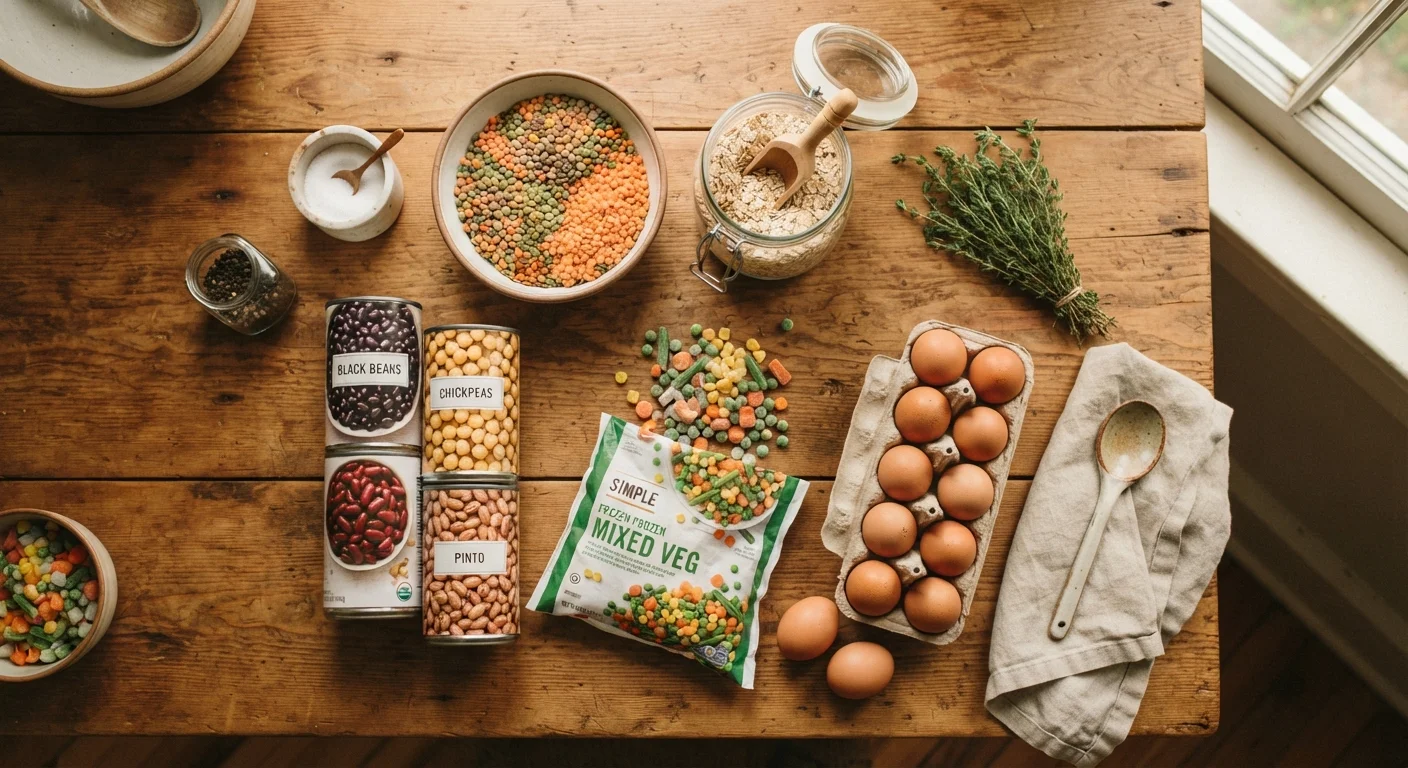
Photo: InsightsChief.com | Your Source Of Trusted Insights editorial
Key Takeaways
- Many of the most affordable grocery staples rank among the most nutrient-dense foods available.
- Frozen and canned produce often retain comparable nutrition to fresh varieties, sometimes even more.
- Plant-based proteins like lentils and dried beans deliver strong dietary value at a fraction of the cost of meat.
- Generic and store-brand foods are typically produced to the same nutritional standards as name brands.
- A nutritious diet does not require expensive superfoods, supplements, or specialty items.
The Price-Quality Assumption in the Grocery Aisle
Many shoppers instinctively equate higher price with higher nutritional quality. It's an understandable shortcut in a marketplace full of premium packaging and health-halo marketing. But when you examine what's actually inside the most affordable grocery staples, the assumption falls apart quickly.
Nutrition scientists evaluate foods by their density of vitamins, minerals, fiber, and macronutrients relative to calories - not by retail price. On that measure, some of the cheapest items in any grocery store consistently outperform expensive alternatives. Understanding where this assumption comes from, and where it breaks down, is the first step toward building a genuinely nutritious diet on a realistic budget.
For a broader look at practical family nutrition principles, see our family nutrition primer.
Myth
Frozen vegetables are nutritionally inferior to fresh produce because freezing destroys vitamins.
Fact
Freezing typically preserves most nutrients effectively, and frozen vegetables are often processed within hours of harvest.
Fresh vegetables begin losing certain nutrients - particularly water-soluble vitamins like vitamin C and folate - from the moment they're harvested. By contrast, most commercially frozen vegetables are blanched and frozen rapidly after picking, locking in much of their nutritional value. Research published in nutrition journals has found that frozen vegetables can be nutritionally comparable to, or in some cases superior to, fresh counterparts that have been stored or shipped over several days. For budget families, frozen vegetables represent excellent value: lower cost, longer shelf life, and dependable nutrition.
Myth
Canned beans are unhealthy because they're loaded with sodium and lack real nutritional value.
Fact
Canned beans are nutrient-dense and their sodium content can be substantially reduced simply by rinsing them under water.
Legumes - including chickpeas, black beans, kidney beans, and lentils - are among the most nutritionally complete plant foods available. They provide protein, dietary fiber, iron, folate, potassium, and complex carbohydrates. Canned versions offer the same core nutrition as dried beans at significantly lower preparation time. Studies have shown that draining and rinsing canned beans can remove roughly 40% of the added sodium. Choosing low-sodium canned varieties reduces that concern further. For families on tight budgets, canned beans are one of the highest-value foods per dollar available anywhere in the store. Our deeper look at beans, lentils, and eggs covers these foods in full context.
Myth
Store-brand and generic foods are lower quality than name-brand equivalents.
Fact
Generic grocery products are required to meet the same federal food safety and labeling standards as name brands, and many are manufactured by the same producers.
The U.S. Food and Drug Administration regulates food labeling and safety standards across all brands. Many store-brand products are produced in the same facilities as national brands, differing primarily in packaging and marketing spend - costs that name brands pass on to consumers. Independent consumer analyses have repeatedly found that generic staples such as oats, canned tomatoes, flour, and frozen vegetables are nutritionally equivalent to their branded counterparts. Swapping systematically to store brands on core staples is one of the most straightforward ways to reduce grocery spending without any compromise in dietary quality.
Myth
Eggs are unhealthy because of their cholesterol content and should be avoided for heart health.
Fact
Current dietary guidance from major health organizations no longer sets a specific daily cholesterol limit, and eggs remain a recognized source of high-quality protein and micronutrients.
For decades, dietary cholesterol - including that found in eggs - was treated as a primary driver of cardiovascular risk. More recent nutritional science has shifted this view considerably. The 2020-2025 Dietary Guidelines for Americans removed the previous 300mg daily cholesterol limit, reflecting updated evidence that dietary cholesterol has a more complex relationship with blood cholesterol than once believed. Eggs provide complete protein (all essential amino acids), choline (important for brain and liver function), vitamin D, and B vitamins. For households seeking affordable protein, eggs remain a well-regarded, evidence-supported option. Individuals with specific cardiovascular conditions should consult their healthcare provider for personalized guidance.
Myth
White rice and pasta offer no nutritional value and cause blood sugar spikes, making them poor food choices.
Fact
Refined grains like white rice and pasta contribute energy, B vitamins, and iron, and their glycemic impact depends heavily on preparation and overall meal composition.
While whole grains are generally preferred for their added fiber content, refined grains are not nutritionally empty. Enriched white rice and pasta are typically fortified with iron, niacin, thiamine, and folic acid under U.S. regulations. Their effect on blood glucose is significantly modulated by how they're prepared (cooking method and cooling time affect resistant starch content) and what they're eaten with. A meal of white rice paired with legumes, vegetables, and a protein source has a very different glycemic profile than rice eaten alone. Whole grains are worth prioritizing when the budget allows, but dismissing white rice or pasta as categorically harmful oversimplifies the nutritional picture for families who rely on them as affordable caloric staples.
What the Evidence Actually Shows
Research consistently shows that dietary patterns - the overall combination of foods eaten over time - matter far more than any single expensive ingredient. Families eating predominantly whole grains, legumes, eggs, and frozen or canned vegetables can meet established dietary guidelines without relying on costly specialty foods.
$0.15
Approximate cost per serving of dried lentils
USDA food cost data consistently places dried legumes among the lowest cost-per-gram-of-protein sources available in US grocery retail.
~40%
Sodium removed by rinsing canned beans
Research from the University of Tennessee found that draining and rinsing canned beans reduced sodium content by approximately 40% on average.
90%+
Of key nutrients retained in frozen vegetables
Studies reviewed in the Journal of the Science of Food and Agriculture found that blanching and freezing preserves most vitamins and minerals effectively in common vegetables.
The practical implication is significant: a household that spends thoughtfully on staples like oats, dried beans, eggs, and frozen spinach can build a nutrient profile that rivals far more expensive eating patterns. For families with growing children, this matters enormously. Our article on feeding growing kids on a budget explores how these staples translate into age-appropriate meals.
Protein is a particular concern for budget-conscious households. The evidence supporting plant-based protein sources like lentils and legumes is robust. For a detailed look at what protein actually does and where to find affordable sources, see protein on a budget.
Nutritional Quality Isn't Reserved for High-Income Shoppers
When produce form is a question - fresh versus frozen versus canned - the nutritional differences are often smaller than assumed. Our comparison of fresh, frozen, and canned produce examines this in detail, but the headline finding is that frozen and low-sodium canned options are genuinely sound choices for budget households.
This article is for general informational purposes only and does not constitute medical or dietary advice. Consult a qualified healthcare professional or registered dietitian for guidance specific to your health needs or those of your family.
The content provided on our blog site traverses numerous categories, offering readers valuable and practical information. Readers can use the editorial team’s research and data to gain more insights into their topics of interest. However, they are requested not to treat the articles as conclusive. The website team cannot be held responsible for differences in data or inaccuracies found across other platforms. Please also note that the site might also miss out on various schemes and offers available that the readers may find more beneficial than the ones we cover.