
The Tradeoffs of Tracking Your Health With a Smartphone

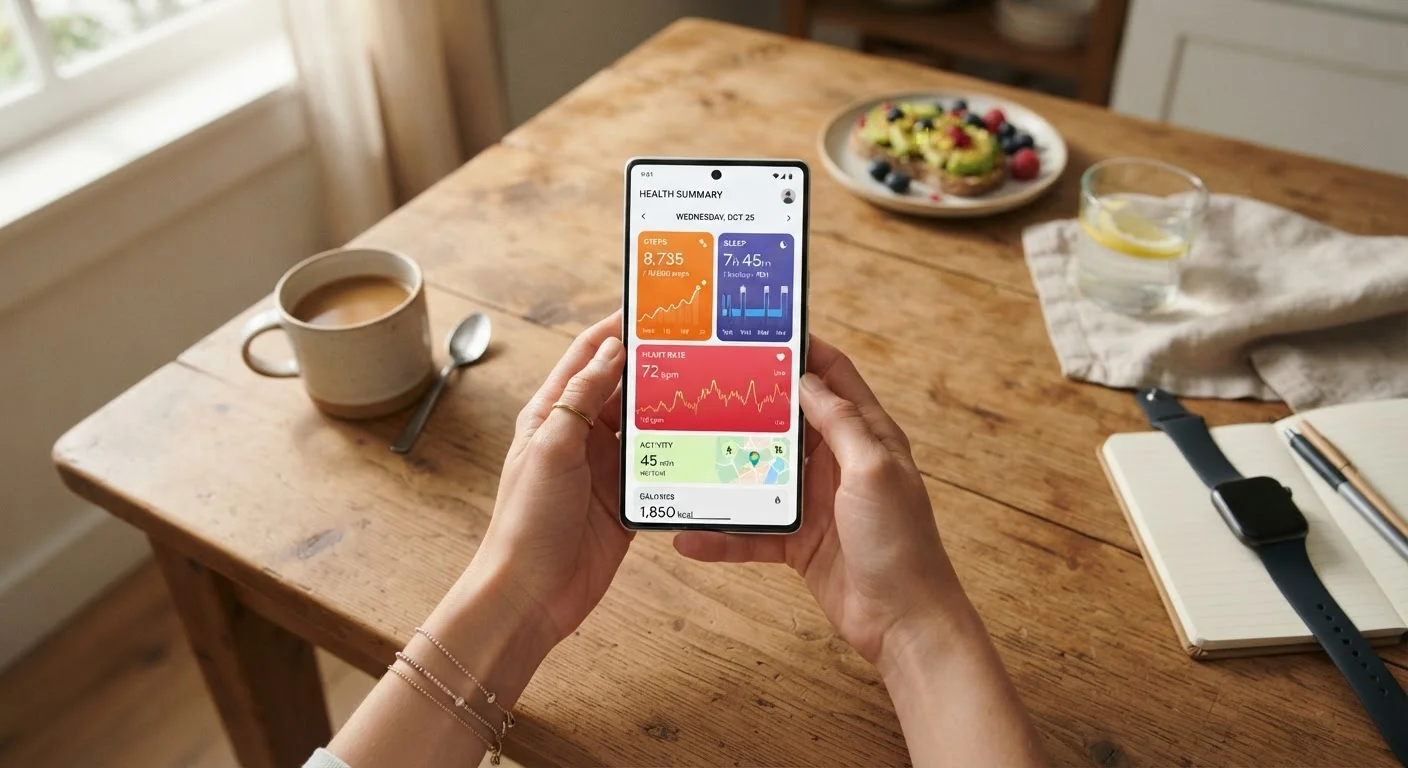
Photo: InsightsChief.com | Your Source Of Trusted Insights editorial
Key Takeaways
- Smartphone health apps offer a low-cost starting point for monitoring activity, sleep, and nutrition.
- Built-in sensors have meaningful accuracy limitations, especially for clinical-level measurements.
- Tracking can motivate healthy habits but may also contribute to anxiety or over-reliance on data.
- No app replaces professional medical evaluation for symptoms or ongoing health concerns.
- Privacy settings and data-sharing policies deserve careful review before using any health app.
Free or very low cost to get started
Most smartphones include built-in health apps at no additional charge. This removes the financial barrier that dedicated wearables or gym memberships often present for budget-conscious households.
Builds awareness of everyday movement patterns
Seeing a daily step count or activity summary can highlight sedentary stretches that might otherwise go unnoticed, prompting small but meaningful behavioral adjustments over time.
Supports habit formation through feedback loops
Consistent data and gentle reminders can reinforce routines like drinking more water, going to bed earlier, or hitting a daily activity goal - the kind of low-effort nudges that support long-term behavior change.
Consolidates multiple wellness metrics in one place
Many apps integrate sleep tracking, nutrition logging, heart rate trends, and stress indicators, giving users a broader view of interconnected lifestyle factors without needing separate devices.
Easy to share data with a healthcare provider
When visiting a doctor, exported activity or sleep trends can provide useful context for conversations about lifestyle factors - a practical supplement to clinical observations.
Sensor accuracy falls short of clinical standards
Consumer-grade phone sensors produce estimates rather than precise measurements. Studies have found that calorie and heart rate readings from these devices can deviate meaningfully from laboratory benchmarks, limiting their reliability for medical purposes.
Can increase health anxiety in some users
Continuous monitoring of metrics like heart rate variability or sleep stages may cause unnecessary worry when readings fluctuate normally. For individuals prone to health anxiety, this kind of constant feedback can be counterproductive.
Data privacy policies may be opaque or permissive
Many health apps share or license user data to third parties, including advertisers or research organizations. Users often accept these terms without fully understanding the scope of what they're agreeing to.
Risk of over-relying on data instead of professional care
App-generated readings should never replace a clinical evaluation. Relying on a smartphone to monitor a genuine health concern can delay appropriate medical attention, which carries real risk.
Tracking fatigue can undermine long-term engagement
Research on behavior change suggests that the motivational boost from self-monitoring tends to diminish over time. Many users stop engaging with health apps within a few weeks of starting, reducing their long-term practical value.
Why Families Are Turning to Smartphone Health Tracking
For households watching every dollar, purchasing dedicated fitness trackers or gym memberships may not be realistic. Smartphones - devices most families already own - come preloaded with apps that count steps, monitor heart rate, log sleep, and even estimate calorie burn. This has made smartphone-based health tracking one of the most accessible entry points into everyday wellness.
The appeal is straightforward: zero additional hardware cost, a familiar interface, and data that updates continuously throughout the day. For parents juggling busy schedules, a quick glance at a daily step count or sleep summary can reinforce small, manageable goals. Paired with strategies like weaving movement into daily routines, these tools can support habits that don't require a gym or expensive equipment.
But convenience and accessibility don't automatically translate into accuracy or wellbeing. Understanding both sides of this technology helps families use it wisely.
The Real Advantages of Tracking Your Health by Phone
Smartphone health tracking offers several genuine benefits when approached with clear expectations.
Free or very low cost to get started
Most smartphones include built-in health apps at no additional charge. This removes the financial barrier that dedicated wearables or gym memberships often present for budget-conscious households.
Builds awareness of everyday movement patterns
Seeing a daily step count or activity summary can highlight sedentary stretches that might otherwise go unnoticed, prompting small but meaningful behavioral adjustments over time.
Supports habit formation through feedback loops
Consistent data and gentle reminders can reinforce routines like drinking more water, going to bed earlier, or hitting a daily activity goal - the kind of low-effort nudges that support long-term behavior change.
Consolidates multiple wellness metrics in one place
Many apps integrate sleep tracking, nutrition logging, heart rate trends, and stress indicators, giving users a broader view of interconnected lifestyle factors without needing separate devices.
Easy to share data with a healthcare provider
When visiting a doctor, exported activity or sleep trends can provide useful context for conversations about lifestyle factors - a practical supplement to clinical observations.
~50%
Adults using health or fitness apps
Surveys by the Pew Research Center have found that roughly half of US adults report using a health-related app on their smartphone at some point.
27%
Calorie estimate error rate in studies
Multiple peer-reviewed analyses have found that wearable and smartphone-based calorie expenditure estimates can deviate from measured values by roughly 20-30% on average.
Beyond step counting, many apps support food journaling, hydration reminders, breathing exercises, and menstrual cycle tracking - creating a consolidated picture of multiple lifestyle factors. For people working toward sustainable habits, this breadth of data can surface patterns that are otherwise easy to miss, such as how sleep quality correlates with daily activity levels.
The Limitations and Risks Worth Knowing
The same convenience that makes smartphone tracking appealing also introduces real limitations that families should weigh honestly.
Sensor accuracy falls short of clinical standards
Consumer-grade phone sensors produce estimates rather than precise measurements. Studies have found that calorie and heart rate readings from these devices can deviate meaningfully from laboratory benchmarks, limiting their reliability for medical purposes.
Can increase health anxiety in some users
Continuous monitoring of metrics like heart rate variability or sleep stages may cause unnecessary worry when readings fluctuate normally. For individuals prone to health anxiety, this kind of constant feedback can be counterproductive.
Data privacy policies may be opaque or permissive
Many health apps share or license user data to third parties, including advertisers or research organizations. Users often accept these terms without fully understanding the scope of what they're agreeing to.
Risk of over-relying on data instead of professional care
App-generated readings should never replace a clinical evaluation. Relying on a smartphone to monitor a genuine health concern can delay appropriate medical attention, which carries real risk.
Tracking fatigue can undermine long-term engagement
Research on behavior change suggests that the motivational boost from self-monitoring tends to diminish over time. Many users stop engaging with health apps within a few weeks of starting, reducing their long-term practical value.
Accuracy is the most significant concern. Smartphone sensors - accelerometers, optical heart rate monitors, GPS - are designed for consumer use, not clinical measurement. Research has shown that calorie estimates from wearable and phone-based trackers can vary substantially from actual expenditure. Step counts may undercount or overcount depending on how the device is carried. For general motivation, this imprecision may be acceptable. For anyone managing a health condition, these numbers should never substitute for professional evaluation.
There's also a psychological dimension. Some individuals find that constant data monitoring increases anxiety rather than reducing it - a phenomenon sometimes called "metric fixation." If checking your stats becomes a source of stress rather than insight, it may be worth stepping back. Our look at screen time and mental wellbeing explores this tension in more depth.
Privacy: What Happens to Your Health Data
Health data is among the most sensitive personal information a device can collect. Before using any health tracking app, it's worth reviewing its privacy policy to understand what data is collected, how it is stored, and whether it is shared with or sold to third parties.
Your Health Data Has Legal Protections - With Gaps
Free apps, in particular, often sustain themselves through data licensing or advertising partnerships. This doesn't necessarily make them harmful, but it does mean users should make an informed choice. Look for apps that offer clear opt-out controls, avoid requiring unnecessary permissions (such as access to contacts or camera), and store health data locally rather than only on external servers.
For families with children, additional caution is warranted. Many major app platforms have age restrictions on health data collection, but parental awareness and involvement remain important safeguards.
Using Tracking as a Tool, Not a Verdict
The most productive mindset toward smartphone health data is to treat it as one informative signal among many - not an authoritative health verdict. A lower step count on a stressful day doesn't mean you failed; a high heart rate reading during a walk doesn't mean something is wrong with your heart.
For those interested in measuring wellness progress without relying solely on numbers from an app, it's worth exploring a broader range of fitness metrics that give a fuller, more balanced picture. Similarly, home-based fitness approaches can complement tracked data with structured activity that doesn't depend on app engagement at all.
Used as a prompt for reflection rather than a scorecard, smartphone health tracking can be a genuinely useful - and genuinely affordable - part of a family's wellness routine.
This article provides general health information for educational purposes only and is not a substitute for professional medical advice, diagnosis, or treatment. Always consult a qualified healthcare provider with questions about your health or before making changes to your wellness routine.
The content provided on our blog site traverses numerous categories, offering readers valuable and practical information. Readers can use the editorial team’s research and data to gain more insights into their topics of interest. However, they are requested not to treat the articles as conclusive. The website team cannot be held responsible for differences in data or inaccuracies found across other platforms. Please also note that the site might also miss out on various schemes and offers available that the readers may find more beneficial than the ones we cover.