
Pet Nutrition Labels Decoded: What the Ingredients List Is Actually Telling You

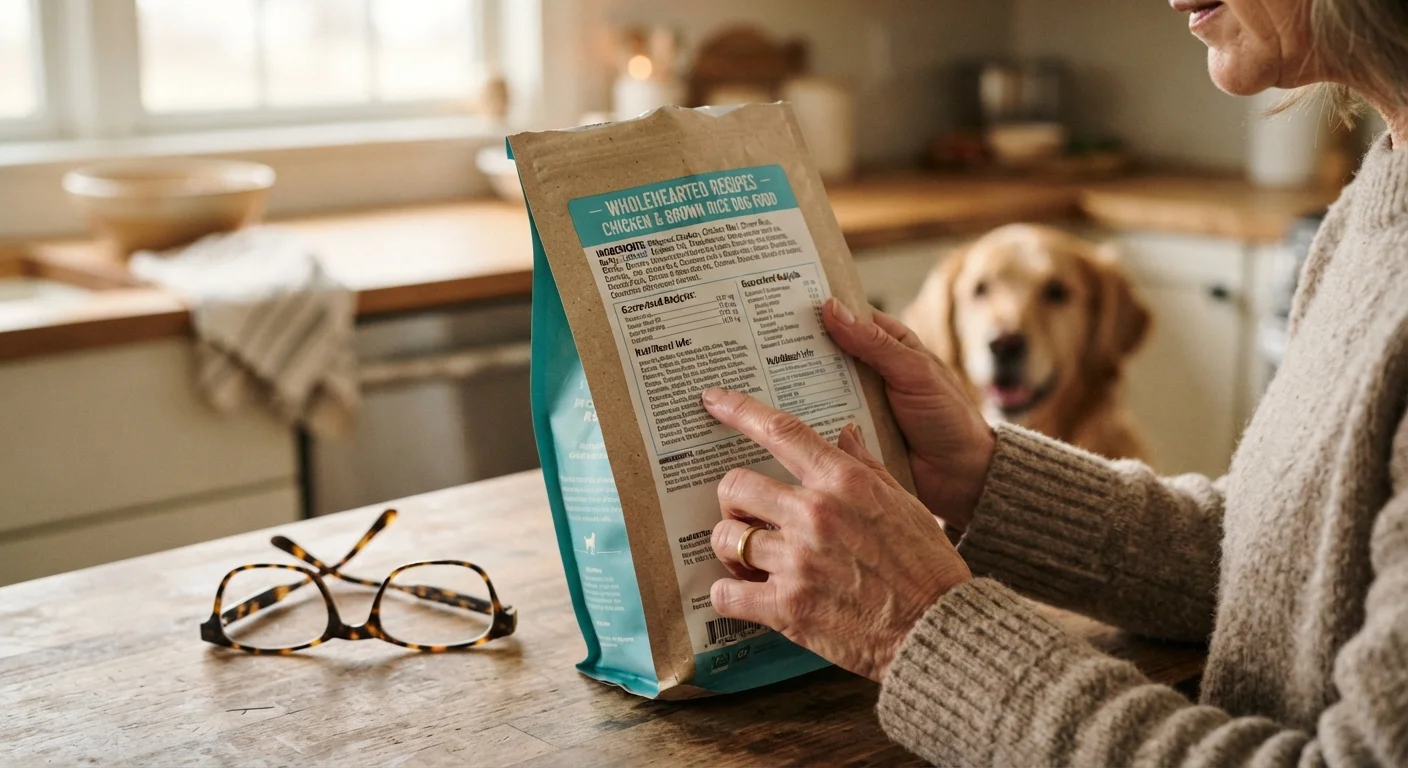
Photo: InsightsChief.com | Your Source Of Trusted Insights editorial
Key Takeaways
- Ingredients are listed by pre-cooking weight, so moisture content affects where an ingredient appears on the list.
- The guaranteed analysis panel tells you minimum or maximum nutrient percentages, not exact amounts.
- Marketing terms like 'natural,' 'holistic,' and 'premium' have little or no regulatory definition in pet food.
- Ingredient splitting can make a less desirable ingredient appear lower on the list than it truly is.
- An AAFCO nutritional adequacy statement tells you whether the food is complete and balanced for your pet's life stage.
- Price alone doesn't reliably indicate nutritional quality - label literacy matters more.
Why the Ingredients List Isn't as Straightforward as It Looks
Flip any bag of pet food over and the ingredients list can feel overwhelming - dozens of items, some familiar, some sounding like a chemistry experiment. The good news is that once you know a few ground rules, the list becomes a genuinely useful tool rather than a wall of confusion.
The single most important rule: ingredients are listed by pre-cooking weight, not by nutritional contribution. This distinction matters a lot. Fresh chicken, for example, is roughly 70-80% water. When it's processed, that moisture cooks off, which means a food that lists chicken first may actually contain less chicken protein than you'd expect. This is why some nutritionists pay close attention to where concentrated protein sources, like chicken meal or salmon meal, appear on the list.
It's also worth knowing about a practice called ingredient splitting. A manufacturer might list 'ground corn,' 'corn gluten meal,' and 'corn flour' as separate entries rather than combining them. Each appears lower on the list individually, but added together they could outweigh the first ingredient. Spotting variations of the same base ingredient repeated in the top ten is a useful signal.
AAFCO Sets the Rules, But Doesn't Test Every Product
Decoding the Guaranteed Analysis Panel
Just below or beside the ingredients list, you'll find the guaranteed analysis - a small table listing minimum percentages of crude protein and crude fat, and maximum percentages of crude fiber and moisture. Notice those words 'minimum' and 'maximum': these are floors and ceilings, not exact figures. The actual nutrient content in the bag could be meaningfully different.
Comparing guaranteed analysis numbers across wet and dry foods also requires an extra step. Wet food contains far more moisture (often 75-80%), which dilutes every percentage shown. To make a fair comparison, nutritionists use a calculation called dry matter basis - essentially, removing the moisture from both foods mathematically so you're comparing apples to apples. Many pet food review resources explain how to run this calculation, or your vet's office can walk you through it.
3%
Minimum ingredient level for 'with [protein]' label claim
Under AAFCO rules, a product labeled 'with chicken' or 'with beef' only needs to contain 3% of that ingredient - compared to 25% required for a 'recipe' or 'dinner' designation.
25%
Ingredient threshold for 'dinner' or 'recipe' label claims
AAFCO requires at least 25% of a named ingredient (excluding water) for a pet food to be marketed as a 'dinner,' 'entrée,' 'platter,' or 'recipe' featuring that ingredient.
70-80%
Moisture content in fresh meat before processing
Fresh chicken or beef listed first on a dry food label contains this much water by weight, which cooks off during processing - a key reason ingredient position doesn't equal nutritional dominance.
What Marketing Language Actually Means (and Doesn't)
Front-of-bag language is where pet food companies communicate their brand story - and where regulatory oversight gets thinner. A few terms do carry weight; many don't.
- 'Natural': AAFCO defines this to mean no artificial colors, flavors, or chemical preservatives, but the definition has nuance and exceptions. It says nothing about ingredient quality or sourcing.
- 'Holistic,' 'Premium,' 'Gourmet': These have no regulatory definition in pet food. They are purely marketing terms.
- 'With real chicken' vs. 'Chicken Recipe': AAFCO rules govern how prominently an ingredient can be named. A product called 'Chicken Recipe' must contain at least 25% chicken; one labeled 'with chicken' only needs 3%. The name on the front tells you more than you might think.
- 'Grain-free': This describes what's been removed but not what replaced it. Many grain-free foods substitute legumes or potatoes. The FDA has been studying a potential link between certain grain-free diets and a heart condition called dilated cardiomyopathy (DCM) in dogs; consult your vet if this is a concern.
For families trying to stretch their pet care budget, knowing that a higher price tag doesn't reliably signal better nutrition is genuinely useful. A mid-range food with a clean AAFCO adequacy statement may serve your pet just as well as a premium-branded one. See our guide to homemade vs. commercial pet food for more on evaluating your options.
Compare Wet and Dry Food on a Dry Matter Basis
The One Statement That Matters Most
If you read nothing else on a pet food label, read the AAFCO nutritional adequacy statement. It's usually printed near the guaranteed analysis and says something like: ' is formulated to meet the nutritional levels established by the AAFCO Dog Food Nutrient Profiles for maintenance.'
This statement tells you two things: whether the food is complete and balanced (not just a treat or supplement), and which life stage it's designed for. A puppy or kitten needs a food formulated for 'growth' or 'all life stages' - adult maintenance formulas don't meet the elevated nutritional demands of young, developing animals.
Foods without any adequacy statement, or those labeled 'for intermittent or supplemental feeding only,' are not intended as a pet's sole diet. Used as a primary food, they can lead to nutritional deficiencies over time.
Label reading pairs well with regular health monitoring. Our monthly pet care checklist includes weight checks that can help you notice early if a food change isn't working for your animal. And if you want to compare these label-reading skills to what you'd apply for human food shopping, our guide to nutrition label literacy covers the human-food equivalent.
This article is for general informational purposes only and is not veterinary or nutritional advice. Always consult a licensed veterinarian before making significant changes to your pet's diet, especially if your pet has a health condition.
Frequently Asked Questions
The content provided on our blog site traverses numerous categories, offering readers valuable and practical information. Readers can use the editorial team’s research and data to gain more insights into their topics of interest. However, they are requested not to treat the articles as conclusive. The website team cannot be held responsible for differences in data or inaccuracies found across other platforms. Please also note that the site might also miss out on various schemes and offers available that the readers may find more beneficial than the ones we cover.