
Homemade vs. Commercial Pet Food: What Families Should Weigh Before Switching

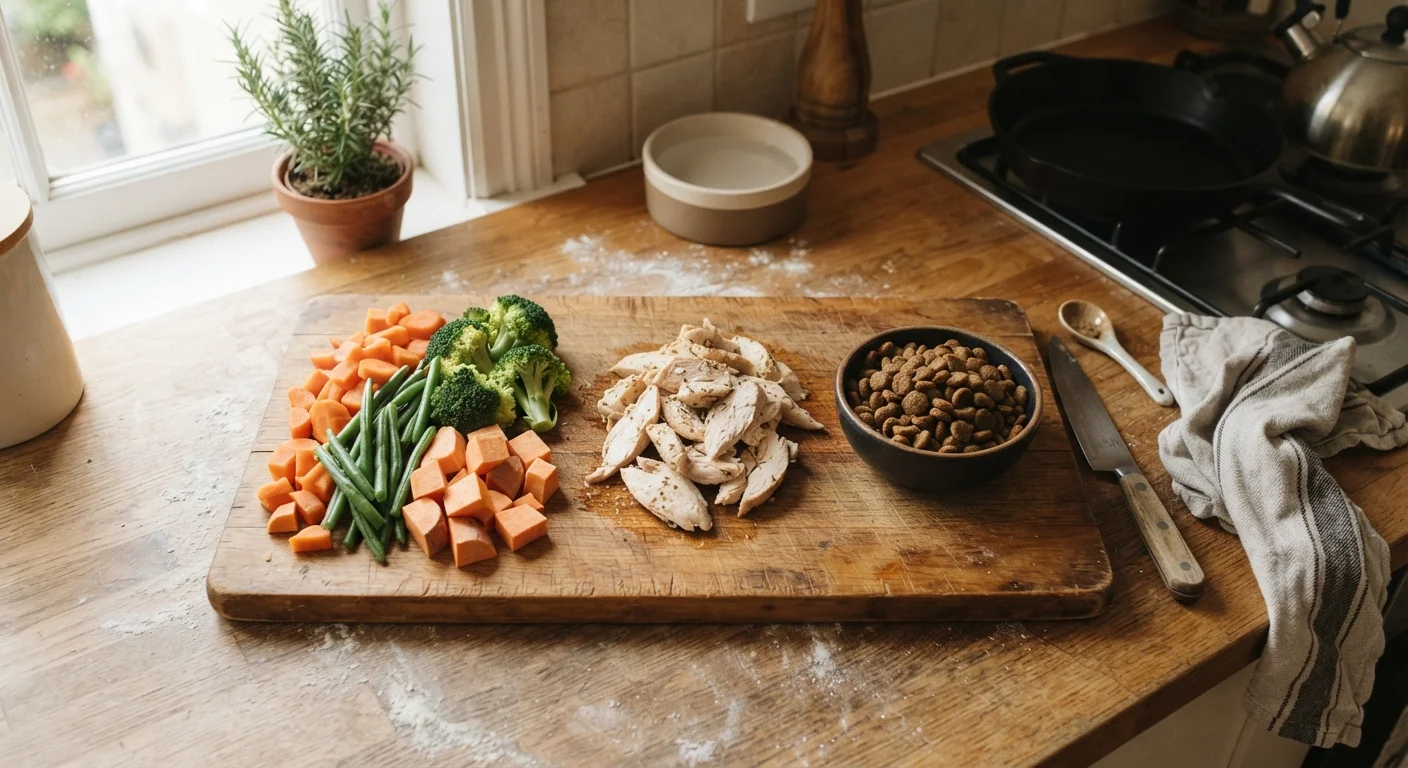
Photo: InsightsChief.com | Your Source Of Trusted Insights editorial
Key Takeaways
- Homemade pet food requires veterinary nutritionist input to avoid dangerous nutrient deficiencies.
- Commercial foods labeled 'complete and balanced' must meet AAFCO nutritional standards in the US.
- Cooking from scratch is not automatically cheaper once ingredients, supplements, and time are factored in.
- Both approaches carry safety risks - raw homemade diets risk bacterial contamination; commercial foods can face recalls.
- A hybrid approach using commercial food as a base with occasional whole-food toppers is a practical middle ground.
- Always consult a veterinarian before making significant changes to your pet's diet.
Why Families Are Rethinking the Pet Food Aisle
Pet food spending has climbed steadily for US households, and with grocery bills already stretched, it's natural to wonder whether cooking for your dog or cat could save money - or simply give you more peace of mind about what's in the bowl. The appeal is real: you know every ingredient, you can avoid additives you're uncomfortable with, and it feels like an extension of the same care you put into feeding your family.
But the decision deserves the same clear-eyed thinking you'd bring to any household trade-off. Just as whole vs. processed foods for your family isn't simply a question of "natural is better," homemade vs. commercial pet food isn't decided by ingredients alone. Nutrition science, food safety, and real-world cost all belong in the conversation.
The Nutritional Reality: Harder to Balance Than It Looks
Dogs and cats have precise micronutrient requirements that differ significantly from human needs. Cats, for example, cannot synthesize taurine or arachidonic acid and must get them through diet - deficiencies can cause serious heart and vision problems. Dogs need proper calcium-to-phosphorus ratios, adequate zinc, and correct vitamin D levels, among many others.
Studies published in veterinary journals have found that the overwhelming majority of homemade pet diet recipes available online - including those from veterinary websites - are missing one or more essential nutrients at recommended levels. Without a recipe formulated by a board-certified veterinary nutritionist and supplemented correctly, well-intentioned home cooking can quietly create deficiencies over months or years.
| Criterion | Homemade Pet Food | Commercial Pet Food |
|---|---|---|
| Nutritional completeness | Difficult without expert formulation | Regulated by AAFCO standards |
| Ingredient control | Full control over every ingredient | Dependent on manufacturer transparency |
| Typical cost | Often equal to or higher than commercial | Wide range; mid-grade widely available |
| Time commitment | Significant - daily or batch prep required | Minimal - open and serve |
| Food safety risk | Bacterial risk, especially raw diets | Recall risk; regulated manufacturing |
| Supplement complexity | Multiple supplements typically required | Nutrients built into the formula |
| Flexibility for sensitivities | High, with professional guidance | Prescription and limited-ingredient options exist |
Commercial foods carrying the "complete and balanced" statement on their label must meet standards established by the Association of American Feed Control Officials (AAFCO). That doesn't make every commercial food equally high-quality, but it does mean the nutritional floor is regulated. For a deeper look at how to read those labels critically, see our guide on decoding pet nutrition labels.
Cost and Safety: Rethinking the Savings Assumption
Many families assume homemade automatically costs less. In practice, it rarely does when done correctly. Adequate protein (lean meats, fish, eggs), a variety of vegetables, and the necessary supplements - calcium, vitamin E, zinc, iodine, and others - add up quickly. USDA data on retail protein costs and typical supplement regimens suggest that a nutritionally complete homemade diet for a medium-sized dog can cost as much or more per day than a mid-range commercial food.
~95%
Homemade recipes missing key nutrients
Multiple peer-reviewed veterinary studies have found that the vast majority of widely available homemade pet diet recipes are deficient in at least one essential nutrient.
12-15+
Supplements often needed in homemade diets
Board-certified veterinary nutritionists note that a complete homemade recipe typically requires a dozen or more individual supplements to meet established nutritional profiles.
2-3×
Potential cost multiplier for home-cooked diets
Consumer and veterinary cost analyses suggest properly supplemented homemade diets can cost two to three times more per day than comparable commercial options for medium-to-large dogs.
Food safety is a parallel concern. Raw homemade diets carry documented risks of Salmonella, Listeria, and E. coli - not just for pets but for human household members handling the food, particularly young children and immunocompromised individuals. Cooked homemade diets reduce but don't eliminate contamination risk. Commercial foods aren't risk-free either - recalls do happen - but regulated manufacturing environments include safety controls that home kitchens don't replicate. Families weighing these trade-offs can think about them similarly to feeding kids nutritiously on a budget: cutting corners on process can undermine the nutritional goal.
This article provides general information about pet nutrition and is not a substitute for personalized veterinary advice. Always consult a licensed veterinarian or board-certified veterinary nutritionist before changing your pet's diet.
Finding Your Household's Practical Middle Ground
For most families, an all-or-nothing switch isn't necessary. A practical middle ground is to use a nutritionally complete commercial food as the foundation of your pet's diet and add vet-approved whole-food toppers - a spoonful of plain cooked pumpkin, a few blueberries, or a small amount of cooked lean meat - for variety and enrichment. This approach avoids the complexity of full recipe formulation while still letting you engage more actively with what your pet eats.
If you do want to pursue a fully homemade diet, the right starting point is a consultation with a veterinary nutritionist who can create a species- and life-stage-appropriate recipe with specific supplement instructions. Skipping this step is where most homemade diets go wrong. Pet ownership already carries more financial complexity than many families anticipate - as explored in the real trade-offs of pet ownership - and diet is one of the areas where cutting corners can lead to costly veterinary bills down the line.
Whatever you decide, the goal is the same: a healthy, thriving pet without unnecessary financial strain on your household.
The content provided on our blog site traverses numerous categories, offering readers valuable and practical information. Readers can use the editorial team’s research and data to gain more insights into their topics of interest. However, they are requested not to treat the articles as conclusive. The website team cannot be held responsible for differences in data or inaccuracies found across other platforms. Please also note that the site might also miss out on various schemes and offers available that the readers may find more beneficial than the ones we cover.