
Synthetic vs. Conventional Motor Oil

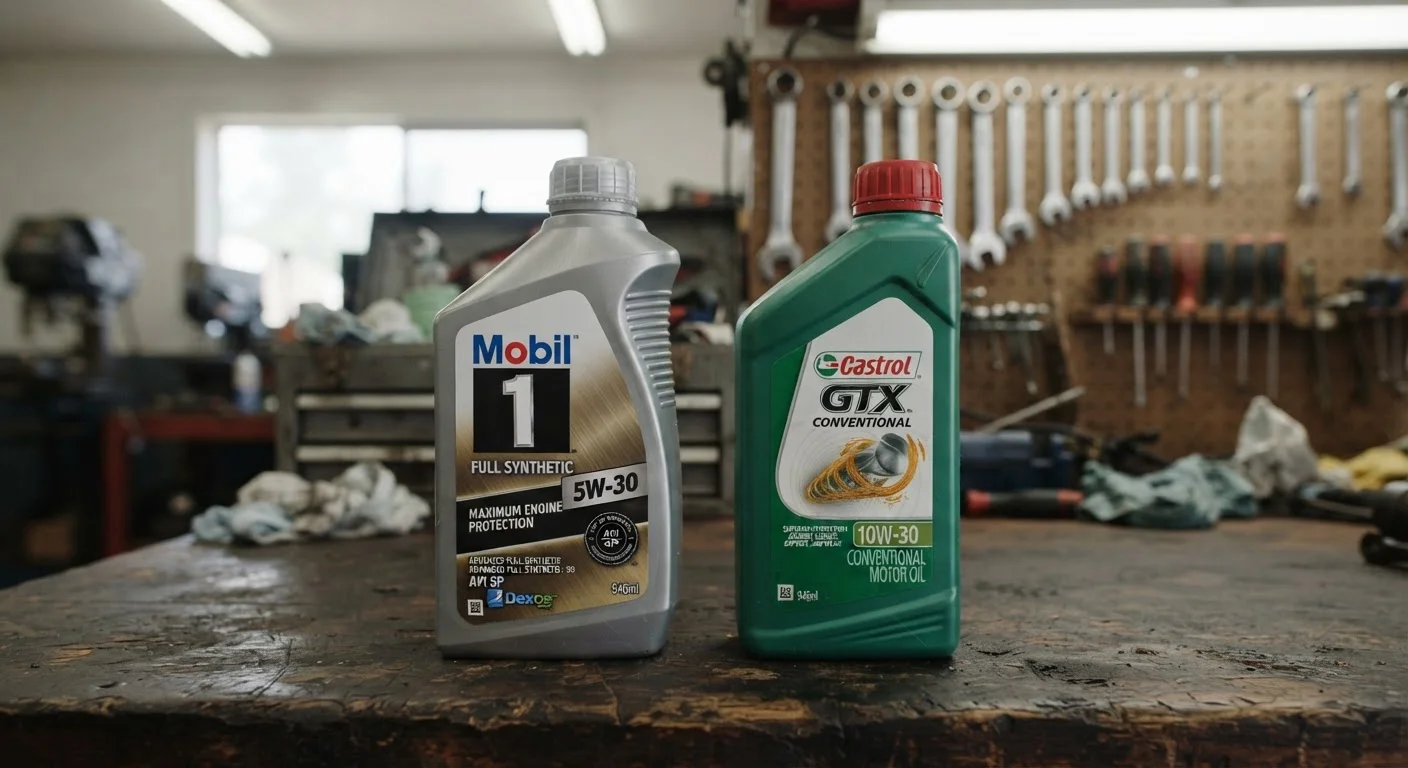
Photo: InsightsChief.com | Your Source Of Trusted Insights editorial
Key Takeaways
- Synthetic oil typically costs $20-$50 more per oil change but lasts significantly longer between changes.
- Conventional oil suits older, high-mileage engines and drivers who already change oil frequently.
- Your vehicle's owner's manual is the authoritative source for which oil type is required or recommended.
- Climate and driving conditions - extreme heat, cold, or stop-and-go traffic - affect which oil performs better.
- Neither oil type guarantees better fuel economy; differences in real-world mpg are generally small.
What Actually Separates These Two Oils
Motor oil's job is to lubricate engine parts, reduce heat, and carry away contaminants. Both synthetic and conventional oil do this - but they're made differently, and that manufacturing difference drives most of the performance and cost variation.
Conventional motor oil is refined directly from crude petroleum. It contains naturally occurring molecules of varying sizes and shapes, along with additive packages that improve its stability and performance. It has a long track record and meets the needs of a wide range of engines.
Synthetic motor oil is chemically engineered, either from a synthetic base stock or from crude oil that is further refined and restructured at the molecular level. The result is a more uniform molecular structure that resists breakdown at high temperatures, flows more easily in cold starts, and generally lasts longer before needing replacement.
There is also a middle category - synthetic blend oil - that mixes both base stocks, offering a compromise on both cost and performance. It's worth knowing this option exists, though the core trade-offs remain similar.
| Criterion | Synthetic Motor Oil | Conventional Motor Oil |
|---|---|---|
| Typical cost per oil change | $65-$100+ | $30-$55 |
| Typical change interval | 7,500-15,000 miles | 3,000-5,000 miles |
| Cold-weather performance | Flows better at low temps | Thickens more in extreme cold |
| Heat and stress resistance | Resists breakdown longer | Degrades faster under high heat |
| Required for modern engines | Often required or recommended | Generally suited to older engines |
| Environmental impact | Fewer change cycles, less waste oil | More frequent disposal required |
The Real Cost Calculation
The upfront price gap is real: a conventional oil change typically runs $30-$55 at a shop, while a full-synthetic service often costs $65-$100 or more, depending on oil grade and location. That difference of $20-$50 per visit adds up - but so does the change interval.
Conventional oil generally requires changes every 3,000-5,000 miles under normal driving conditions. Many synthetic oils are rated for 7,500-10,000 miles or more, with some full-synthetic formulations and modern vehicles permitting up to 15,000 miles between changes (always check your owner's manual - manufacturer guidance overrides general rules).
3,000-5,000
Typical conventional oil change interval (miles)
This is a commonly cited industry guideline; always verify against your vehicle manufacturer's specific recommendation.
7,500-15,000
Typical synthetic oil change interval (miles)
Many modern vehicles using full-synthetic oil have manufacturer-approved intervals in this range, though driving conditions can shorten them.
~$35-$50
Estimated annual savings from fewer synthetic changes
Savings vary widely by location, vehicle, and shop rates; this is an illustrative estimate, not a guarantee.
Over 30,000 miles of driving, a conventional-oil driver might pay for six changes versus two or three with synthetic. Depending on local shop rates, the annual totals can come surprisingly close. The math shifts further when you factor in your own time, shop fees, and the potential cost of engine wear from less-stable oil breaking down faster under stress.
For a full picture of how maintenance choices fit into total ownership spending, see our look at common ownership cost assumptions that quietly inflate what drivers pay.
Which Oil Is Right for Your Situation
The single most reliable guide is your vehicle's owner's manual. If it specifies synthetic, that's not a suggestion - it's an engineering requirement. Using conventional oil in an engine designed for synthetic can cause increased wear and, in some cases, void your powertrain warranty.
If your manual allows either type, consider these factors:
- Engine age and mileage: Older, high-mileage engines may actually benefit from staying on conventional or a high-mileage blend, since synthetic's superior cleaning action can sometimes disturb deposits that are acting as seals in worn engines. A mechanic familiar with your vehicle's history can advise here.
- Climate: Synthetic oil flows better at low temperatures, protecting your engine during cold starts - a meaningful factor in northern climates.
- Driving patterns: Short trips, frequent idling, and stop-and-go traffic degrade oil faster and favor synthetic's longer-lasting formulation.
- Budget flexibility: If a higher upfront cost is genuinely difficult, consistent conventional oil changes on schedule protect your engine far better than delayed synthetic changes.
If you're weighing whether to handle oil changes yourself, our guide to DIY maintenance trade-offs covers what's realistic for most home mechanics. And for context on how oil costs fit into the broader picture of car ownership expenses, the Ownership Costs hub breaks down where your money actually goes.
The content provided on our blog site traverses numerous categories, offering readers valuable and practical information. Readers can use the editorial team’s research and data to gain more insights into their topics of interest. However, they are requested not to treat the articles as conclusive. The website team cannot be held responsible for differences in data or inaccuracies found across other platforms. Please also note that the site might also miss out on various schemes and offers available that the readers may find more beneficial than the ones we cover.