
Gap Insurance: When It Makes Sense and When It Doesn't

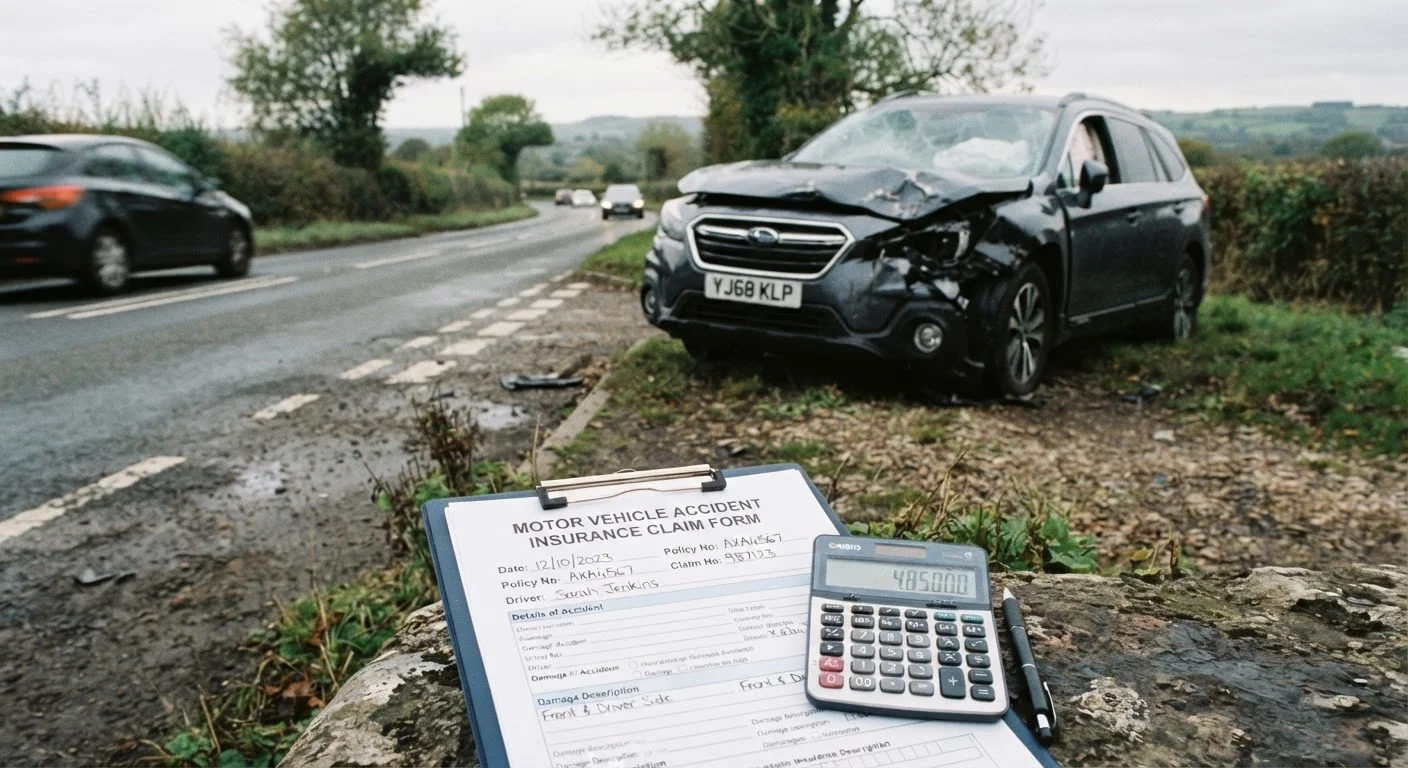
Photo: InsightsChief.com | Your Source Of Trusted Insights editorial
Key Takeaways
- Gap insurance pays the difference between your loan balance and your car's actual cash value after a total loss.
- New vehicles can depreciate 15-25% in the first year, creating a coverage gap almost immediately after purchase.
- Gap insurance is most valuable when you finance with a small down payment or choose a long loan term.
- If your loan balance is close to or below your car's market value, gap coverage is likely unnecessary.
- You can typically buy gap insurance through your lender, insurer, or dealership - prices vary significantly.
Eliminates out-of-pocket debt after a total loss
Without gap coverage, a totaled car can leave you paying hundreds or thousands of dollars on a loan for a vehicle you no longer have. Gap insurance removes that financial liability entirely.
Low annual cost relative to potential exposure
When purchased through an auto insurer, gap coverage typically adds a modest amount to an existing premium - often in the range of a few dollars per month - while protecting against a potentially large lump-sum obligation.
Covers the depreciation cliff on new vehicles
New vehicles can lose a significant portion of their value within the first 12-24 months of ownership, creating a meaningful gap that standard insurance won't address without this add-on.
Useful protection when negative equity is rolled in
If you carried an unpaid balance from a previous vehicle into your current loan, that negative equity is not reflected in your new car's value - gap insurance covers that exposure too.
Often available through insurers at competitive rates
Purchasing gap coverage through your existing auto insurer is generally less expensive than buying it through the dealership or lender, giving price-conscious buyers a more affordable option.
Unnecessary once loan balance approaches car value
As you pay down a loan, the risk of a coverage gap shrinks and eventually disappears. Continuing to pay for gap insurance past that point provides little to no practical benefit.
Dealership-sold gap coverage is often overpriced
Gap insurance rolled into a dealer financing package can cost several hundred dollars upfront, sometimes exceeding what the same protection would cost over multiple years through an insurer.
Does not cover mechanical breakdowns or missed payments
Gap insurance is narrowly scoped to total-loss and theft scenarios. It provides no protection against repair costs, depreciation on a vehicle you're still driving, or payment delinquency.
Redundant for buyers who put 20% or more down
A larger down payment reduces the loan balance enough that standard insurance payouts often cover the full amount owed, leaving gap coverage with nothing to fill.
Wasted cost on short-term or low-balance loans
Drivers who choose shorter loan terms or finance a modest amount relative to the vehicle's value are unlikely to ever face a meaningful gap, making the additional premium an unnecessary expense.
What Gap Insurance Actually Does
Gap insurance - short for Guaranteed Asset Protection - is a supplemental auto coverage that kicks in after a total loss or theft when your standard insurance payout falls short of your remaining loan or lease balance.
Here's the core problem it solves: standard collision and comprehensive insurance pays out your vehicle's actual cash value (ACV) at the time of the loss, not what you originally paid or what you still owe. Because new cars depreciate rapidly - often losing 15-25% of their value in the first year alone - a driver who financed most of their purchase can quickly find themselves in a position where the car is worth less than the loan balance.
If that car is totaled, the insurer pays the ACV, the lender expects the full loan balance, and the driver is left covering the difference out of pocket. Gap insurance is designed to eliminate that shortfall. For a broader foundation on how auto coverage types work together, see our plain-language car insurance guide.
Gap Insurance vs. Loan/Lease Payoff Coverage
The Case for Gap Insurance
Gap insurance makes financial sense in a specific set of circumstances - and understanding those situations clearly is more useful than a blanket recommendation either way.
Eliminates out-of-pocket debt after a total loss
Without gap coverage, a totaled car can leave you paying hundreds or thousands of dollars on a loan for a vehicle you no longer have. Gap insurance removes that financial liability entirely.
Low annual cost relative to potential exposure
When purchased through an auto insurer, gap coverage typically adds a modest amount to an existing premium - often in the range of a few dollars per month - while protecting against a potentially large lump-sum obligation.
Covers the depreciation cliff on new vehicles
New vehicles can lose a significant portion of their value within the first 12-24 months of ownership, creating a meaningful gap that standard insurance won't address without this add-on.
Useful protection when negative equity is rolled in
If you carried an unpaid balance from a previous vehicle into your current loan, that negative equity is not reflected in your new car's value - gap insurance covers that exposure too.
Often available through insurers at competitive rates
Purchasing gap coverage through your existing auto insurer is generally less expensive than buying it through the dealership or lender, giving price-conscious buyers a more affordable option.
The coverage tends to be most valuable when: you financed 80% or more of the vehicle's purchase price; your loan term is 60, 72, or 84 months; you purchased a vehicle model known for steep early depreciation; or you rolled negative equity from a previous loan into your current one. These factors compound quickly - a long loan with a low down payment and a vehicle that drops in value fast is precisely the scenario gap insurance was designed for. You can read more about common coverage missteps in our look at car insurance decisions that often backfire.
The Case Against Gap Insurance
Gap insurance is not a universal must-have, and for many drivers it represents a recurring cost with a low probability of ever paying out.
Unnecessary once loan balance approaches car value
As you pay down a loan, the risk of a coverage gap shrinks and eventually disappears. Continuing to pay for gap insurance past that point provides little to no practical benefit.
Dealership-sold gap coverage is often overpriced
Gap insurance rolled into a dealer financing package can cost several hundred dollars upfront, sometimes exceeding what the same protection would cost over multiple years through an insurer.
Does not cover mechanical breakdowns or missed payments
Gap insurance is narrowly scoped to total-loss and theft scenarios. It provides no protection against repair costs, depreciation on a vehicle you're still driving, or payment delinquency.
Redundant for buyers who put 20% or more down
A larger down payment reduces the loan balance enough that standard insurance payouts often cover the full amount owed, leaving gap coverage with nothing to fill.
Wasted cost on short-term or low-balance loans
Drivers who choose shorter loan terms or finance a modest amount relative to the vehicle's value are unlikely to ever face a meaningful gap, making the additional premium an unnecessary expense.
One additional consideration: gap coverage purchased through a dealership's finance office is typically priced significantly higher than the same or equivalent coverage purchased through your auto insurer. If you're evaluating quotes, understanding what quote figures actually reflect can help you make a fair comparison across sources.
How to Decide If You Need It
The clearest way to assess whether gap insurance makes sense is to compare your current loan payoff amount against your vehicle's actual cash value, which you can estimate using widely available vehicle valuation tools.
If your loan balance exceeds your car's estimated market value by a meaningful margin - generally more than a few thousand dollars - gap coverage is worth the cost. As you pay down the loan and the gap narrows, that calculation changes. Many drivers drop gap insurance once their loan balance falls at or below the vehicle's ACV.
20%
Typical first-year vehicle depreciation
Industry estimates generally place new vehicle depreciation at 15-25% in the first year of ownership, with the steepest drop occurring the moment the car leaves the lot.
84 months
Longest common auto loan term
Seven-year loan terms have become more common in the US auto market, extending the period during which a borrower is most likely to owe more than the vehicle is worth.
It's also worth distinguishing gap insurance from related but different products. A collision and comprehensive policy is a prerequisite - gap insurance only supplements those payouts, it doesn't replace them. For a full breakdown of how those base coverages work, see what liability, collision, and comprehensive actually cover.
This article is for general informational purposes only and does not constitute personalized insurance or financial advice. Coverage terms, pricing, and eligibility vary by provider, state, and individual circumstances. Consult a licensed insurance professional before making coverage decisions.
The content provided on our blog site traverses numerous categories, offering readers valuable and practical information. Readers can use the editorial team’s research and data to gain more insights into their topics of interest. However, they are requested not to treat the articles as conclusive. The website team cannot be held responsible for differences in data or inaccuracies found across other platforms. Please also note that the site might also miss out on various schemes and offers available that the readers may find more beneficial than the ones we cover.