
Packing Light Without Leaving Behind What You Actually Need

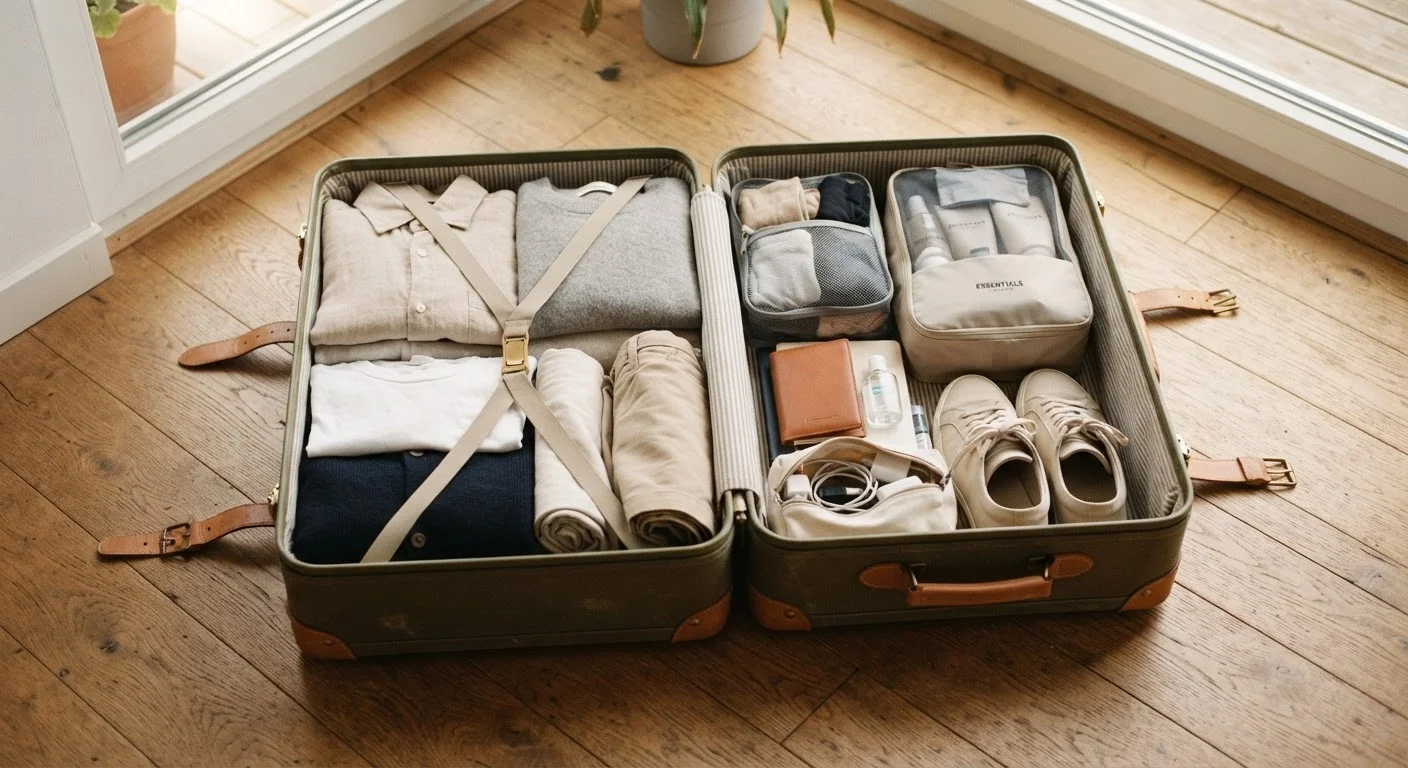
Photo: InsightsChief.com | Your Source Of Trusted Insights editorial
Key Takeaways
- A destination-specific packing list cuts overpacking more effectively than general advice.
- The rolling method and packing cubes can meaningfully reduce bulk without sacrificing organization.
- Versatile, mix-and-match clothing reduces the number of items needed for any trip length.
- Toiletries and electronics are the two categories most likely to add unnecessary weight.
- A final audit pass - removing one item per category - is a reliable way to stay within limits.
Why Overpacking Happens - and What It Actually Costs
Most overpacking isn't carelessness - it's anxiety. The instinct to cover every scenario by bringing more produces bags that are harder to carry, slower through security, and potentially subject to airline fees. A checked bag fee each way adds real cost to a trip; a heavy carry-on that must be gate-checked costs time and convenience.
Beyond fees, an overpacked bag creates friction throughout a trip: lugging it through transit, managing it in small hotel rooms, and repacking at every stop. The goal of packing light isn't to be minimal for its own sake - it's to travel with less friction and more flexibility. Budgeting for the trip itself matters too; see strategies that consistently stretch a travel budget further for the broader picture.
Check Airline Restrictions Before You Pack
What follows is a repeatable process - not a one-size-fits-all list. Your packing needs are shaped by your destination, activities, and personal requirements. Use these steps as a framework, not a prescription.
What You'll Need Before You Start
What you will need
Packing cubes
Compress and organize clothing by category, making it easier to locate items and maximize bag space.
Luggage scale
Verify bag weight before leaving home to avoid surprise fees at the check-in counter.
Packing list (written or digital)
Track every item you intend to bring and serves as a checklist during your final audit.
Travel-size toiletry containers
Decant full-size products into TSA-compliant quantities, reducing weight and volume in your bag.
Step-by-Step: How to Pack Light Without Underpacking
Build a destination-specific packing list
Start with a blank list - not a recycled one from a past trip. Your destination's climate, planned activities, and trip length are the only reliable guides. A four-day city trip in October requires a different kit than a beach week or a hiking itinerary. Note the specific activities you have scheduled and list only what each one realistically requires.
Pair this step with the pre-trip planning checklist to make sure documents, bookings, and logistics are covered alongside your packing.
Choose a clothing formula and stick to it
Select a set number of clothing items based on trip length, not instinct. A common working formula: enough bottoms for half the trip days, enough tops for each day, one or two layers for temperature variation, and one set of shoes per activity type (walking, formal, athletic). Every item should pair with at least two others you're bringing.
Neutral colors and simple patterns maximize outfit combinations. If an item only works with one other thing in your bag, it likely doesn't earn its place.
Audit toiletries and electronics ruthlessly
These two categories are consistent culprits for overweight bags. For toiletries, decant only what you'll realistically use into travel-size containers; many destinations have pharmacies or grocery stores where you can buy anything you've forgotten. For electronics, list every device and its charger - then question each one. A laptop, tablet, e-reader, and camera is likely redundant for most leisure trips.
Consider whether your accommodation provides items like hair dryers or basic toiletries before packing your own.
Pack using the rolling method and fill dead space
Rolling clothing (rather than folding flat) typically reduces volume and minimizes creasing for casual items. Place rolled clothing in packing cubes if you have them, then arrange cubes in the bag with heavier items closest to the back panel (the side that rests against your back when worn or wheeled). Fill remaining dead space - inside shoes, gaps between cubes - with socks, small accessories, or a packable bag.
Do a final one-item-out audit before closing the bag
Once everything is in the bag, go through each category - clothing, footwear, toiletries, electronics, documents - and challenge yourself to remove at least one item from at least two categories. This isn't about minimalism for its own sake; it's about identifying the items that felt necessary during the packing mindset but are genuinely optional in practice.
Then weigh the bag. If you're traveling with a carry-on, compare the weight against your airline's posted limit. A luggage scale at home is more reliable than guessing at the airport.
Review the night before departure
Run a final check the evening before your flight rather than the morning of. Confirm all documents are accessible (not buried at the bottom of the bag), that liquids are in a separate pouch for easy security screening, and that any items you're using up until departure - phone charger, medications, toiletries - have a designated spot ready for last-minute addition. See the night-before flight checklist for a full rundown of this step.
The One-Week Rule Works for Longer Trips Too
Common Mistakes That Undermine an Otherwise Good Pack
Even travelers who follow a structured process run into a few consistent pitfalls worth knowing in advance.
- Packing for worst-case scenarios: Bringing a full rain suit for a trip where rain is unlikely, or formal wear for events that may not materialize, is a common way to add volume without adding real preparedness.
- Ignoring what's available at the destination: Most cities have pharmacies, grocery stores, and laundromats. Items that can be cheaply sourced or replaced at the destination don't need to travel with you.
- Wearing your heaviest items only once: If you're packing a bulky jacket or heavy boots, plan to wear them multiple times - or ask whether they're truly needed.
- Leaving the bag too full to close comfortably: A bag packed to its maximum capacity has no room for anything acquired during the trip - souvenirs, a warmer layer bought locally, or a gift. Leave a small margin.
Planning meals and day-to-day logistics thoughtfully also reduces what you need to carry. Reducing food costs while traveling is one area where good pre-trip decisions pay off repeatedly throughout your trip.
The content provided on our blog site traverses numerous categories, offering readers valuable and practical information. Readers can use the editorial team’s research and data to gain more insights into their topics of interest. However, they are requested not to treat the articles as conclusive. The website team cannot be held responsible for differences in data or inaccuracies found across other platforms. Please also note that the site might also miss out on various schemes and offers available that the readers may find more beneficial than the ones we cover.