
First Time Flying Alone: A Practical Orientation for New Solo Flyers

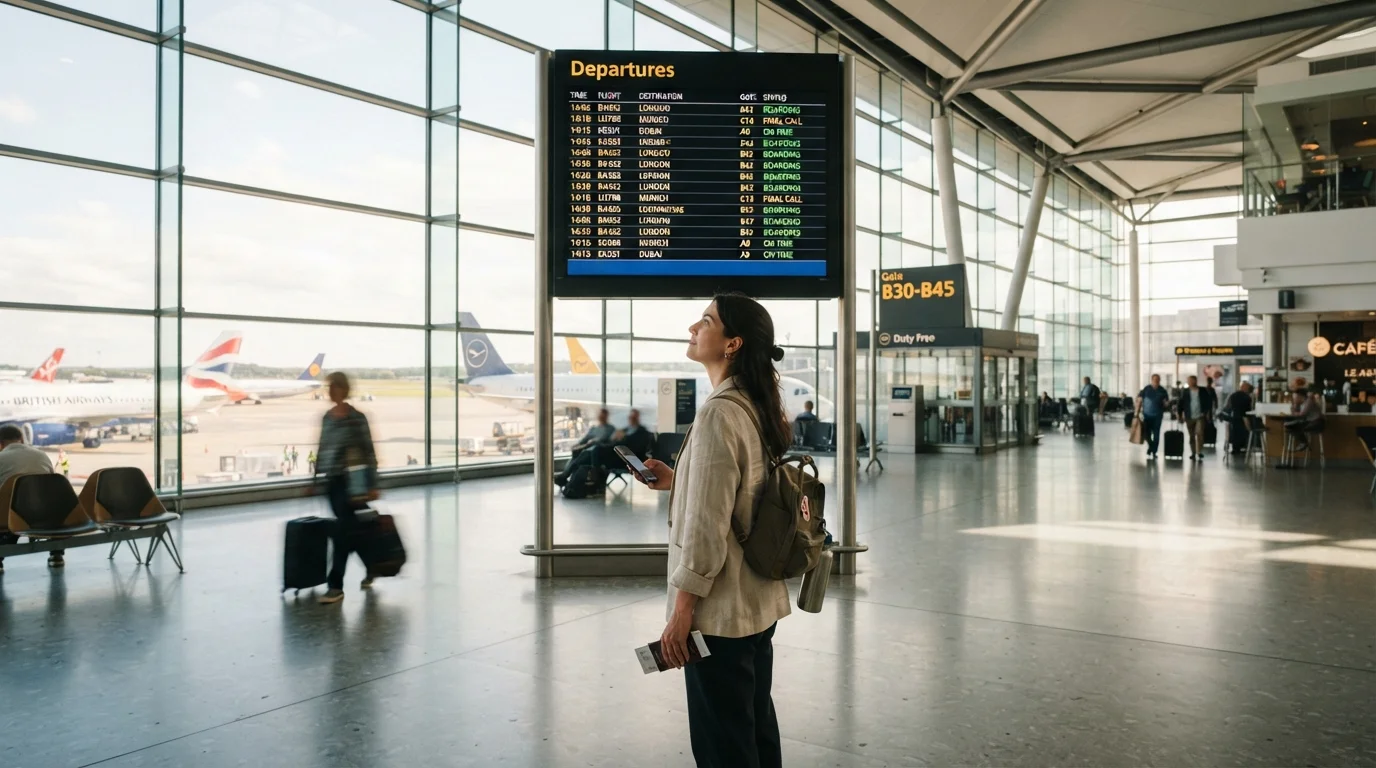
Photo: InsightsChief.com | Your Source Of Trusted Insights editorial
Key Takeaways
- Arriving at least two hours before a domestic flight gives you a realistic buffer for check-in and security.
- Your boarding pass and government-issued ID are the two items that unlock every stage of the airport process.
- Airport signage is designed for solo navigation - follow the color-coded overhead signs and you rarely need to ask for help.
- Most airport delays and stresses stem from arriving too late or packing prohibited items in carry-on bags.
- After landing, baggage claim and ground transportation signs are consistently posted throughout arrival halls.
What to Expect From the Solo Flying Experience
Flying alone for the first time can feel like being dropped into a busy system with no manual. The good news: airports run on repetition and signage. Once you understand the sequence of steps, the experience is far more predictable than it appears from the outside.
The core journey through any US airport follows a consistent pattern: arrival, check-in, security screening, finding your gate, boarding, and deplaning. Each stage has its own rules, but none is complicated once you know what's coming. Before you travel, it's worth reviewing a pre-trip planning checklist to make sure your documents and packing are squared away well in advance.
If airports feel genuinely nerve-wracking rather than just unfamiliar, you're not alone - there are real, identifiable reasons the environment can feel overwhelming. Our companion piece on airport anxiety covers practical, grounded strategies for managing that feeling.
Boarding pass
A document - paper or digital - that confirms your seat on a specific flight and is scanned at security and at the gate. It includes your name, flight number, gate, seat, and boarding group.
TSA
The Transportation Security Administration, the US federal agency that operates security screening checkpoints at all commercial airports.
REAL ID
A federally compliant form of state-issued ID that meets minimum security standards set by the US government. Required for domestic air travel at TSA checkpoints after the federal enforcement deadline.
Jetway
The enclosed, retractable bridge that connects the airport gate to the door of the aircraft, allowing passengers to board without going outdoors.
Boarding group
Airlines divide passengers into numbered or lettered groups that board in sequence. Your boarding pass indicates which group you belong to, determining when you're called to board.
Baggage claim
The area of the arrivals terminal where checked luggage is delivered to passengers via a rotating conveyor belt, typically after the aircraft has reached its gate.
Documents, Check-In, and Security
Your two non-negotiables are a valid, government-issued photo ID and your boarding pass. Lose track of either and the process stalls. Keep them in the same jacket pocket or the front compartment of your bag throughout the day.
If your airline allows online check-in - and most US carriers do, opening 24 hours before departure - complete it from home. If you're carrying only a personal item or carry-on bag, you can walk straight to security. If you have a checked bag, proceed to the airline's bag drop counter, which typically has a shorter queue than the full check-in line.
At security, the TSA process is standardized across US airports. Laptops and liquids over 3.4 oz must come out of your bag. Shoes, belts, and jackets go into a bin. Walk through the scanner, collect your items on the other side, and re-pack at the benches provided - not at the conveyor belt, where you'd be blocking other travelers. Rushing this step is where most first-timers lose small items.
Pack Your Carry-On With Security in Mind
Navigating the Terminal and Boarding
After clearing security, you're in the secure terminal. Your boarding pass will show a gate number - for example, B14 or C22. The letter refers to the terminal concourse; the number is the specific gate. Overhead signs update in real time and will point you in the right direction. Allow 10-15 minutes to walk to distant gates, more in very large airports like O'Hare or LAX.
Once at your gate, check the departure board to confirm the flight number matches your ticket. Gates do occasionally change, so verify this rather than assuming. Most airlines begin boarding 30-45 minutes before departure in groups, typically by fare class and seat location. Listen for announcements and watch the display board - you don't need to be first in line.
When your group is called, have your boarding pass and ID ready. The gate agent scans your pass, and you proceed down the jetway onto the aircraft. Find your row number on the overhead bins, stow your bag, and settle in. Fellow passengers and flight attendants are experienced at helping with bag storage if you need it.
Before your travel day, it's worth running through our night-before flight checklist to avoid last-minute scrambles.
On the Plane and After Landing
Once seated, locate the safety card in the seat-back pocket and listen to the crew's pre-departure briefing - this is standard procedure regardless of how many flights you've taken. Keep your seatbelt fastened whenever the seatbelt sign is illuminated. Flight attendants will pass through the cabin and are your primary point of contact for anything you need during the flight.
After landing, the plane taxis to the gate. Remain seated until the seatbelt sign turns off. Collect your carry-on from the overhead bin and follow the flow of passengers off the aircraft. Once in the terminal, signs for baggage claim and ground transportation are posted at consistent intervals - follow them toward the main terminal exits.
If you checked a bag, baggage claim carousels are listed on airport display screens by flight number. Bags typically start appearing 15-25 minutes after landing on domestic routes, though this varies. If your bag doesn't arrive, go to the airline's baggage service desk before leaving the airport.
Flying solo is ultimately a skill that normalizes with repetition. Even seasoned travelers had a first time. If you're weighing whether solo travel suits your broader travel style, a comparison of solo and group travel can help you think through the tradeoffs honestly.
Don't Cut Arrival Time Too Close
Frequently Asked Questions
The content provided on our blog site traverses numerous categories, offering readers valuable and practical information. Readers can use the editorial team’s research and data to gain more insights into their topics of interest. However, they are requested not to treat the articles as conclusive. The website team cannot be held responsible for differences in data or inaccuracies found across other platforms. Please also note that the site might also miss out on various schemes and offers available that the readers may find more beneficial than the ones we cover.