
Travel Insurance on a Tight Budget: What It Covers and When to Skip It

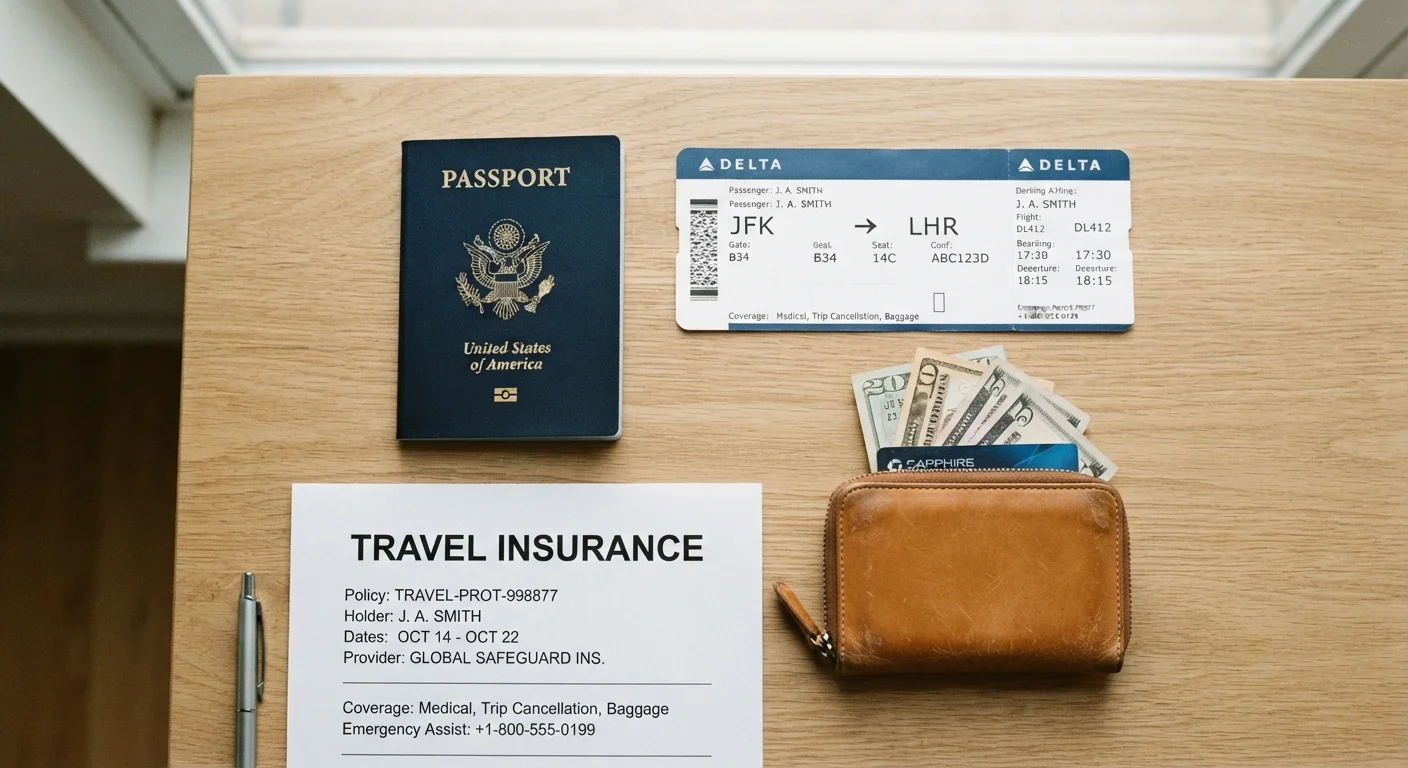
Photo: InsightsChief.com | Your Source Of Trusted Insights editorial
Key Takeaways
- Travel insurance typically costs 4-10% of total trip cost, varying by age, destination, and coverage level.
- Trip cancellation and medical evacuation are the two coverage areas that tend to matter most for budget travelers.
- Skipping travel insurance can be reasonable for low-cost, domestic trips with flexible bookings.
- Credit cards sometimes include limited travel protections - verify what's actually covered before paying for a separate policy.
- Travelers with non-refundable international bookings face the most financial exposure without coverage.
Protects large non-refundable trip investments
Trip cancellation coverage can reimburse thousands of dollars in prepaid flights, hotels, and tours if a covered event forces you to cancel before departure.
Fills the international medical coverage gap
Most US health plans and Medicare do not cover medical treatment abroad, leaving travelers personally liable for hospital bills that can reach five or six figures.
Medical evacuation coverage offsets catastrophic costs
Emergency air transport from a remote destination can cost $50,000 or more; evacuation coverage transfers that risk to the insurer for a fraction of that cost.
Provides some buffer against travel disruptions
Trip delay and baggage delay benefits can cover meals, lodging, and essentials when airlines or weather derail your plans, reducing out-of-pocket stress mid-trip.
"Cancel for any reason" upgrades add flexibility
Optional CFAR riders let travelers cancel for reasons not listed in standard policies, typically recovering 50-75% of trip costs - useful when future plans are uncertain.
Adds 4-10% to total trip cost upfront
For a $2,000 trip, a standard policy can cost $80-$200 or more, a meaningful sum for households already stretching their travel budget.
Covered reasons are narrower than many expect
Standard policies cover specific named events - illness, injury, death, severe weather. Changing your mind, work conflicts, or fear of travel generally do not qualify without a CFAR upgrade.
Existing card benefits may duplicate coverage
Many travel credit cards include trip delay, cancellation, and baggage protection, meaning travelers who purchase a separate policy could be paying for overlapping benefits.
Claims process can be slow and document-heavy
Insurers typically require extensive documentation - receipts, medical records, airline notifications - before approving claims, adding friction during an already stressful situation.
Pre-existing condition exclusions limit value for some
Many standard policies exclude claims arising from conditions diagnosed before purchase unless a waiver is obtained within a set window after the initial trip deposit.
What Standard Travel Insurance Actually Covers
Most comprehensive travel insurance policies bundle several distinct protections. Understanding each one separately helps you assess actual value rather than paying for a package you don't need.
Trip cancellation and interruption reimbursses prepaid, non-refundable costs if you cancel or cut short a trip for a covered reason - typically illness, injury, a death in the family, or severe weather. This is usually the highest-value component for anyone with large upfront bookings.
Emergency medical coverage pays for treatment you receive abroad. US health insurance plans, including Medicare, generally provide little or no coverage outside the country. Without a travel policy, a serious injury in a foreign hospital can generate bills in the tens of thousands of dollars.
Medical evacuation covers the cost of transporting you to an appropriate medical facility - or back home - when local care is inadequate. This single coverage category can offset costs that regularly exceed $50,000 for remote-destination evacuations.
Baggage loss and delay reimburses for lost, stolen, or delayed luggage up to a policy limit, often with per-item caps that are lower than the total.
Travel delay covers meals and accommodations when a covered delay extends beyond a set number of hours, typically six to twelve.
For a plain-language breakdown of what these terms mean in practice, see what travel insurance actually covers and what it doesn't.
Protects large non-refundable trip investments
Trip cancellation coverage can reimburse thousands of dollars in prepaid flights, hotels, and tours if a covered event forces you to cancel before departure.
Fills the international medical coverage gap
Most US health plans and Medicare do not cover medical treatment abroad, leaving travelers personally liable for hospital bills that can reach five or six figures.
Medical evacuation coverage offsets catastrophic costs
Emergency air transport from a remote destination can cost $50,000 or more; evacuation coverage transfers that risk to the insurer for a fraction of that cost.
Provides some buffer against travel disruptions
Trip delay and baggage delay benefits can cover meals, lodging, and essentials when airlines or weather derail your plans, reducing out-of-pocket stress mid-trip.
"Cancel for any reason" upgrades add flexibility
Optional CFAR riders let travelers cancel for reasons not listed in standard policies, typically recovering 50-75% of trip costs - useful when future plans are uncertain.
The Real Cons: When the Premium Isn't Worth It
Travel insurance adds a real line item to every trip budget, and for some travelers in some situations, the math simply doesn't support the purchase.
Adds 4-10% to total trip cost upfront
For a $2,000 trip, a standard policy can cost $80-$200 or more, a meaningful sum for households already stretching their travel budget.
Covered reasons are narrower than many expect
Standard policies cover specific named events - illness, injury, death, severe weather. Changing your mind, work conflicts, or fear of travel generally do not qualify without a CFAR upgrade.
Existing card benefits may duplicate coverage
Many travel credit cards include trip delay, cancellation, and baggage protection, meaning travelers who purchase a separate policy could be paying for overlapping benefits.
Claims process can be slow and document-heavy
Insurers typically require extensive documentation - receipts, medical records, airline notifications - before approving claims, adding friction during an already stressful situation.
Pre-existing condition exclusions limit value for some
Many standard policies exclude claims arising from conditions diagnosed before purchase unless a waiver is obtained within a set window after the initial trip deposit.
4-10%
Typical travel insurance cost as share of trip
The US Travel Insurance Association broadly cites this range as a general benchmark for comprehensive policy premiums relative to total trip cost.
$50,000+
Common cost of international medical evacuation
Industry sources including the US State Department note that emergency air medical transport from remote or international destinations can routinely exceed this figure.
The scenarios where skipping coverage makes the most financial sense are narrow but clear. A domestic road trip with refundable hotel bookings and a total cost well under $500 rarely justifies a $40-$80 policy. Similarly, if you already hold a travel credit card that includes meaningful trip delay and cancellation protections, you may be doubling up unnecessarily - though it's worth confirming the card's actual benefit terms, which are often more limited than the marketing suggests.
This parallels decisions in other insurance categories. Just as dropping coverage after paying off a car loan can expose drivers to significant risk, reflexively skipping travel insurance without assessing your actual exposure can backfire. See car insurance decisions that often backfire for a parallel look at how insurance skipping decisions play out.
How to Decide Based on Your Actual Trip
Rather than asking "should I always buy travel insurance," the more useful question is: what is my financial exposure if this trip falls apart?
Work through these factors:
- Total non-refundable spend. Add up flights, hotels, tours, and any other prepaid bookings that won't be returned if you cancel. The higher this number, the stronger the case for cancellation coverage.
- Destination and health system. International travel - especially to countries where US health insurance doesn't apply - raises the stakes for emergency medical and evacuation coverage significantly.
- Your existing coverage. Some credit cards include trip cancellation protection. Some health insurance policies have limited international provisions. Verify the actual terms before assuming coverage exists.
- Flexibility in your bookings. If most of your bookings are refundable or changeable, trip cancellation coverage loses much of its value.
- Your risk tolerance and emergency fund. If absorbing a $3,000 loss would seriously strain your finances, paying $150-$250 for a policy may be a reasonable hedge.
Travel insurance is one of the hidden costs most travelers forget to budget for - planning for it upfront avoids a last-minute decision made without the full picture.
Check Your Credit Card Benefits First
This article is for general informational purposes only and does not constitute personalized insurance, financial, or legal advice. Coverage terms, exclusions, and pricing vary by provider and policy. Always read the full policy document and consult a licensed insurance professional before making coverage decisions.
The content provided on our blog site traverses numerous categories, offering readers valuable and practical information. Readers can use the editorial team’s research and data to gain more insights into their topics of interest. However, they are requested not to treat the articles as conclusive. The website team cannot be held responsible for differences in data or inaccuracies found across other platforms. Please also note that the site might also miss out on various schemes and offers available that the readers may find more beneficial than the ones we cover.