Sinking Funds vs. Emergency Funds: Understanding the Difference

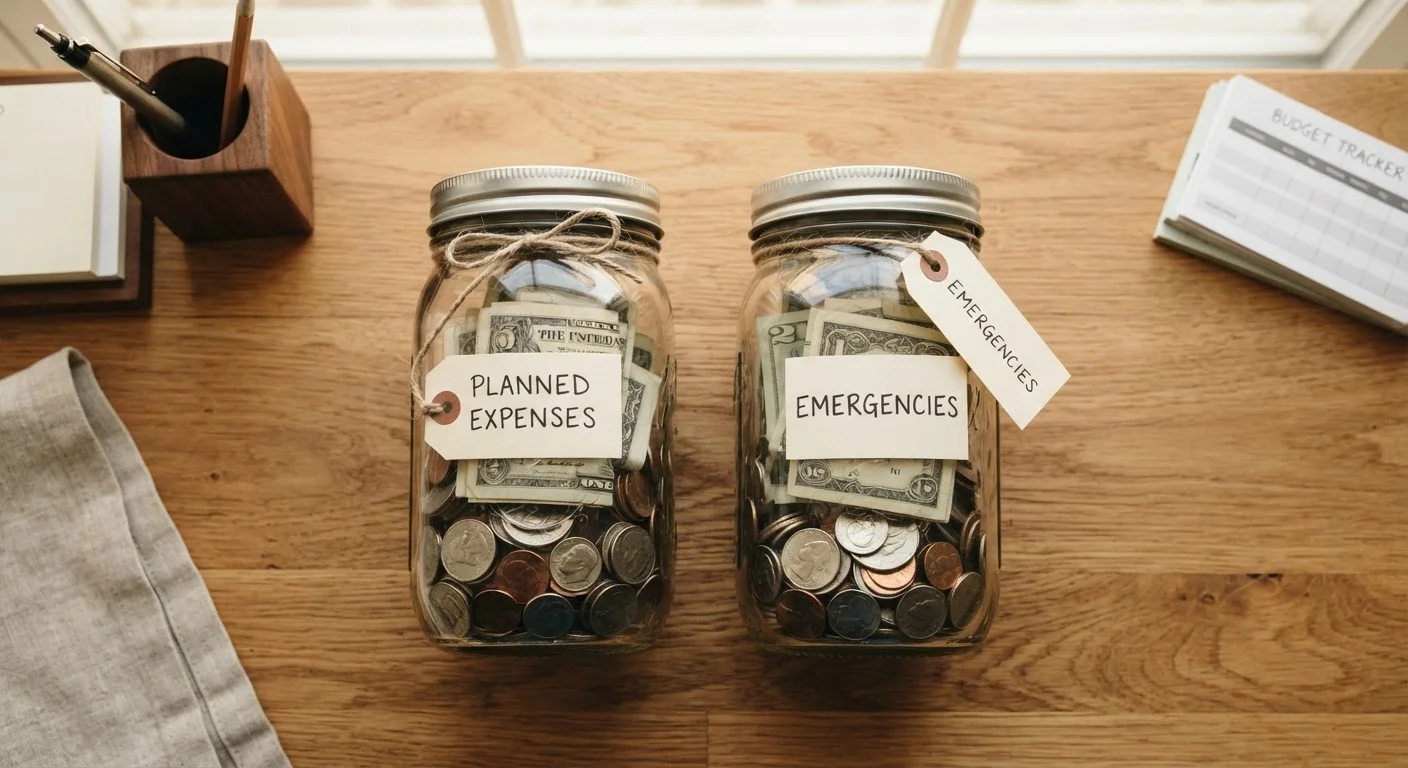
Photo: InsightsChief.com | Your Source Of Trusted Insights editorial
Key Takeaways
- Sinking funds are for planned, predictable expenses; emergency funds are for true financial surprises.
- Both funds belong in a complete household savings strategy - they are not interchangeable.
- Most financial guidance suggests keeping three to six months of essential expenses in an emergency fund.
- Sinking funds can be split by category, with small monthly contributions building toward each known expense.
- Drawing down your emergency fund for predictable costs leaves you exposed when a real crisis hits.
- Starting small with either fund is far better than waiting until you can save a large lump sum.
What Each Fund Is Actually Designed to Do
The terms sinking fund and emergency fund both describe dedicated savings buckets, but their purposes are fundamentally different - and mixing them up is one of the most common budgeting mistakes households make.
A sinking fund is money you set aside deliberately, over time, for an expense you already know is coming. Think car registration, holiday travel, back-to-school shopping, or a planned dental visit. The expense is real and predictable - you just don't want it to blindside your monthly cash flow when it arrives. Our full sinking fund guide breaks down exactly how to structure these within a monthly budget.
An emergency fund, by contrast, is a reserve for genuinely unexpected events: a job layoff, an emergency room visit, a sudden car breakdown that leaves you unable to work, or an urgent home repair. The defining characteristic is that you did not see it coming and you cannot plan the exact amount in advance.
Understanding this distinction matters because separating fixed and variable expenses is foundational to any budget - and the same logic applies to your savings buckets. Planned costs belong in a sinking fund. True surprises belong in an emergency fund.
| Criterion | Sinking Fund | Emergency Fund |
|---|---|---|
| Purpose | Planned, predictable future expenses | Unexpected financial emergencies |
| Examples | Car registration, holidays, annual bills | Job loss, ER visit, sudden car breakdown |
| Savings target | Specific cost ÷ months remaining | 3-6 months of essential expenses |
| Withdrawal timing | Known in advance | Unpredictable |
| Number of buckets | Often multiple (one per goal) | Typically one unified reserve |
| Priority order | Start after emergency fund is seeded | Highest priority savings goal |
| Liquidity needed | Moderate - access by known date | High - accessible within 1-2 business days |
How Much to Save in Each - and Where to Keep It
Sizing these funds requires different approaches because their purposes differ.
For an emergency fund, widely cited guidance from nonprofit credit counseling agencies and government financial literacy resources suggests three to six months of essential living expenses. Essential expenses include rent or mortgage, utilities, groceries, minimum debt payments, and transportation costs - not discretionary spending. If your household runs on a tight budget or relies on a single income, leaning toward the higher end of that range provides more stability. If you are just getting started, even one month's worth is meaningfully better than nothing. Our step-by-step guide to building your first emergency fund can help if you're starting from zero.
For sinking funds, the math is more direct: identify the total cost and the number of months until you need the money, then divide. If holiday gifts typically cost your household $600 and you have 10 months to save, that's $60 per month into that specific bucket. Many households run several sinking funds simultaneously - one for vehicle costs, one for annual subscriptions, one for travel.
~57%
Americans unable to cover a $1,000 emergency
A Bankrate survey found that a majority of U.S. adults could not pay an unexpected $1,000 expense from savings alone, underscoring why a dedicated emergency fund matters.
3-6 months
Recommended emergency fund coverage
Nonprofit financial counseling organizations and the Consumer Financial Protection Bureau (CFPB) broadly recommend covering three to six months of essential living expenses.
On placement: both funds generally work best in a high-yield savings account or money market account that is separate from your everyday checking account. Keeping funds separate reduces the temptation to spend them and makes it easier to track progress. Emergency funds should stay highly liquid - readily accessible within one to two business days. Sinking funds can tolerate slightly less immediate access since you know the withdrawal date in advance.
Why Having Both Funds Matters
A common mistake is treating the emergency fund as the catch-all for every savings need. When that happens, the fund gets routinely depleted by predictable expenses - holiday costs, car maintenance, annual insurance premiums - leaving nothing available when a genuine emergency arrives.
The result: households end up carrying credit card debt or taking out personal loans to cover crises that a dedicated emergency fund was meant to handle. This is a cycle that a dual-fund approach is specifically designed to break.
If your budget is tight and saving for two separate purposes feels overwhelming, prioritize in this order: first, build a starter emergency fund of at least $500 to $1,000 to handle immediate crises. Second, begin opening sinking fund categories for your most predictable large expenses. Third, grow your emergency fund toward the three-to-six-month target over time. Progress doesn't need to be fast to be effective - consistent small contributions to both funds simultaneously is a realistic and sustainable approach for most households.
For travelers, the same logic extends to trip planning: a travel buffer fund acts as a sinking fund for planned trip costs while your main emergency fund stays untouched for true financial disruptions.
This article is for general informational and educational purposes only and does not constitute personalized financial advice. Consult a qualified financial professional for guidance specific to your situation.
The content provided on our blog site traverses numerous categories, offering readers valuable and practical information. Readers can use the editorial team’s research and data to gain more insights into their topics of interest. However, they are requested not to treat the articles as conclusive. The website team cannot be held responsible for differences in data or inaccuracies found across other platforms. Please also note that the site might also miss out on various schemes and offers available that the readers may find more beneficial than the ones we cover.