Grocery Budget Strategies That Don't Require Couponing

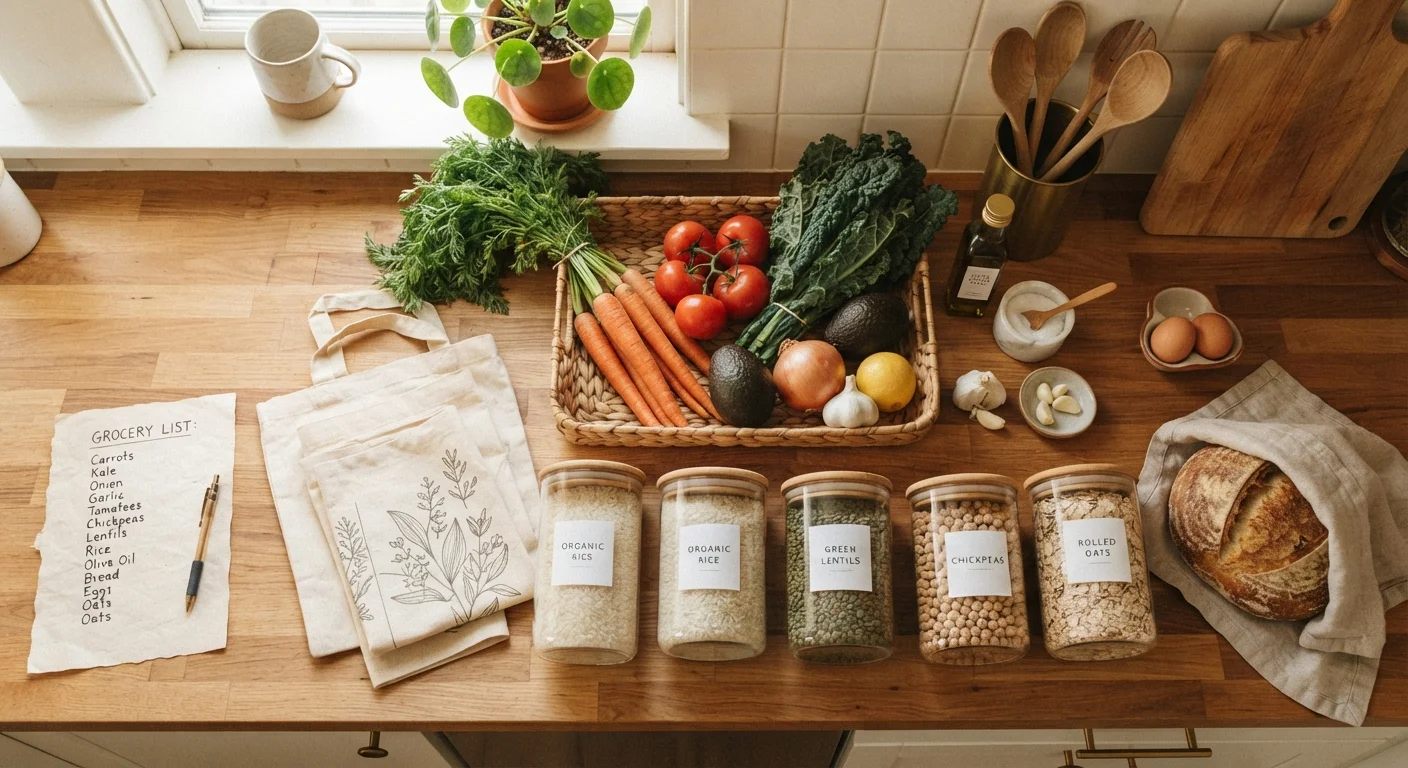
Photo: InsightsChief.com | Your Source Of Trusted Insights editorial
Key Takeaways
- Meal planning before shopping is one of the most effective ways to reduce food waste and impulse spending.
- Buying store-brand and unit-price-conscious items can save 20-30% on comparable products without coupons.
- Stocking versatile pantry staples reduces reliance on expensive convenience foods and last-minute purchases.
- Shopping the perimeter and freezer aisles strategically helps households eat well for less.
- Batch cooking and ingredient doubling stretch grocery dollars across multiple meals each week.
Why You Don't Need Coupons to Save at the Grocery Store
Couponing has its place, but it also has real costs: time, storage space, and the risk of buying things you wouldn't otherwise need. If you've found that clipping and organizing deals doesn't fit your routine, you're not alone - and you're not stuck overpaying. There are structural shopping habits that deliver consistent savings without any of that overhead.
According to the USDA, the average American household wastes roughly 30-40% of the food it purchases. That's not a coupon problem - it's a planning and purchasing problem. Solving it doesn't require a coupon binder. It requires a few durable habits applied consistently. If you're also feeding children, our guide on feeding growing kids on a budget covers nutrition-focused strategies alongside cost control.
Plan meals before you write the list
Shopping without a meal plan is one of the most reliable ways to overspend. When you know exactly what you're cooking for the week, your list becomes a specific, bounded document - not a vague sweep through the aisles. Plan around what's already in your fridge and pantry first, then fill in gaps.
Aim to plan meals that share ingredients. If chicken thighs appear in Tuesday's stir-fry, plan a grain bowl or soup later in the week that uses the remainder. This ingredient-overlap approach cuts waste and reduces the number of distinct items you need to buy.
Knowing exactly what you're cooking transforms a shopping list from vague to precise - and that precision saves money.
Compare unit prices, not package prices
The sticker price on a grocery shelf is often misleading. A larger package isn't always cheaper per ounce, and a sale price doesn't mean value if the unit cost is still high. Most grocery stores display the unit price (cost per ounce, pound, or count) on the shelf tag - use it.
This habit is especially useful in the paper goods, cereals, and canned goods aisles, where package sizes vary widely. Checking unit prices takes about 10 extra seconds per item and requires no apps or loyalty cards.
Unit price - not package price - is the number that actually tells you what you're paying.
Default to store-brand products
Store-brand (also called private-label) products are often manufactured by the same facilities that produce national brands, but sold at a lower price point. Consumer research has consistently found that shoppers rate store-brand quality similarly to name brands in most everyday categories, including canned goods, dairy, frozen vegetables, and basic pantry staples.
A straightforward habit: start with the store brand for any item you haven't tried before. If the quality doesn't meet your needs, switch back. You may find you only return to name brands for a handful of items. That alone can reduce a typical grocery bill meaningfully. For more on the nutritional value of affordable staples, see why cheap doesn't mean unhealthy.
Defaulting to store brands and switching back only when quality falls short is a low-effort, high-return habit.
Stock a working pantry of versatile staples
A stocked pantry changes your relationship with grocery shopping. When you have dried beans, lentils, canned tomatoes, rice, oats, oil, and basic spices on hand, you rarely face a situation where the only option is expensive takeout or a last-minute convenience-food run.
Pantry staples are also among the most cost-efficient foods per serving available. Dried lentils, for example, provide significant protein and fiber at a fraction of the cost of meat. Building your pantry gradually - adding one or two items per shopping trip - avoids a large upfront cost while establishing a buffer that reduces emergency spending.
A well-stocked pantry is a financial buffer that prevents expensive last-minute decisions.
Use the freezer as a savings tool
The freezer is underused by most households. Bread approaching its end date, bulk meat portions, cooked grains, and blanched vegetables all freeze well and extend the usable life of food you've already paid for. This directly reduces waste - which, as noted earlier, is where a substantial share of grocery spending disappears.
Batch-cooking on weekends and freezing portions also reduces the temptation to spend on convenience meals during busy weeknights. A frozen portion of homemade soup or chili costs a fraction of its restaurant equivalent and takes minutes to reheat.
The freezer converts food you've already bought into future meals - reducing waste and the pull of expensive convenience options.
Shop with a list and a rough spending target
Going into a store without both a list and a ballpark budget is an invitation for impulse purchases. Retailers invest heavily in layout, signage, and placement to encourage unplanned spending - end-cap displays, checkout-aisle items, and promotional staging are all designed to pull you off your list.
A written list (paper or phone) keeps you anchored. A rough spending target - even a loose one - creates a mental checkpoint before you reach the register. Neither requires significant preparation time, but both measurably reduce what ends up in your cart that wasn't planned.
A list and a rough spending target are simple guardrails that consistently reduce unplanned grocery spending.
Building Habits That Stick
None of these strategies require a dramatic lifestyle overhaul. The households that consistently spend less on groceries tend to do a handful of things quietly and repeatedly: they plan before they shop, they buy with unit price in mind, and they cook in ways that stretch ingredients. Over time, these habits compound into meaningful savings.
Start With One Habit, Not Six
For a deeper look at how meal planning functions as a genuine financial tool - not just a time-management trick - see our meal planning as a financial tool guide. And if you're curious how couponing stacks up against these approaches, weighing the trade-offs between extreme and casual couponing offers an honest comparison.
This article is for general informational purposes only and does not constitute personalized financial advice. Results vary by household size, location, and spending patterns. Consult a qualified financial professional for guidance specific to your situation.
The content provided on our blog site traverses numerous categories, offering readers valuable and practical information. Readers can use the editorial team’s research and data to gain more insights into their topics of interest. However, they are requested not to treat the articles as conclusive. The website team cannot be held responsible for differences in data or inaccuracies found across other platforms. Please also note that the site might also miss out on various schemes and offers available that the readers may find more beneficial than the ones we cover.