
Zero-Based Budgeting: Giving Every Dollar a Job Before the Month Begins

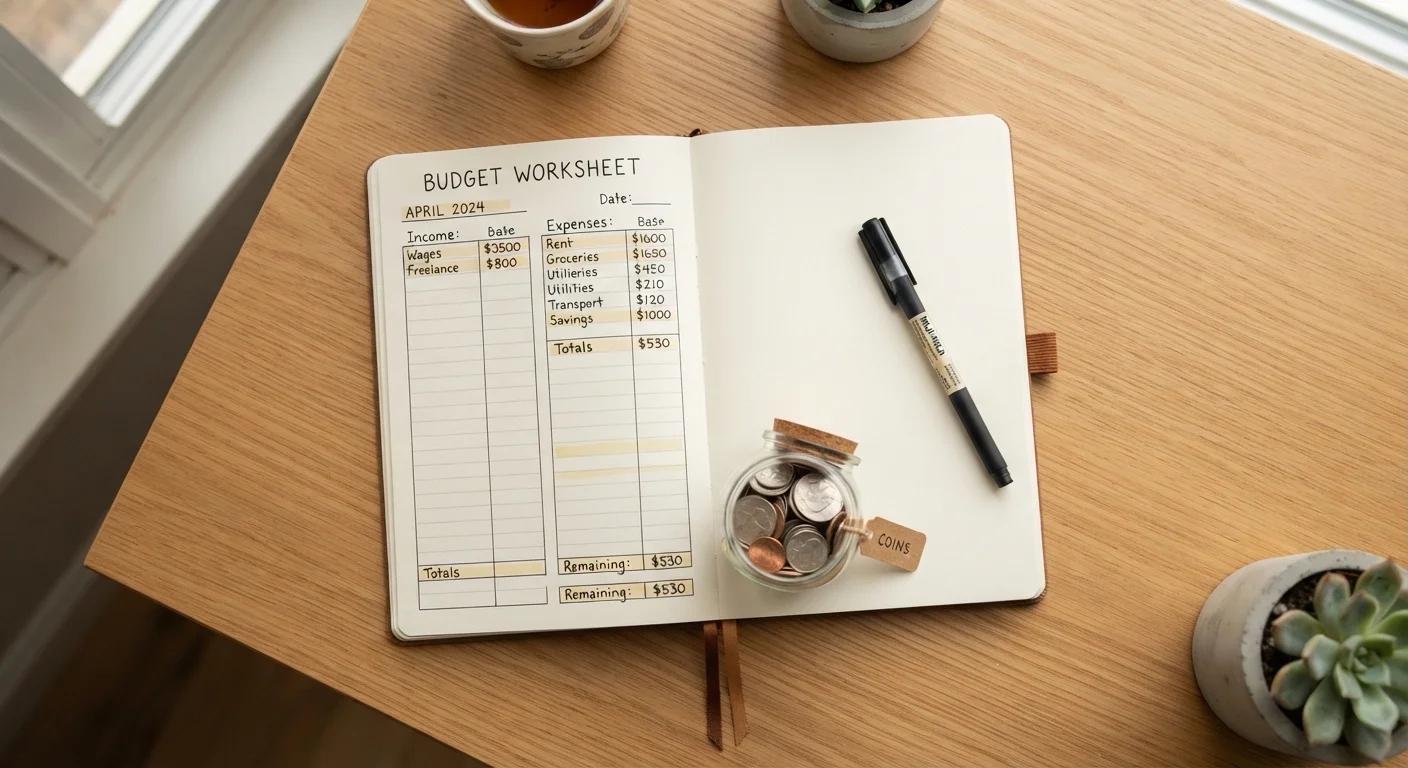
Photo: InsightsChief.com | Your Source Of Trusted Insights editorial
Key Takeaways
- Zero-based budgeting assigns every dollar of income a specific purpose, leaving a balance of zero at month's end.
- The method requires listing all income, then allocating every dollar across expenses, savings, and debt payments.
- It works especially well for households trying to break spending habits or eliminate debt faster.
- Irregular income earners need to build in a buffer category rather than budgeting to the exact last dollar.
- The approach takes more upfront effort than percentage-based methods but offers granular control over spending.
What Zero-Based Budgeting Actually Means
Zero-based budgeting (ZBB) is a method where you allocate every dollar of monthly income to a specific category - expenses, savings, debt repayment, or investing - so that income minus all allocations equals zero. That zero doesn't mean your account is empty; it means no dollar is sitting without an assigned purpose.
The phrase was popularised in personal finance circles as a way to force intentionality. Instead of spending and then checking what's left, you decide in advance where every dollar goes. If you earn $3,800 in a month, you build a plan that accounts for all $3,800 before a single bill is due.
For a plain-language primer on the vocabulary involved, see key budgeting terms every household should know.
Zero-based budgeting
A budgeting method where every dollar of income is assigned to a specific category so that income minus all allocations equals zero each month.
Net income
The amount of money you actually take home after taxes and other deductions are removed from your gross pay.
Sinking fund
A savings category where you set aside small amounts each month toward a known future expense, such as car repairs or holiday gifts.
Discretionary spending
Money spent on non-essential wants - dining out, entertainment, hobbies - rather than necessities like rent or utilities.
Fixed expense
A recurring cost that stays the same amount each month, such as a mortgage payment, car loan, or subscription fee.
Variable expense
A cost that changes month to month, such as groceries, gas, or utility bills, requiring an estimated monthly allocation.
How to Build a Zero-Based Budget Step by Step
- Calculate your monthly take-home income. Use net income - what actually lands in your bank account after taxes and deductions. Include all reliable sources: wages, freelance payments, side income.
- List every known expense. Start with fixed costs (rent, loan payments, insurance), then move to variable necessities (groceries, utilities, gas). Review two to three months of bank statements to catch irregular items like annual subscriptions.
- Assign a dollar amount to savings and debt goals. Treat these as non-negotiable line items, not afterthoughts. Even a modest emergency fund contribution counts.
- Allocate what's left to discretionary categories. Dining out, entertainment, clothing, and hobbies share whatever remains after essentials and goals are funded.
- Check your math. Income minus all category totals should equal zero. If you have money left over, assign it - to savings, a sinking fund, or debt. If you're over budget, trim discretionary categories first.
- Reset at the start of each month. ZBB is rebuilt from scratch monthly, not rolled over. Circumstances change; your budget should reflect reality each month.
For a broader walkthrough of creating any household budget, building a monthly household budget from scratch covers the foundation.
Use Last Month's Numbers When You Can
Who Benefits Most from This Method
Zero-based budgeting tends to deliver the clearest results for households in specific situations:
- People aggressively paying down debt. ZBB makes it easy to see exactly how many dollars can be directed at a loan each month without guessing.
- Households breaking habitual overspending. When every dollar has a name, impulse spending becomes a conscious decision to reallocate from somewhere else.
- Those new to budgeting. The method forces a complete picture of income and expenses, which builds financial awareness fast.
- Dual-income households coordinating finances. Assigning every dollar at the start of the month makes it easier for two earners to align on priorities.
It's worth comparing this structure to other approaches. Percentage-based budgeting vs. fixed-amount budgeting offers a useful contrast if ZBB feels too granular for your situation.
Common Pitfalls and How to Avoid Them
ZBB has real advantages, but it can break down in predictable ways.
- Forgetting irregular expenses
- Annual car registration, holiday gifts, and semi-annual insurance premiums catch people off guard. Create sinking fund categories - small monthly contributions toward known future costs - so these don't blow up your budget when they arrive.
- Budgeting to the exact last dollar on variable income
- If your income fluctuates, budgeting from your average can leave you short in a lean month. Budget from your realistic minimum and treat any extra income as a windfall to allocate when it arrives.
- Abandoning the budget after one bad week
- A single overspent category doesn't invalidate the method. Reallocate from a lower-priority category and continue. Consistency over time matters more than perfection in any single month.
Don't Skip the Buffer for Irregular Income
For a broader view of the principles that make any budget sustainable, see household budgeting principles that hold across income levels.
Is Zero-Based Budgeting Right for Your Household?
ZBB requires more monthly effort than a set-it-and-forget-it percentage rule. If that level of detail feels sustainable for you, it offers something most budgeting methods don't: a precise, month-specific map of where your money goes and why.
If you're weighing ZBB against other approaches, cash envelopes, spreadsheets, and apps: comparing budgeting methods covers how different tools and systems stack up.
The method isn't a guarantee of financial outcomes - results depend heavily on consistency, honest expense tracking, and willingness to make trade-offs. But for households that want full visibility into every spending decision, giving every dollar a job before the month begins is a disciplined starting point.
This article is for general informational and educational purposes only and does not constitute personalised financial advice. Consult a qualified financial professional for guidance specific to your circumstances.
Consumer Financial Protection Bureau (CFPB) Budget Worksheet
The CFPB offers a free, straightforward budget worksheet that helps households list income and expenses - a useful starting point for structuring a zero-based budget.
MyMoney.gov
A U.S. government financial literacy resource that covers budgeting basics, saving, and debt management in plain language - helpful for households building financial foundations.
Frequently Asked Questions
The content provided on our blog site traverses numerous categories, offering readers valuable and practical information. Readers can use the editorial team’s research and data to gain more insights into their topics of interest. However, they are requested not to treat the articles as conclusive. The website team cannot be held responsible for differences in data or inaccuracies found across other platforms. Please also note that the site might also miss out on various schemes and offers available that the readers may find more beneficial than the ones we cover.